Time on the Job
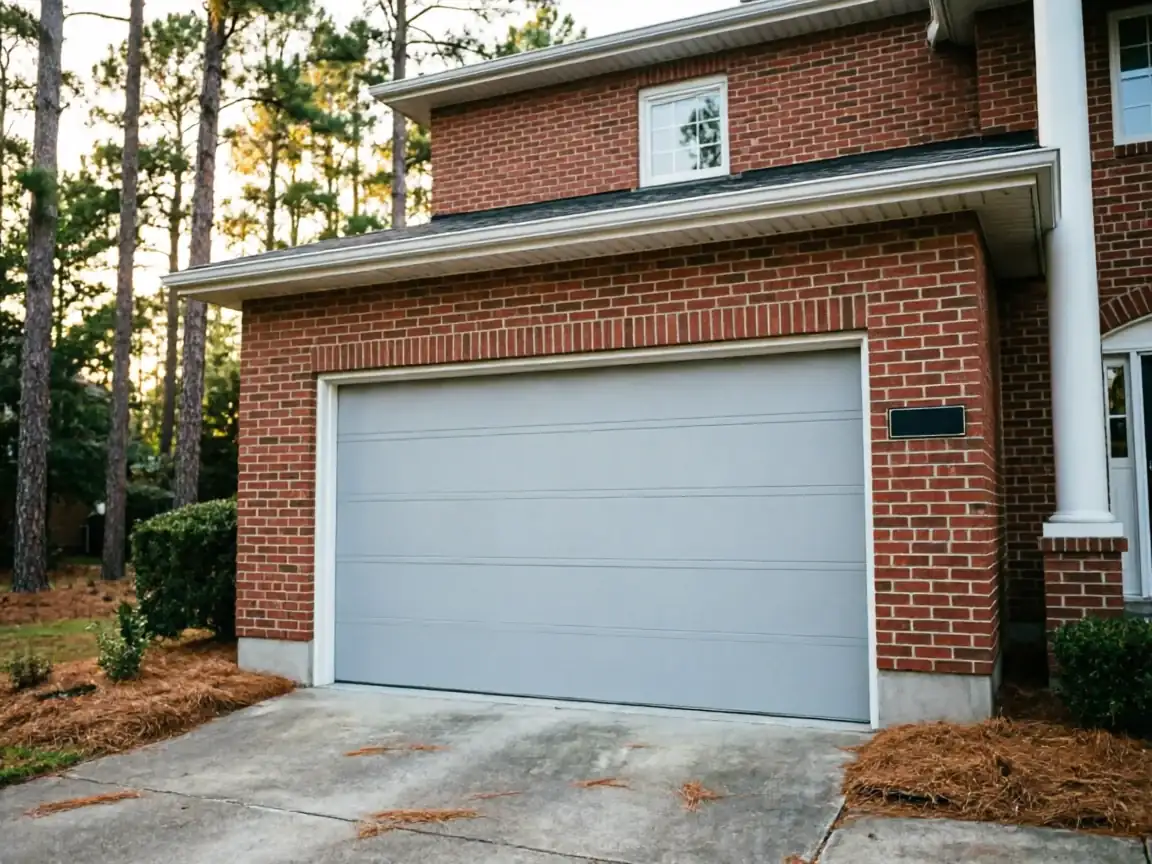
Falkville's houses, on average, went up in 1972 - sixteen years ahead of the typical build date across the rest of the service area, which runs closer to 1988. That gap matters more than it sounds. A door installed when a 1972 house was framed is a different animal from one installed in a 1995 build: narrower panel sections, steel skins with no foam core, and hardware sized to match a track profile that most suppliers stopped stocking a long time ago.
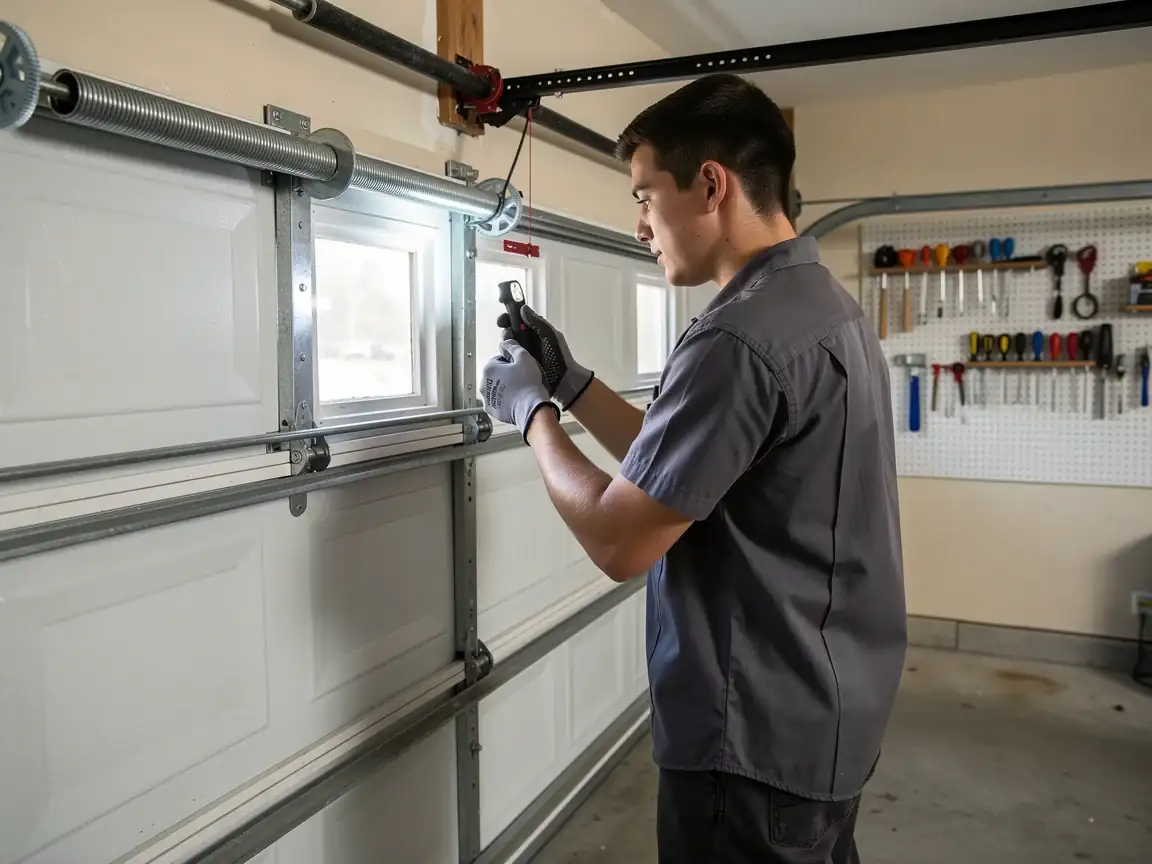
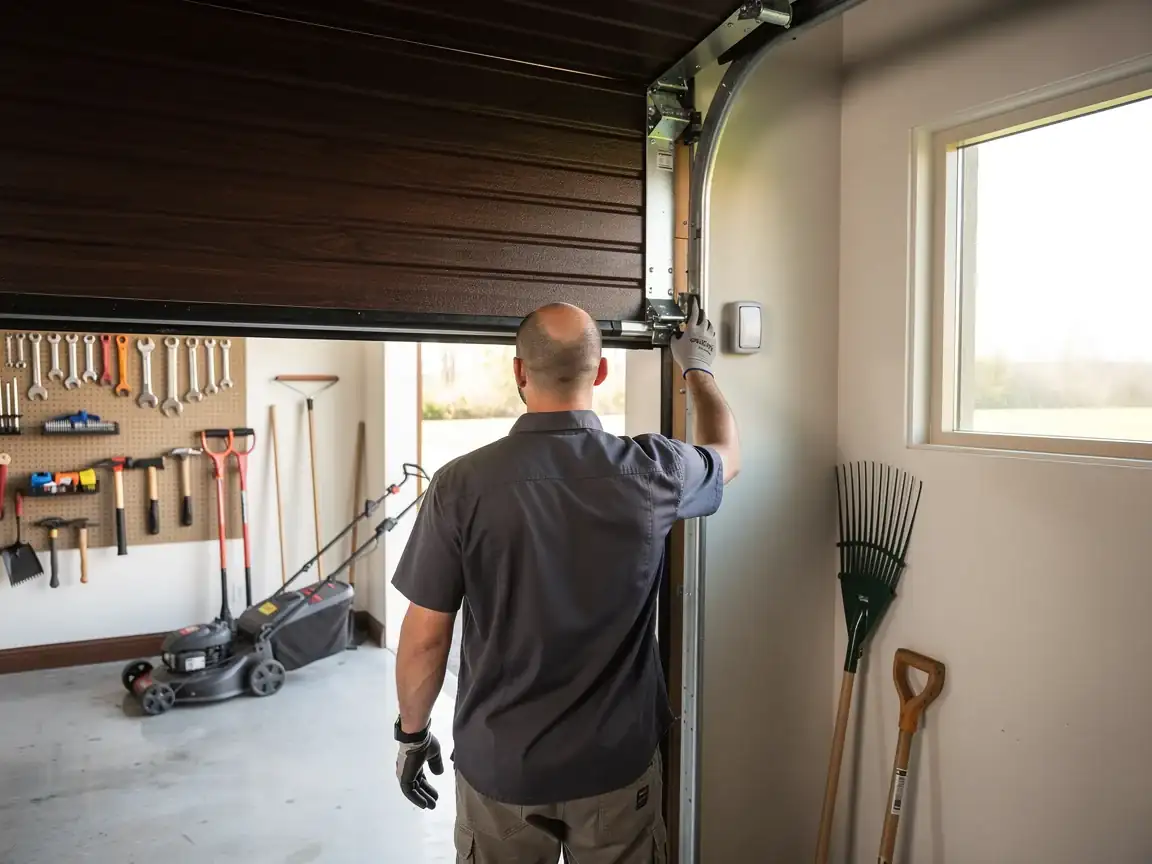
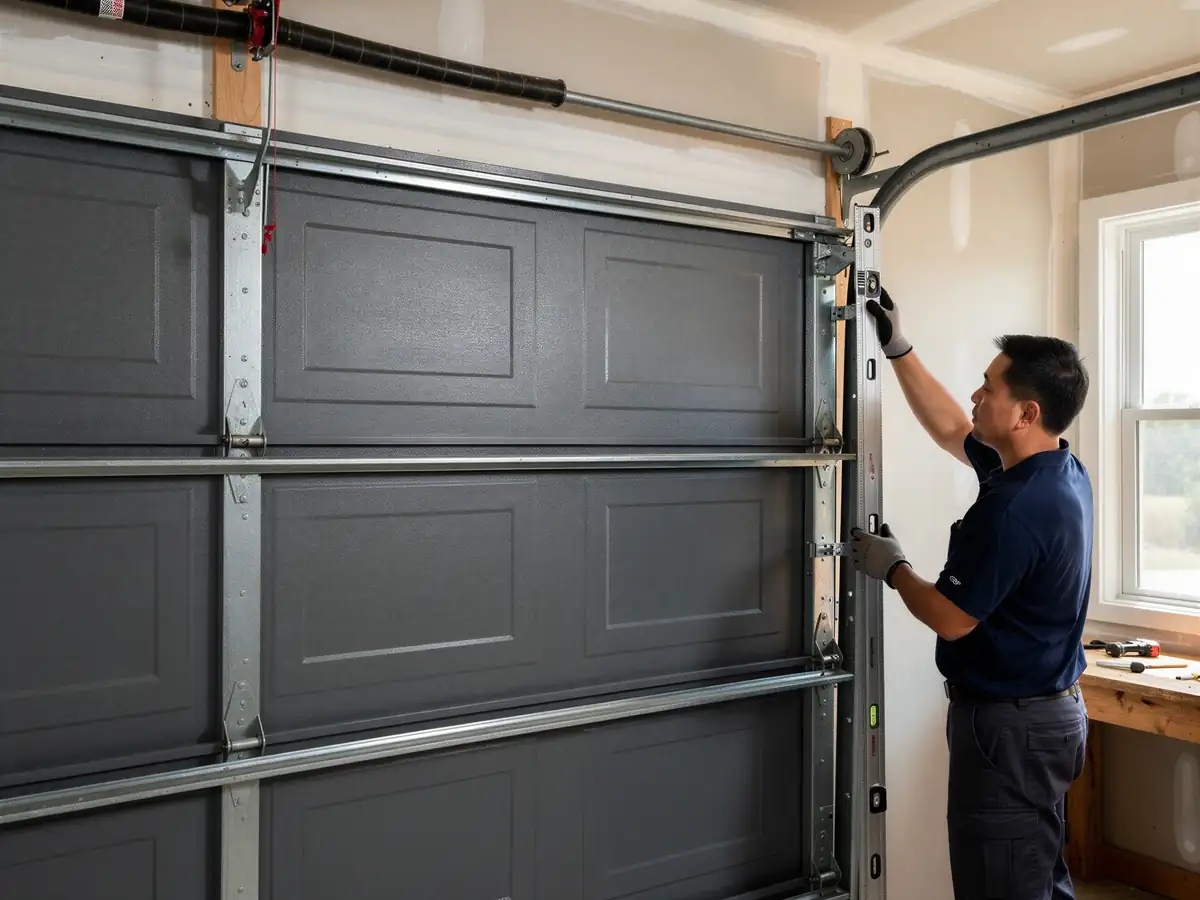
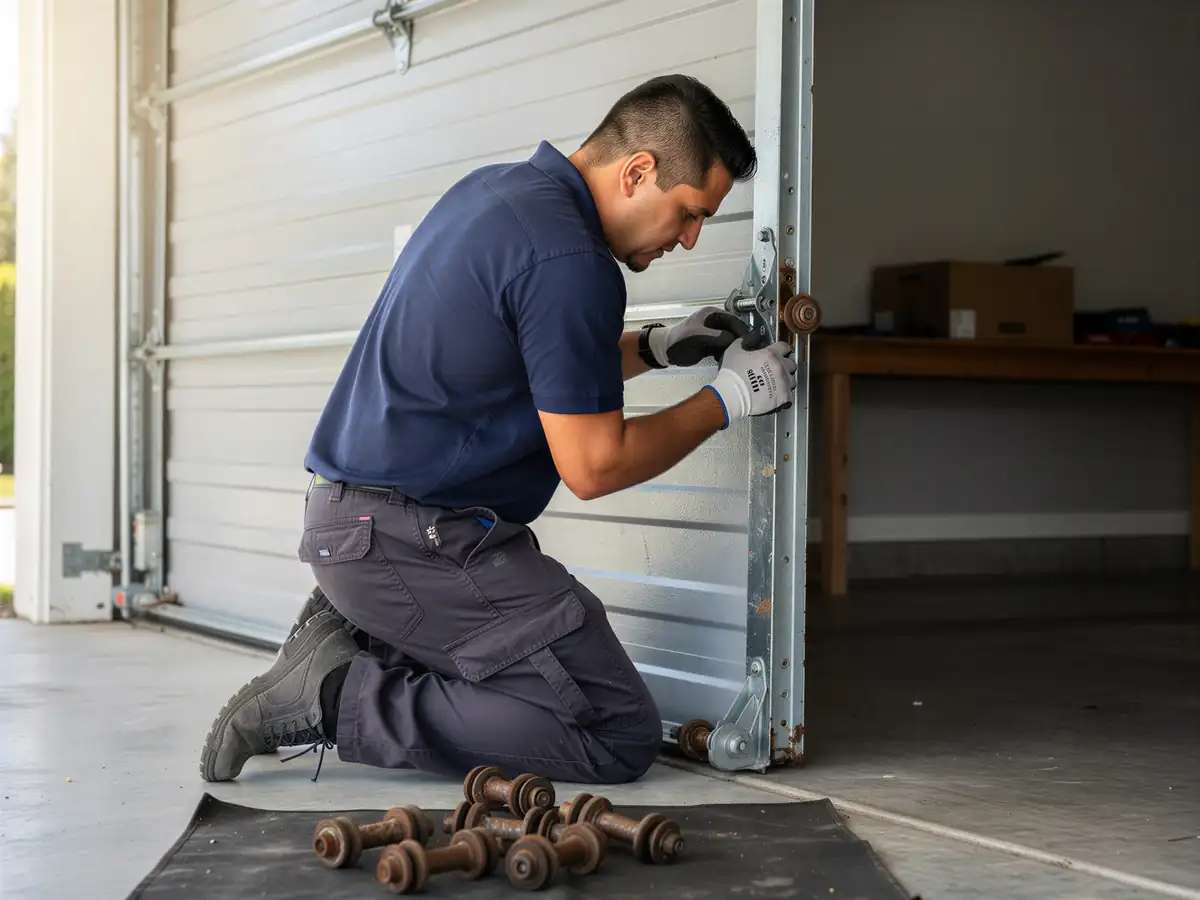
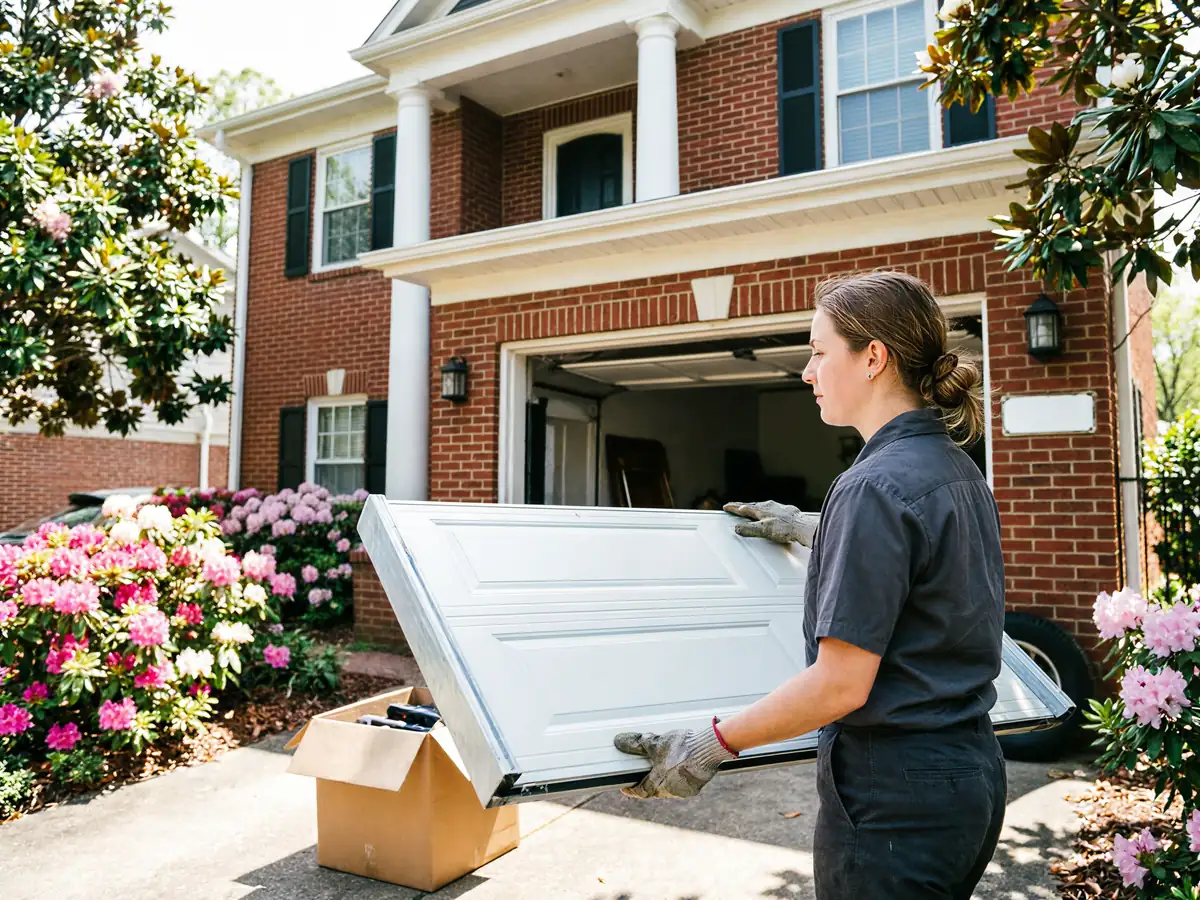
We don't quote a blanket number of hours for a panel swap here, because it depends on what's behind the panel once we pull it. On a door that's held its original hardware since 1972, a straightforward panel swap can turn into a hardware match-up, because the roller carriages and hinges from that era don't always bolt to current stock sections without an adapter. On newer doors in the area built closer to the 1988 median, the job is usually quicker because the hardware is still in common production.
We look at the door before we quote anything, and we tell you upfront if we think you're looking at a panel job or something bigger.
How It Shows Up
On the older end of Falkville's stock
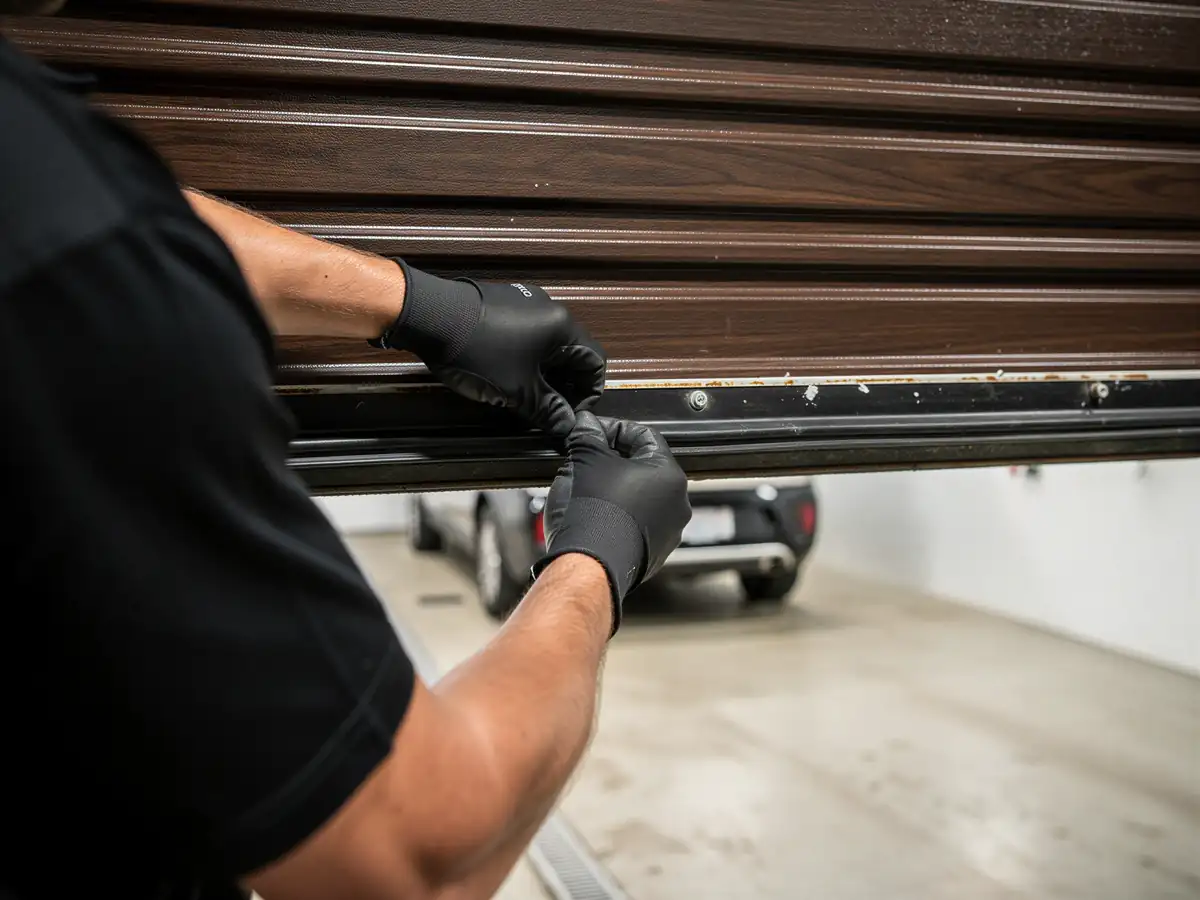
Doors original or close to original to a 1972 build - the usual complaint is a bottom panel that's buckled inward or a middle section with a crease running corner to corner, usually from an impact rather than wear. Steel skins from that era are thinner than what ships today, and they dent instead of flexing back.
The climate here sits in the cold-moderate band
Which means freeze-thaw cycling on any panel seam where water's gotten behind the galvanizing. On a door that's fifty-some years old, that shows up as rust blooming along the bottom panel edge or around the old hinge bolts, sometimes eating through the steel skin from the inside before you see it from the outside.
On newer sections, closer to the service area's 1988 median build year, panel damage tends to be cleaner
A single dented section from a backed-into car or a cracked insulated panel from a hard freeze, rather than the slow rust failure you see on the oldest doors in town.
Can You Do This Yourself
A single panel on a door built close to the service area's 1988 median is often a reasonable DIY swap if you can get the exact matching section. The problem in Falkville is the stock skews older - at a median 1972 build year, a lot of doors here were installed before panel sizing was standardized the way it is now, and the original manufacturer may not even be in business anymore.
We'll say the honest thing: if your door is from that original era and a panel is bent or rusted through, you may not be able to order a true match at any price. In that case a full door replacement often ends up cheaper than hunting down a one-off panel, because custom-matched steel isn't a stock item.
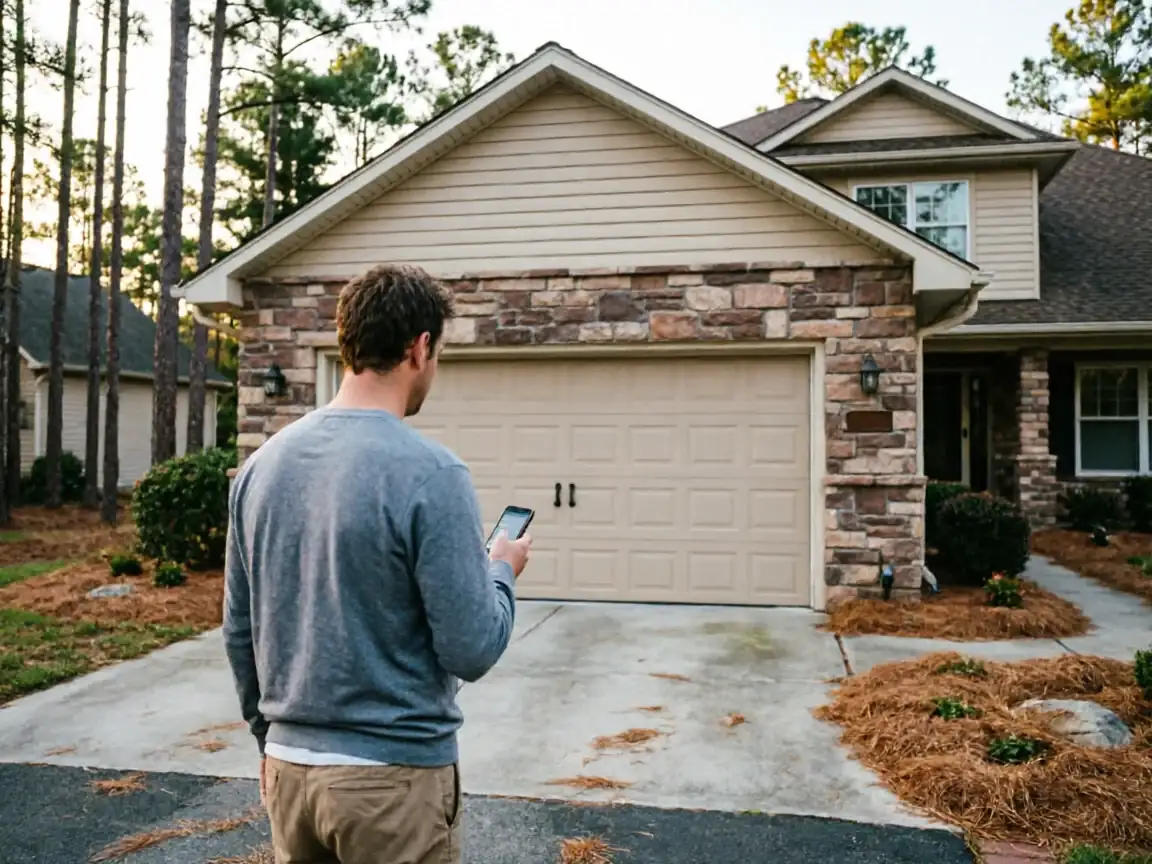
What you can check yourself before calling anyone: pull the bent panel's section number off the inside edge if it's legible, and take a photo of the full door, top to bottom. That tells us in five minutes whether we're looking at a panel job or a door job, before a truck ever leaves Decatur.
What Causes It Around Here
Two things stack on top of each other in Falkville. First, the age of the stock - a median build year of 1972 means a meaningful share of doors in town have been through fifty-plus winters of the cold-moderate freeze-thaw cycle this part of the state gets, which is long enough for galvanized coatings to wear thin at seams and bolt holes.
Second, the household income here runs lower than the service area as a whole - well under the $67,863 median across the territory - which tracks with what we see on inspection: panels patched or painted over rather than replaced at the first sign of rust, which buys time but lets the underlying steel keep deteriorating underneath the paint.
Neither of those is a knock on the town. It's just the combination - older housing stock plus a climate that doesn't let steel sit idle - that produces more rust-driven panel failures here than you'd see on the newer builds closer to the service area's 1988 median.
Getting It Booked In
Falkville sits about 14 miles out from the Decatur shop
The same rough distance as Somerville and Triana on the other sides of the territory. We don't run a branch or depot in Falkville - every job here is a truck coming out from Decatur, so we schedule panel jobs by what the inspection photos show rather than by guessing at drive time.
- 14 miles
If you want the general rundown on what we cover in town
Falkville Garage Doors has that. If your door turns out to need more than a panel - full replacement rather than a match-up - the panel replacement page for the Decatur service area covers how that decision gets made and what it generally involves.
Send us photos of the panel and the door overall before we come out
On a door this old, that one step usually saves a wasted trip.