What Causes It Around Here
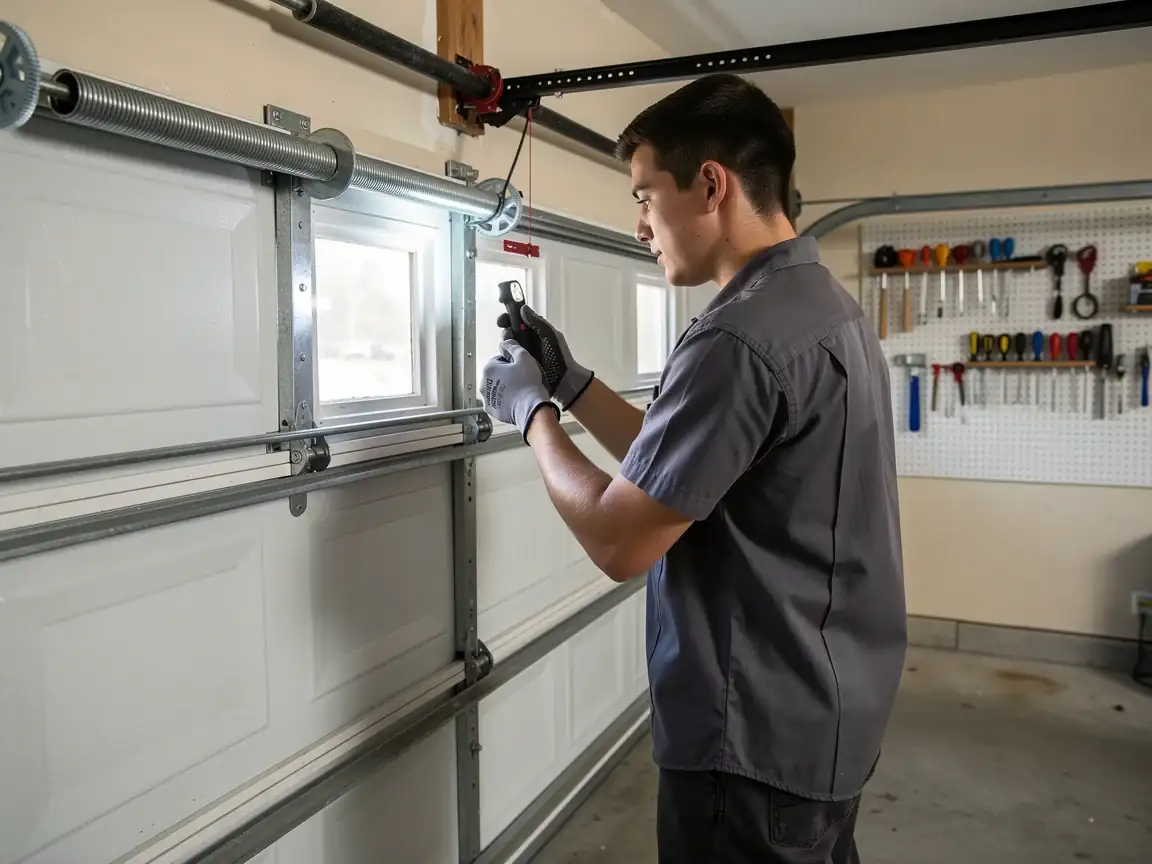
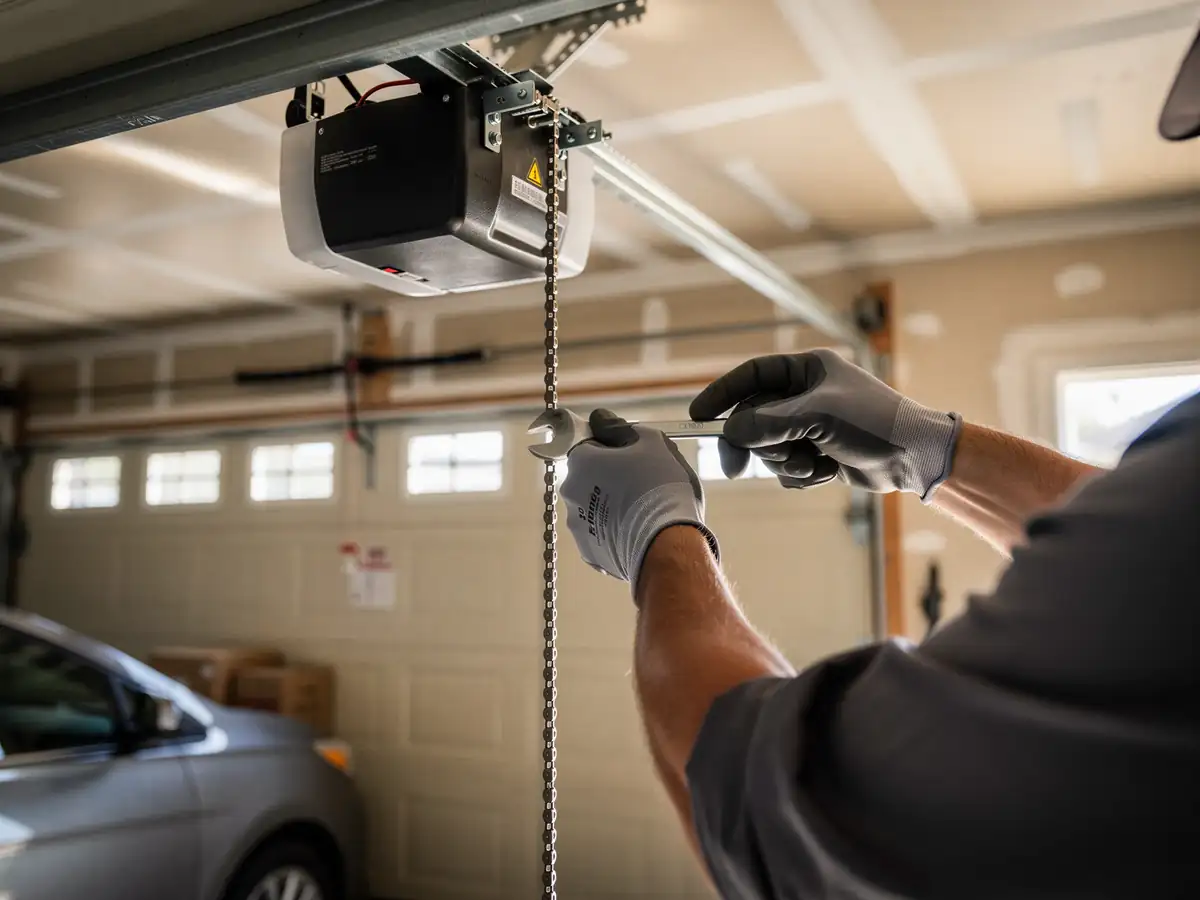
Most of the houses we get called to were built between 1972 and 2012, with the median landing around 1988. That matters for openers because a unit installed when a house was new is now anywhere from fifteen to thirty-plus years old, and chain and belt drives from that era just don't last forever. The nylon drive gear inside the motor housing is usually the first thing to go - it's a wear part by design, and nobody expects it to outlive the house.
The area sits in a cold-moderate climate band, which means winter temperature swings put real stress on these aging gears and on the lubricant inside the gearbox. Grease that's thickened from age doesn't flow the way it should when the temperature drops, and a gear that was already worn thin can finally crack under that extra load. We see a real jump in dead-opener calls after the first hard cold snap of the season, every year, for exactly this reason.
Across the seven areas that make up this stock - mostly 1980s and 90s construction - the pattern repeats: original or first-replacement openers reaching the point where the motor runs but the door doesn't move, or moves and then stops partway. It's not bad luck. It's the math of a housing stock that's now mostly 30 to 50 years old.
How It Shows Up
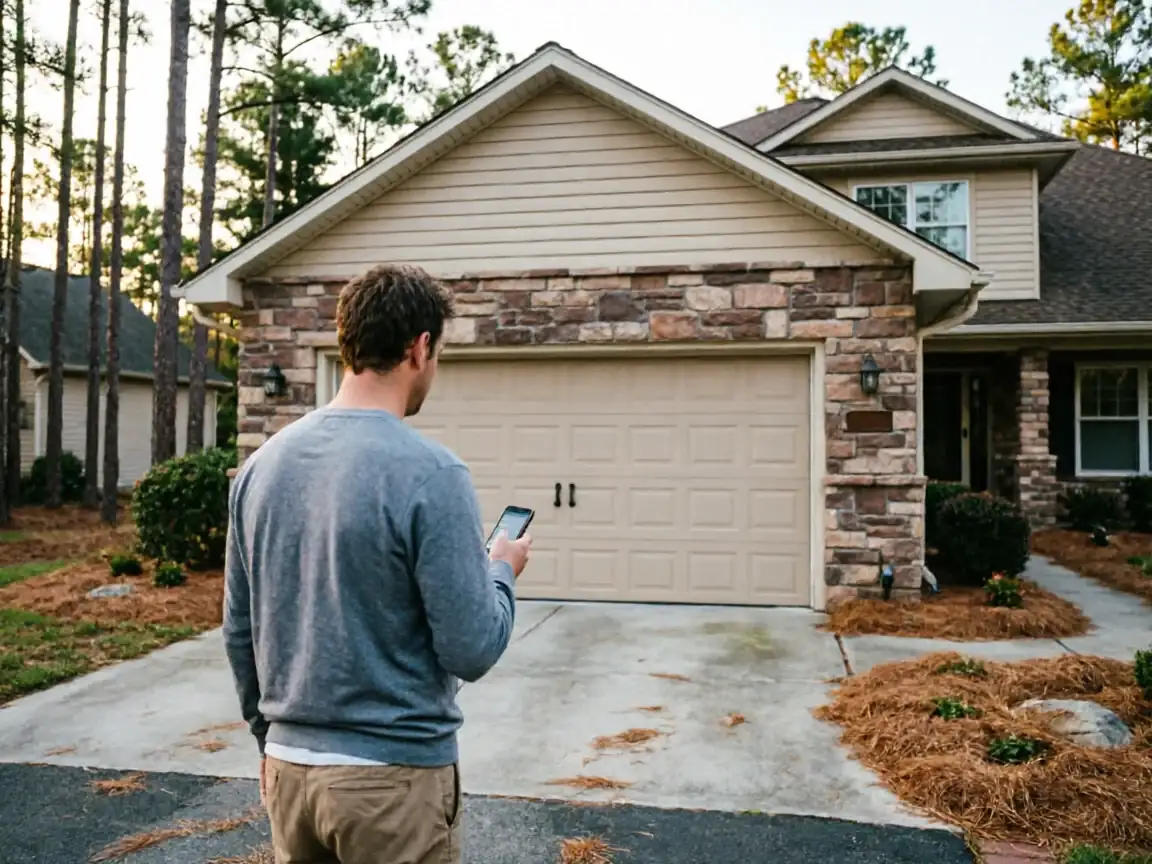
The most common call is a door that won't respond to the remote or wall button at all
No light, no hum, nothing. That's usually a tripped breaker, a dead circuit board, or in older units, a burned-out capacitor. Next most common: the motor runs, you hear it working, but the door doesn't move. That's almost always the drive gear we talked about - it's stripped, and the carriage just spins in place without grabbing the chain or belt.
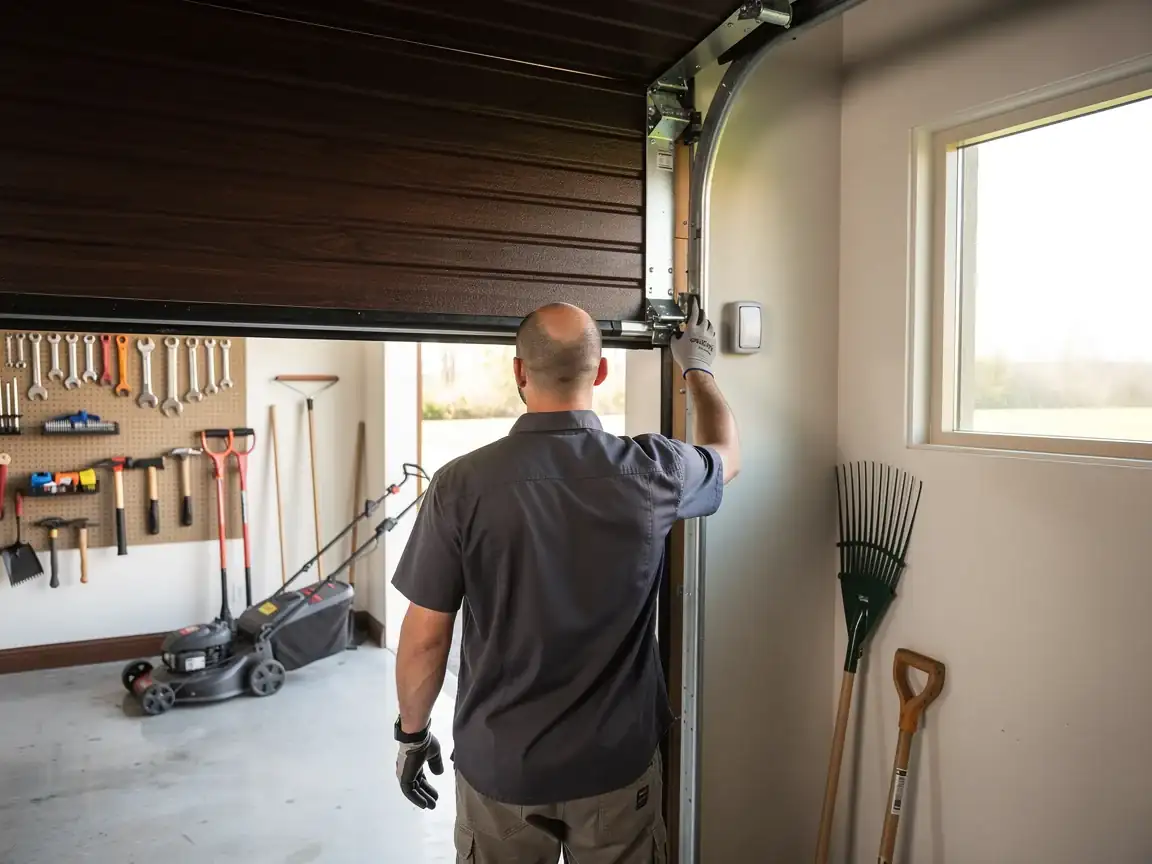
Then there's the door that reverses before it closes, or stops a few inches off the floor
On openers from the 1990s and early 2000s, this is often a misaligned or dirty photo-eye sensor, sometimes just a cobweb or a sun-glare issue, sometimes a sensor that's actually failing internally. Newer units with circuit boards can throw the same symptom from a board fault, which looks identical to a sensor problem from the homeowner's side of things but needs a different fix.
Less often, we get a door that opens fine but won't close from the remote
Only from the wall button. That points to a logic board or remote programming issue rather than anything mechanical. None of these are guesswork calls; each symptom narrows down to a short list of likely causes before a truck even shows up, which is also why phone diagnosis only gets you so far.
The Cost of This Job
We don't have a flat number to quote here, because opener repair isn't one job - it's whichever of the faults above you've actually got, and that drives the parts list. A stripped gear kit is a different job than a circuit board swap, and a circuit board swap is a different job than sensor realignment. What we can tell you is that most of these repairs cost less than replacing the opener outright, which is the first question worth asking before you commit to anything.
Given a median household income of $67,863 across this service area, most of the calls we get are owners who want the actual failed part fixed or swapped, not a wholesale unit replacement they didn't budget for. That's usually the right instinct. An opener motor itself tends to outlast the gears and boards around it, so replacing just the worn component is often the more sensible call.
Honest limitation: if your opener is old enough that the manufacturer doesn't make parts for it anymore, repair stops being the cheaper option and we'll tell you that on the spot rather than stringing out a repair that won't hold. That's not common, but it happens on units from the earlier end of the building range here.
Getting It Booked In
If your opener has gone quiet, is grinding without moving the door, or is reversing on its own, that's enough information to start the call - you don't need to diagnose it yourself first. We cover Decatur and the surrounding area out to Trinity, Priceville, Hartselle, Somerville, Triana, Falkville, and as far as Moulton, which sits at the far edge of where we run calls.
Across the roughly 11,609 households and 8,352 owner-occupied houses in this service area, opener failures follow the same handful of patterns described above, so a short phone description - what the door does, what sound it makes, whether the light comes on - usually gets a tech to your door with the right parts already loaded, rather than a second trip after a wrong guess.
Head back to the home page for the full list of what we work on, including spring and track repair, if the opener isn't actually the issue once we take a look.