What Causes It Around Here
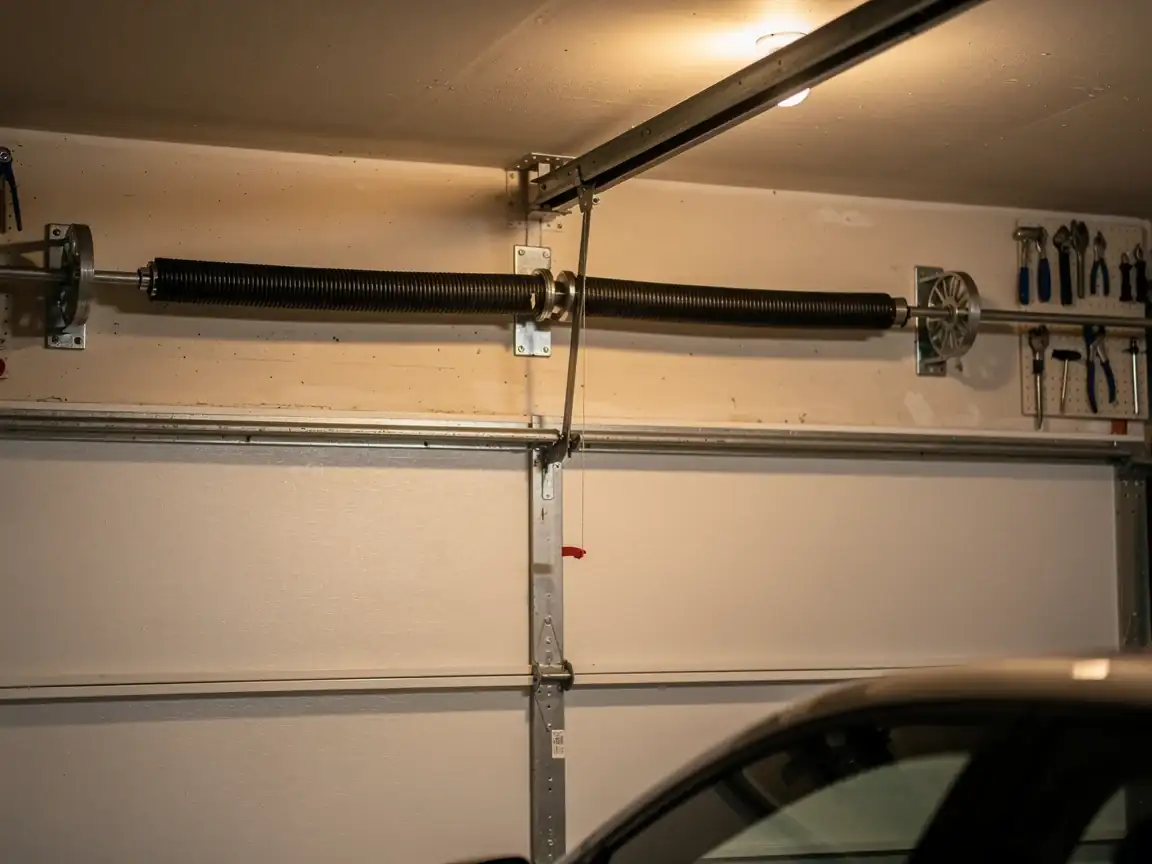
Most of the housing stock across this service area went up between 1972 and 2012, with the bulk of it dating to the 1980s and 90s. That matters for maintenance because a door installed in 1985 is still on its original torsion spring cycle count if nobody's touched it, and the opener behind it is likely a second or third unit bolted onto hardware that's never been upgraded. Springs are rated for a number of open-close cycles, not years, and a 30-plus year old door has usually burned through that rating twice over without anyone noticing until it snaps.
The cold moderate climate band this area sits in adds a second layer to it. Winter cold snaps tighten steel, stiffen lubricant, and shrink weatherstripping, so a spring that's already fatigued from age gets the extra stress of contracting metal right when it's least flexible. Doors that work fine in October start binding, screeching, or refusing to reverse once temperatures drop. None of this is dramatic - it's just wear that shows up faster here than it would in a milder climate, because the housing age and the winter swings are both working against the same hardware at the same time.
How It Shows Up
The first sign is usually noise
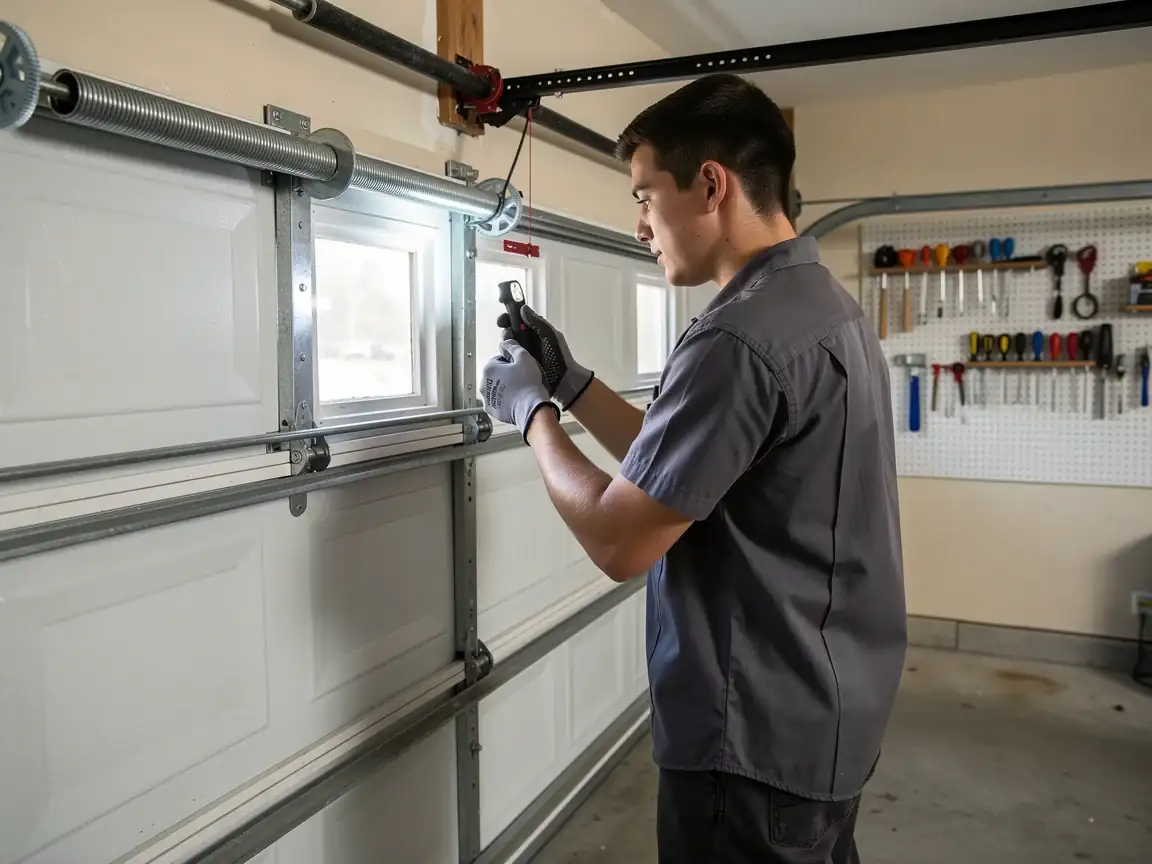
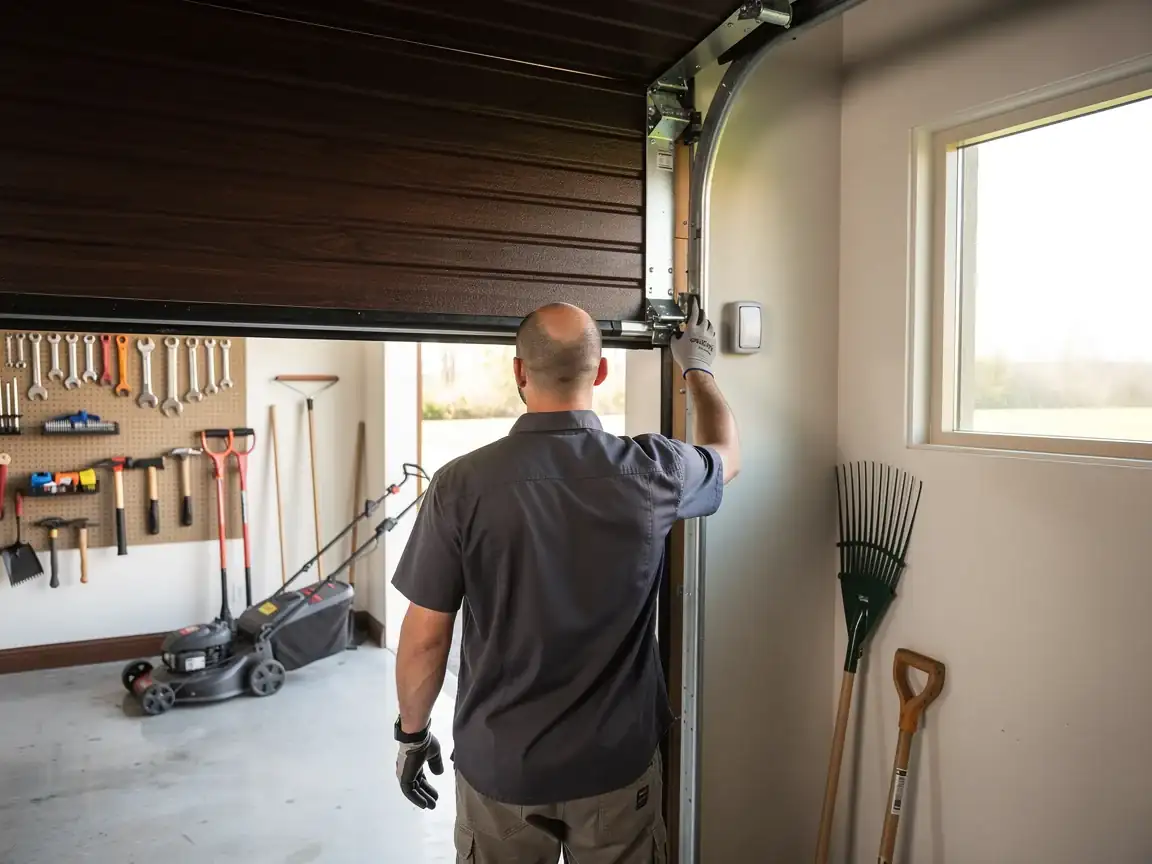
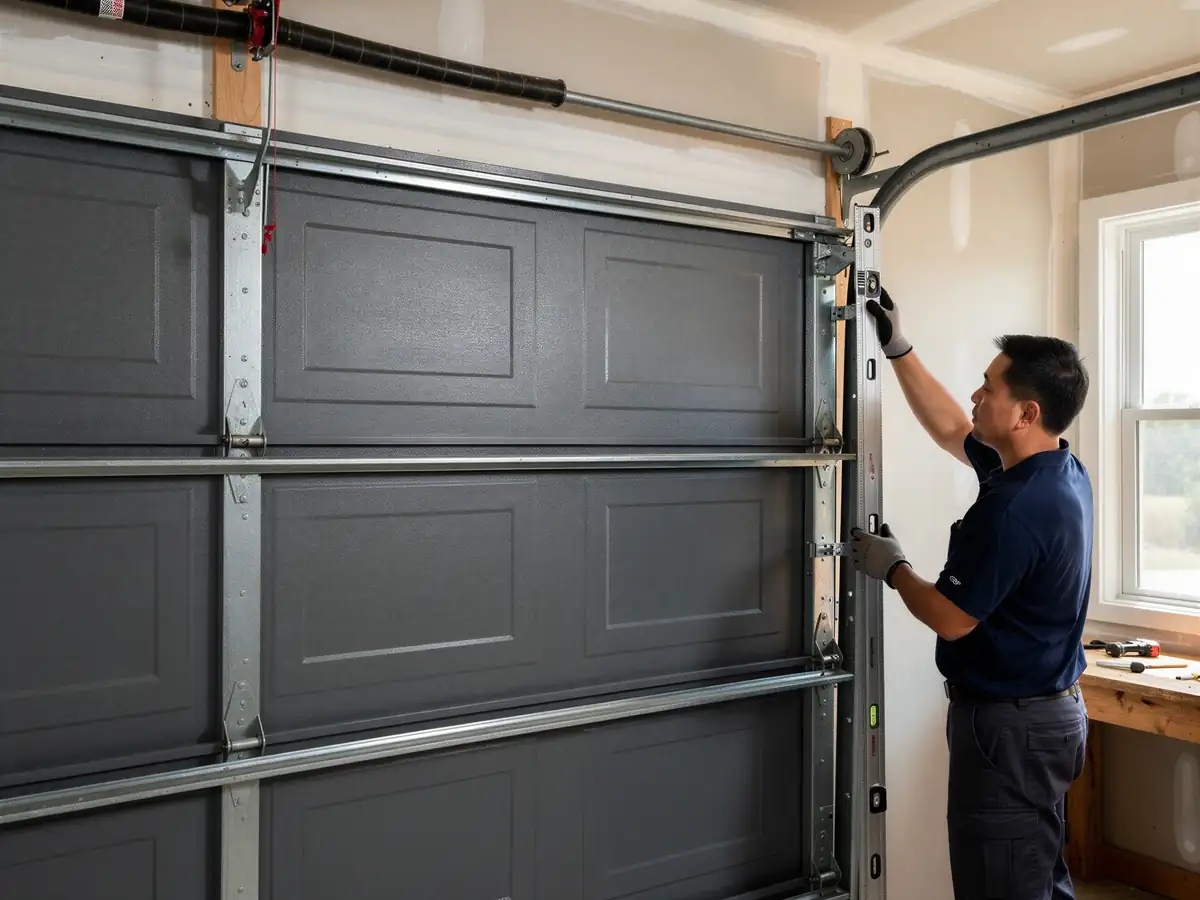
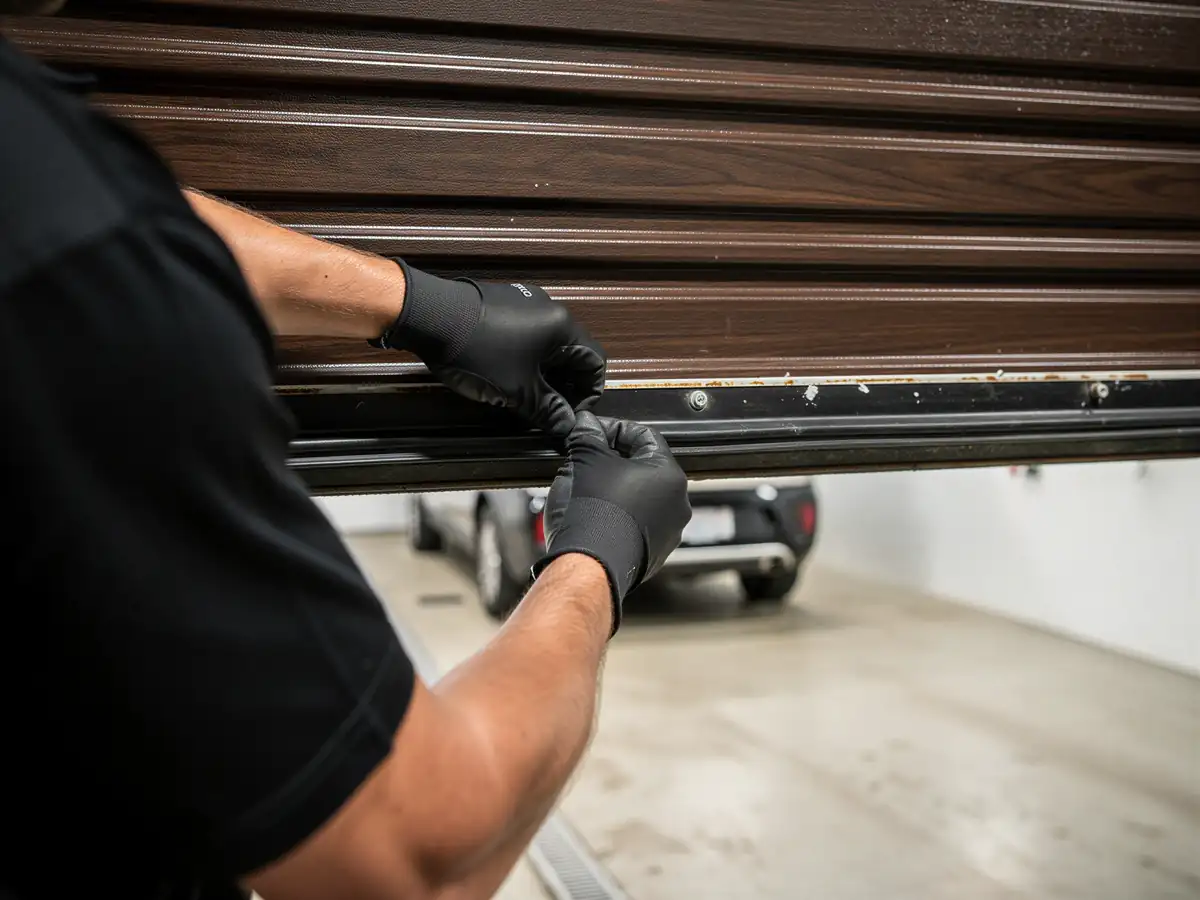
A grinding or popping on the way up that wasn't there a year ago. That's often a roller losing its bearing or a spring starting to lose tension unevenly on one side of the door. Next comes a door that looks like it's racking, meaning one side lags the other as it travels, which is a track alignment or cable problem more than a spring one.
On older openers, you'll see the safety reverse get lazy
The door bumps something and keeps closing for a beat before it kicks back up. That's a sensor or force-adjustment issue, and on hardware pushing 20-plus years it's not always a simple fix since parts for some of those older chain-drive units aren't made anymore.
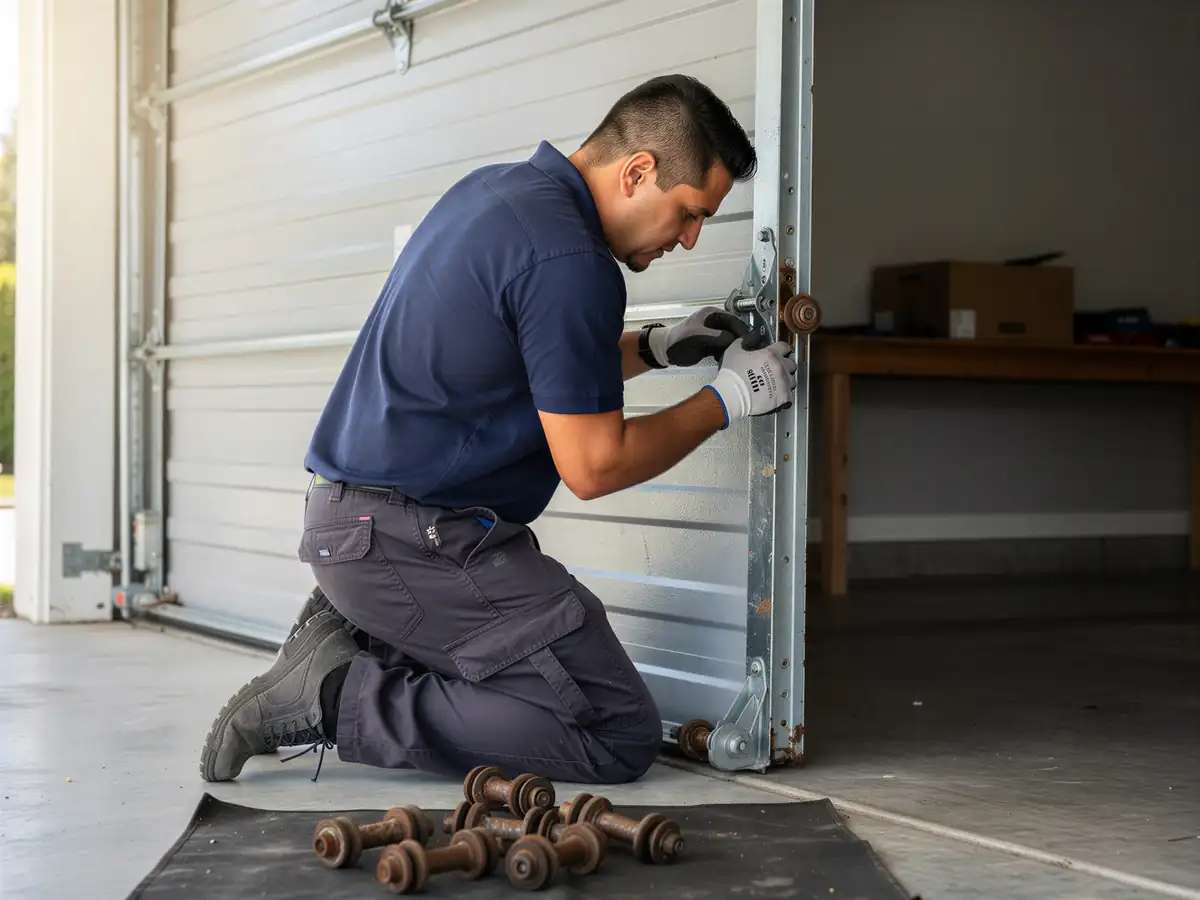
In houses built in that 1980s-90s window specifically, a common one is the torsion spring just letting go
A loud bang, the door won't lift, and the opener strains against dead weight until it burns out trying. That's the failure maintenance is meant to catch before it happens, not after.
The Cost of This Job
We don't have a flat number to put here because the job depends on what's actually worn - a lubrication and adjustment visit is a different scope than replacing a fatigued spring or swapping out failing rollers and cables. What we can tell you is that across this service area, with a median household income around $67,863, most owners are making a call between a maintenance visit now and a bigger repair bill later, and the math usually favors catching it early.
One honest limitation: if your opener is old enough that replacement parts are discontinued, maintenance can only do so much. At some point patching a 25-year-old unit costs more over time than replacing it, and we'll tell you straight if that's where your door is instead of running up a bill on a system that's done.
Getting It Booked In
This service covers the full area - Trinity (6 miles out), Priceville (7 miles), Hartselle (10 miles), Somerville and Triana (14 miles each), Falkville (14 miles), and Moulton (18 miles) - plus the roughly 8,352 owner-occupied houses closer in. If your house falls in that 1972-2012 build window, which covers most of the stock around here, a maintenance visit is worth scheduling before winter rather than after a spring lets go on a cold morning.
Head to the homepage to get in touch and set up a visit.