The Situation
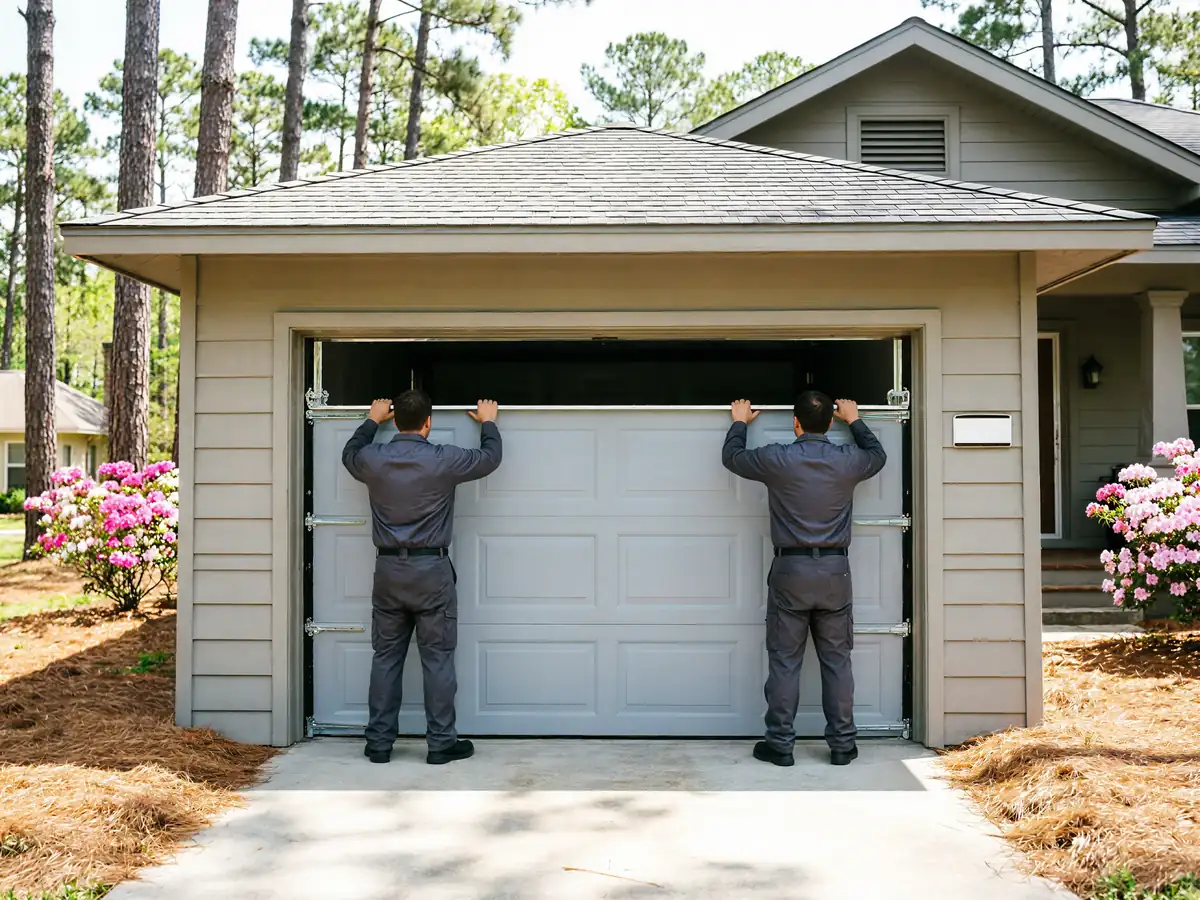
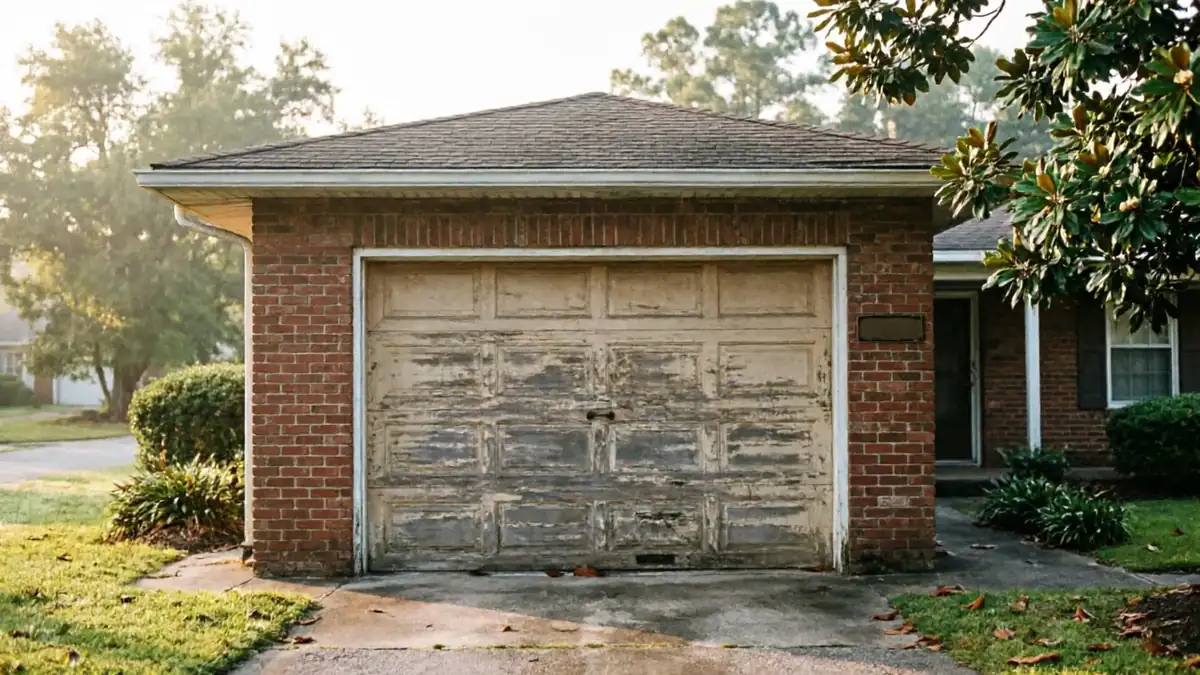
Most of the garage doors we work on in the Decatur service area went up somewhere between 1972 and 2012, with the median build year landing around 1988. Across the seven named areas this shop covers, the bulk of the stock is pure 1980s and 90s construction - tract-built, two-car garages, sectional steel doors on torsion springs that were standard for that era. That means a huge share of the doors we see aren't ancient, but they aren't new either. They're at the age where the original spring has done its working life, the rollers are the plastic kind that were cheap to install in 1991, and the opener, if it's original, predates modern safety sensors.
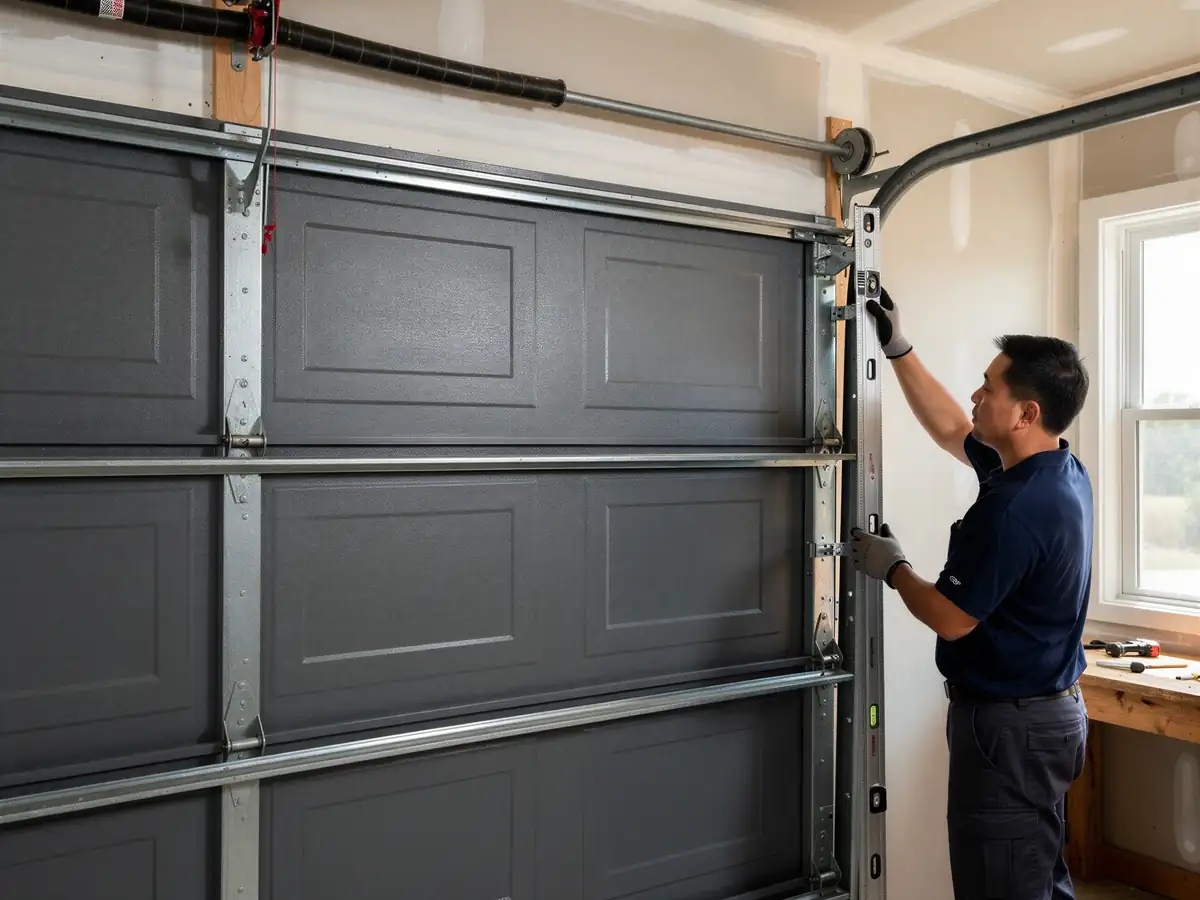
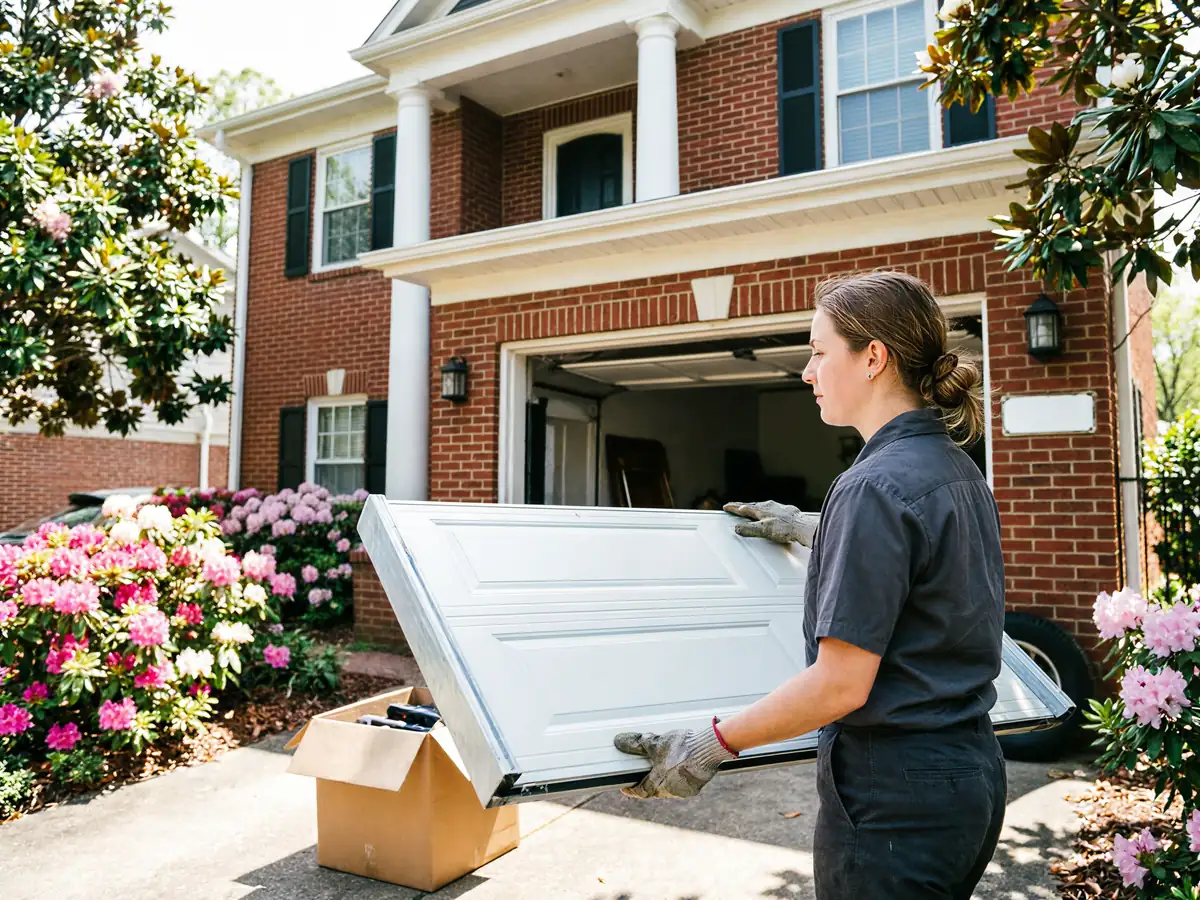
Whether a door like that is worth fixing comes down to what's actually failed. A spring, a cable, a set of rollers, even a bent bottom panel - those are repairs. A rusted-through track on a door that's been limping for years, or a frame that's racked from a bad DIY spring swap, usually isn't.
What Changes With the Season
Decatur falls in a cold-moderate climate band
Which means winter isn't brutal but it isn't mild either. That matters more for an older door than people expect. Steel contracts in cold air, and a torsion spring that's already stretched thin from twenty-plus years of cycling loses tension faster once the temperature drops overnight. We see it every year: a door that opened fine in October starts dragging or won't fully close by January, not because anything broke outright but because the hardware is finally giving up at the point of least resistance.
Lubricant thickens too
Grease that was fine in summer humidity turns gummy in a cold garage, which puts extra load on an opener motor that's already older than it should be. None of this means you need a new door every winter. It means a spring or hinge that's borderline in September is worth replacing before the first cold snap, not after it fails on you.
Checking It Yourself
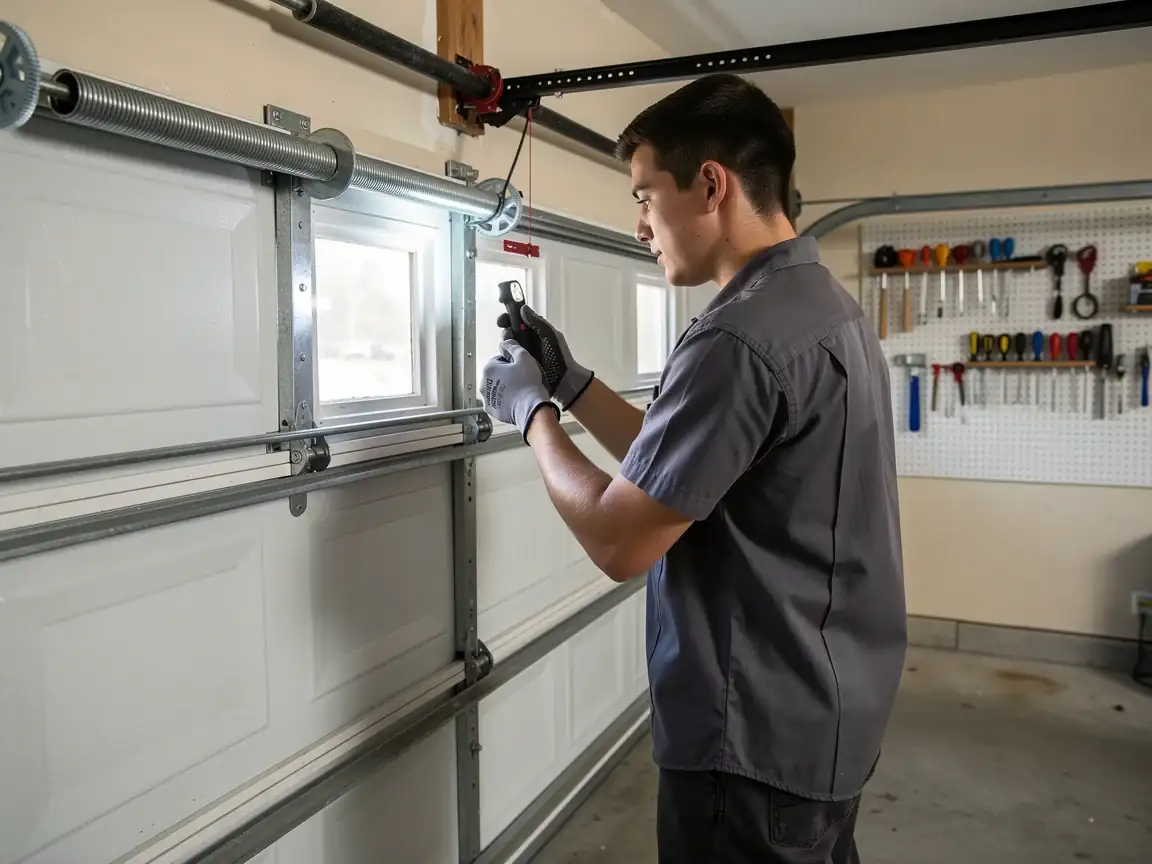
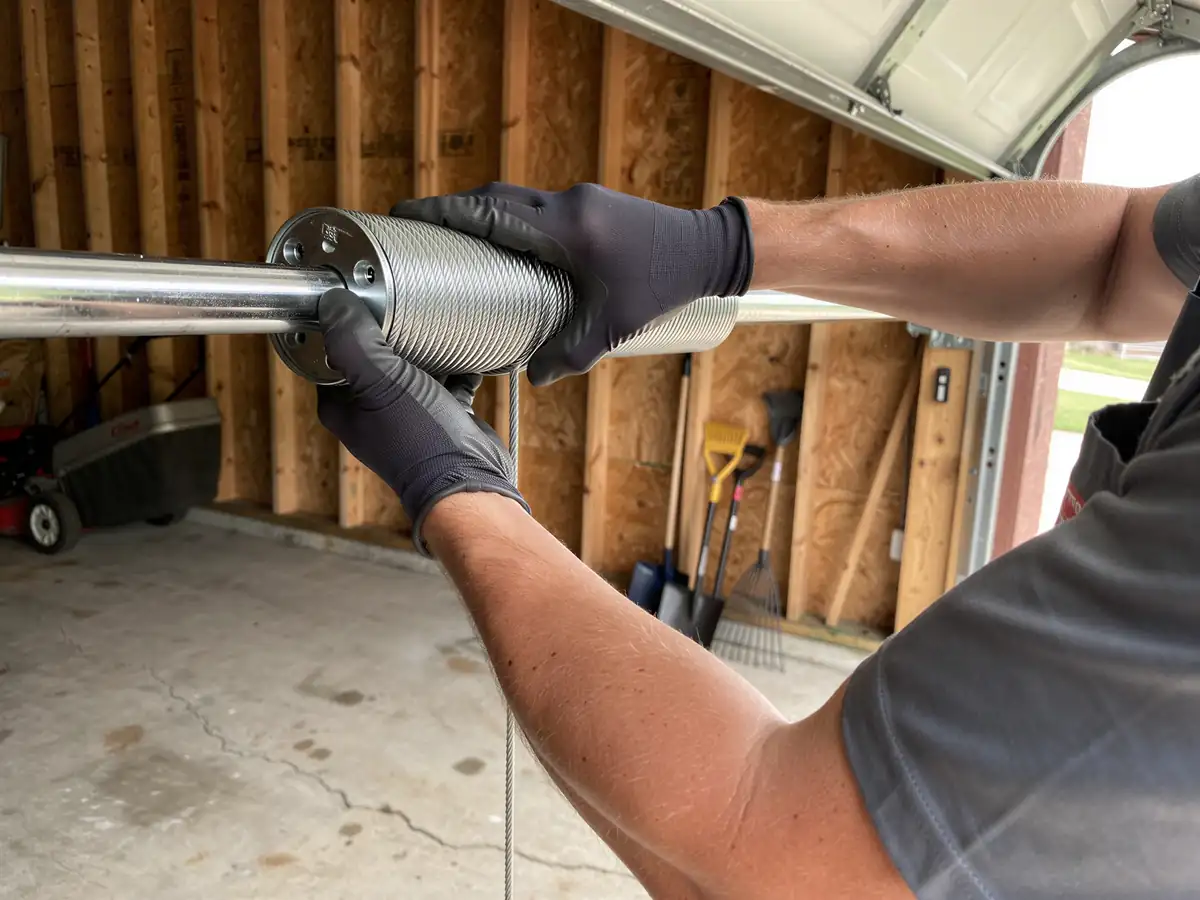
Start with the balance test: disconnect the opener, lift the door halfway by hand, and let go. It should sit there. If it drops or shoots up, the spring is off, and that's a repair call, not a DIY spring job - torsion springs can take a hand off.
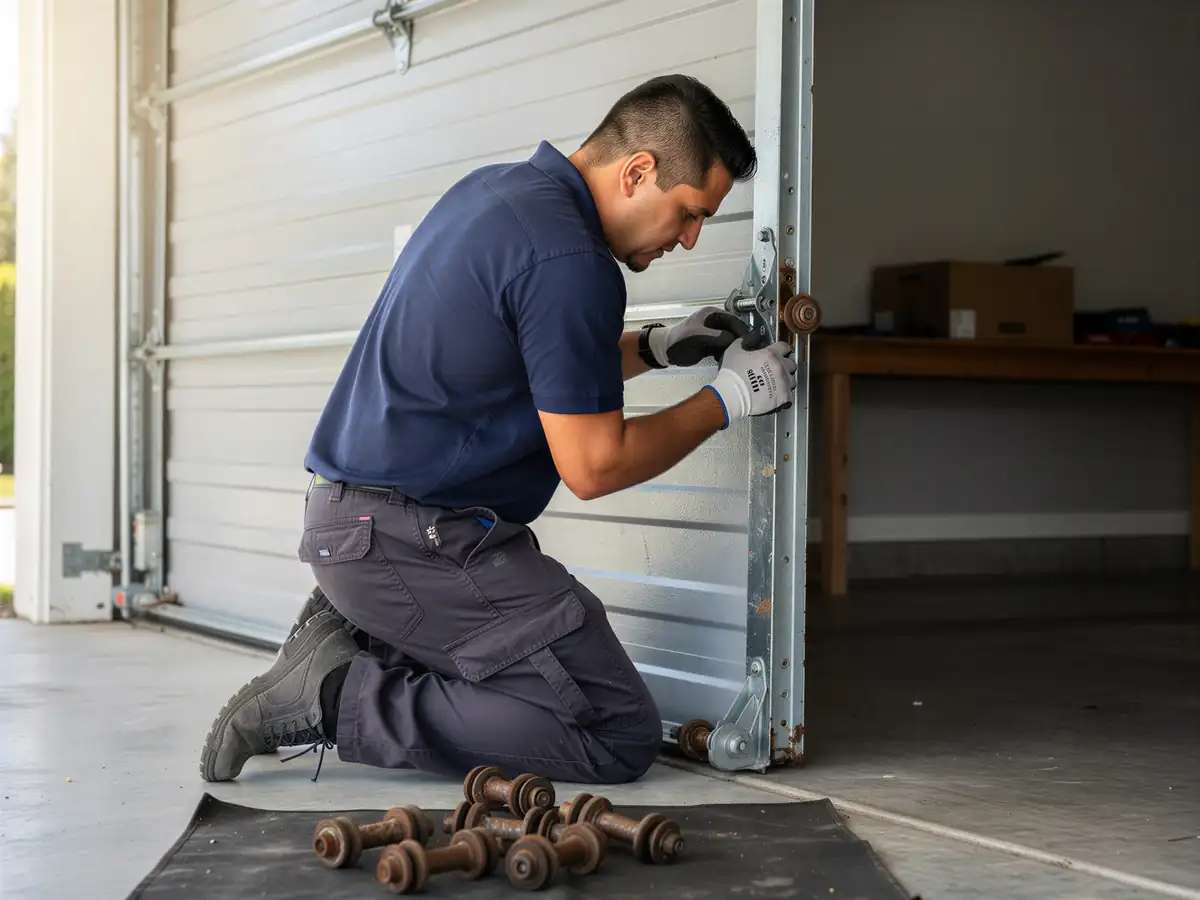
Look at the rollers next. On doors from the 1980s and 90s stock common around here, the original rollers are usually nylon or plastic, and after thirty years they're often chipped, flat-sided, or seized in the bracket. That's cheap to fix and worth doing.
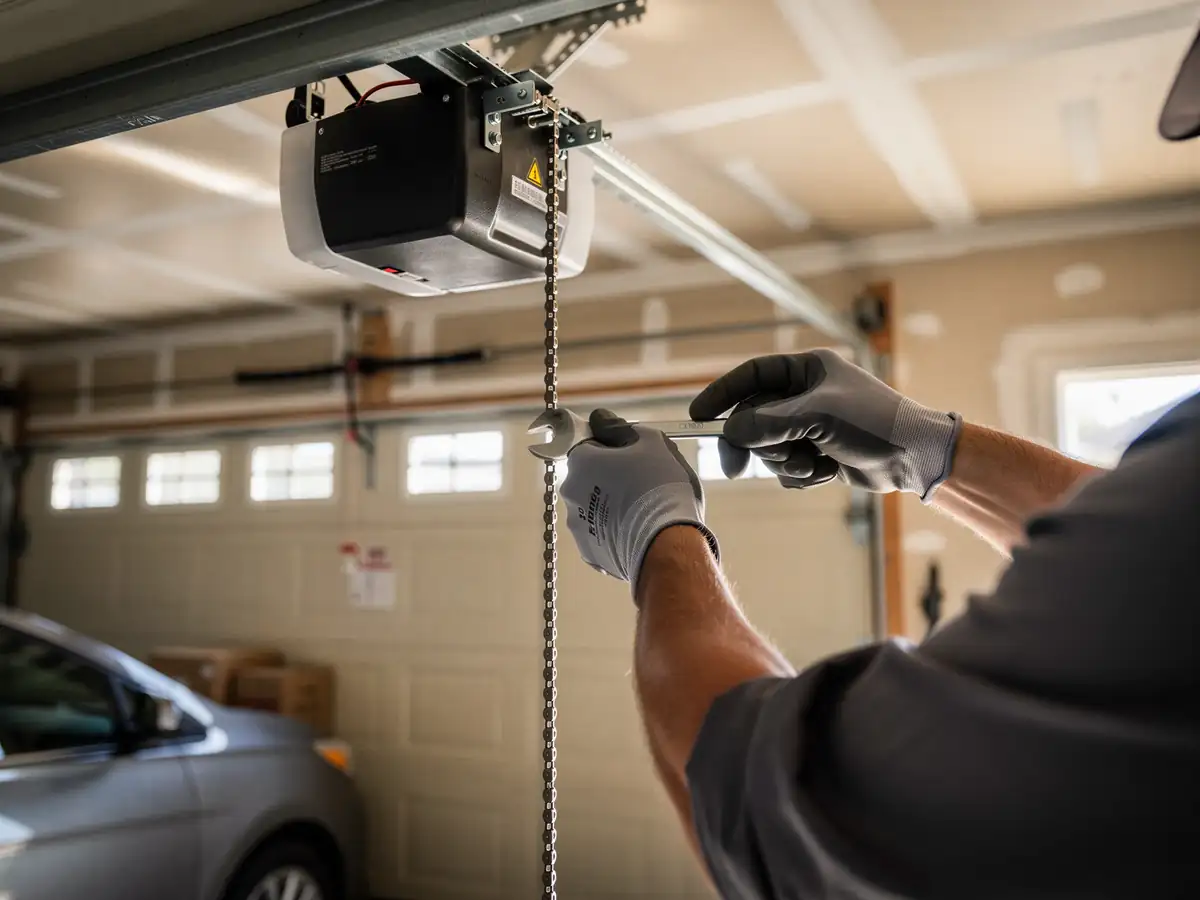
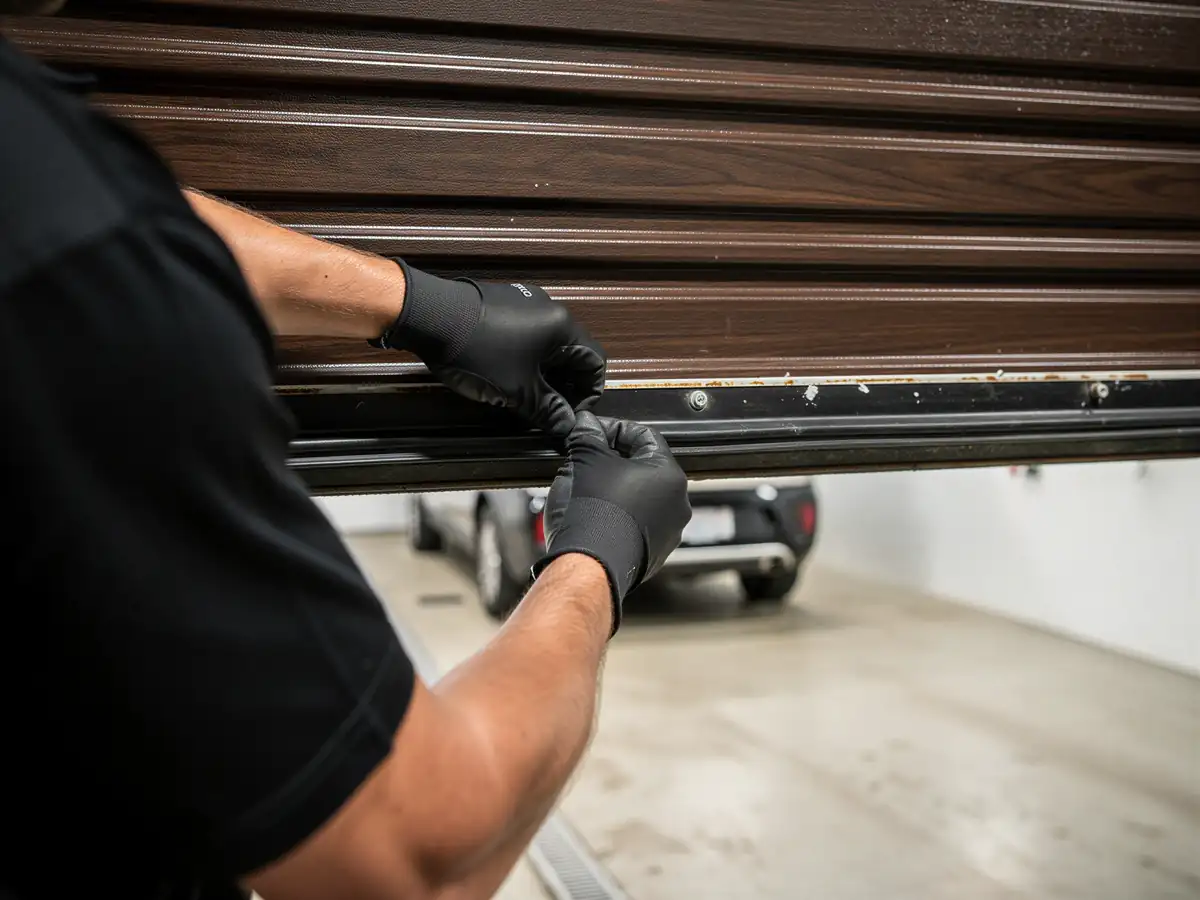
Check the bottom panel and the track for rust pitting, especially near the floor, since that's where condensation sits longest. A little surface rust is normal for a door this age. Rust that's eaten through the steel, or a track that's visibly bowed, points toward replacement instead of another patch. If the opener still has a manual reverse only - no electric eye - it predates the current standard and is worth flagging even if it still runs fine.
How Local Conditions Play In
We cover Decatur and the towns around it - Trinity about six miles out, Priceville around seven, Hartselle closer to ten, with Somerville, Triana, and Falkville a bit farther at fourteen, and Moulton out at eighteen. That spread matters for parts: a common torsion spring size we can grab off the truck, but an odd-ball opener gear or a discontinued panel profile might mean a day's wait, and we'll tell you that up front instead of guessing.
On the money side, median household income in this area runs around $67,863, which puts a full door-and-opener replacement in different territory than a smaller spring repair. We'd rather fix what's fixable on a door with another ten years in it than sell a replacement a homeowner doesn't need yet.
The honest limit here: if the door's steel skin is already failing in more than one place, patching it becomes false economy, and we'll say so instead of running up a repair bill on a door that's done.