What Neighbours Usually Call About
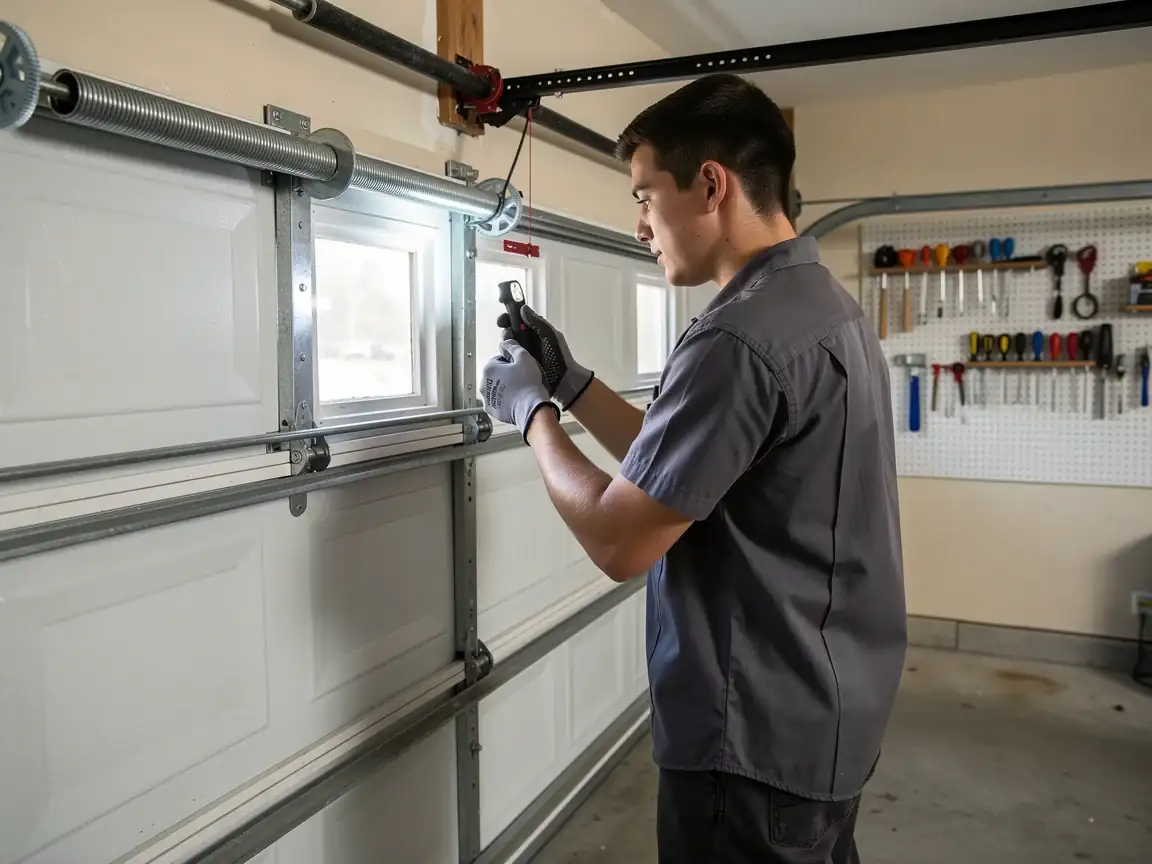
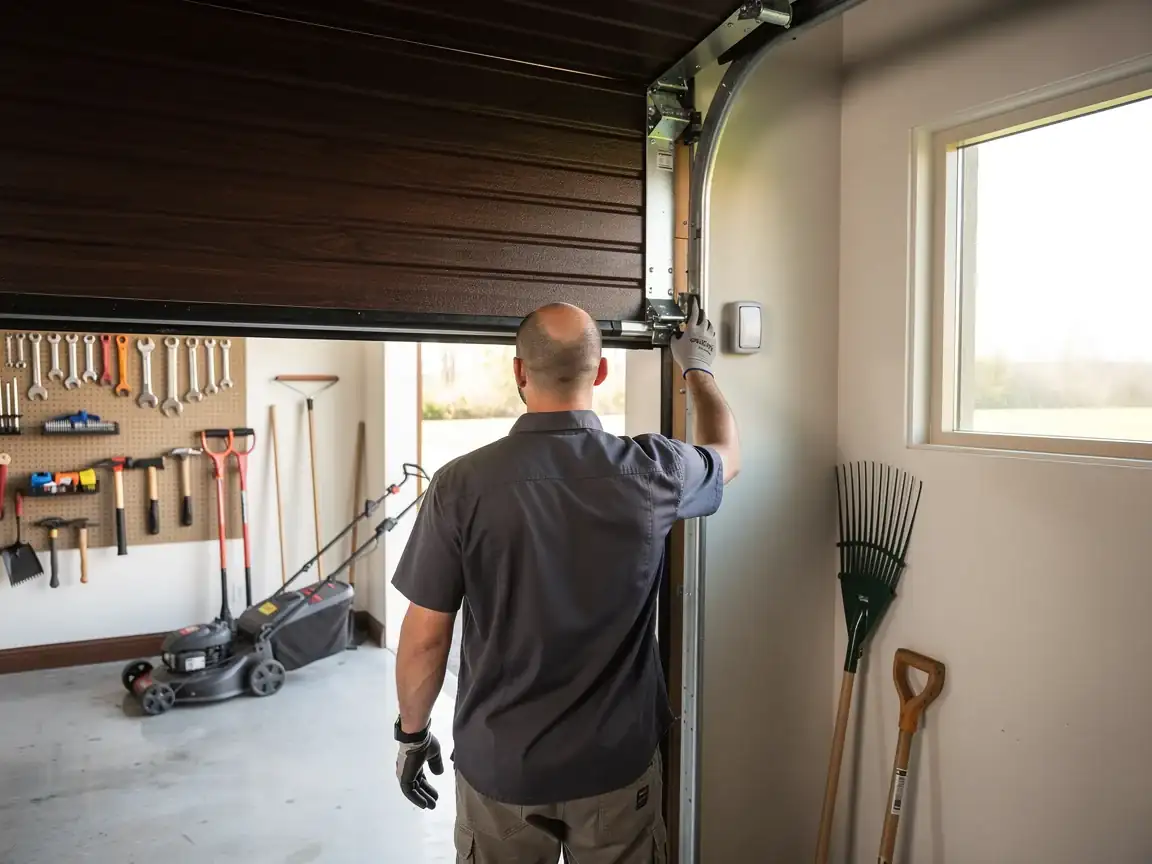
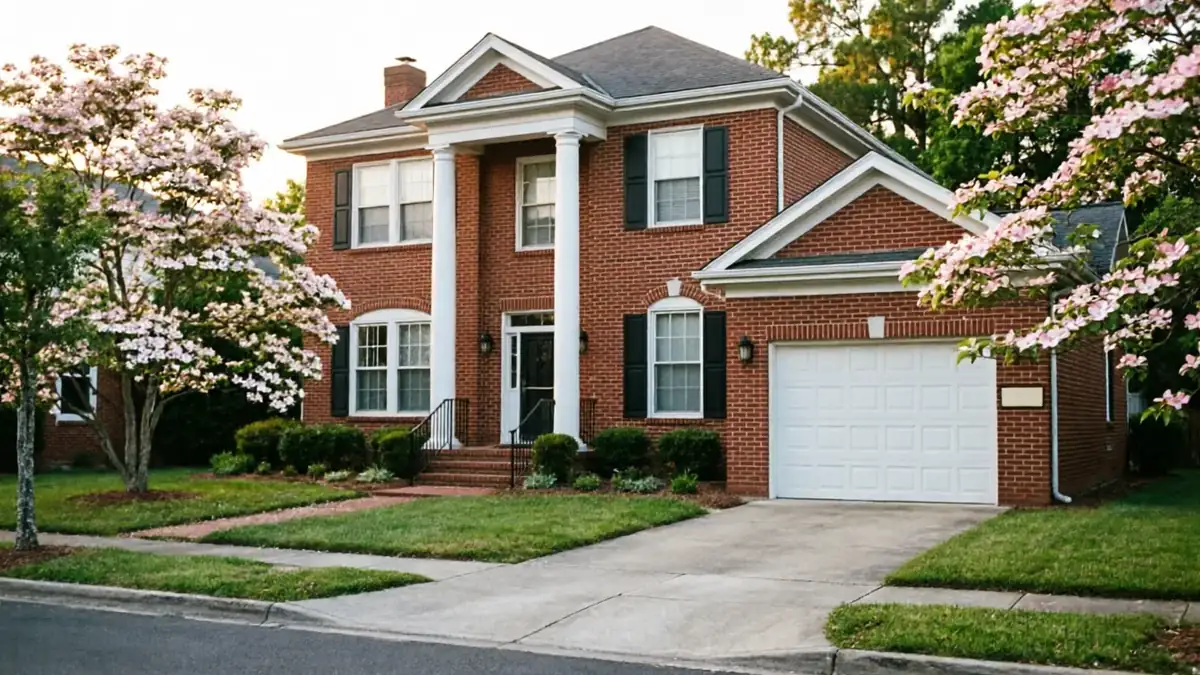
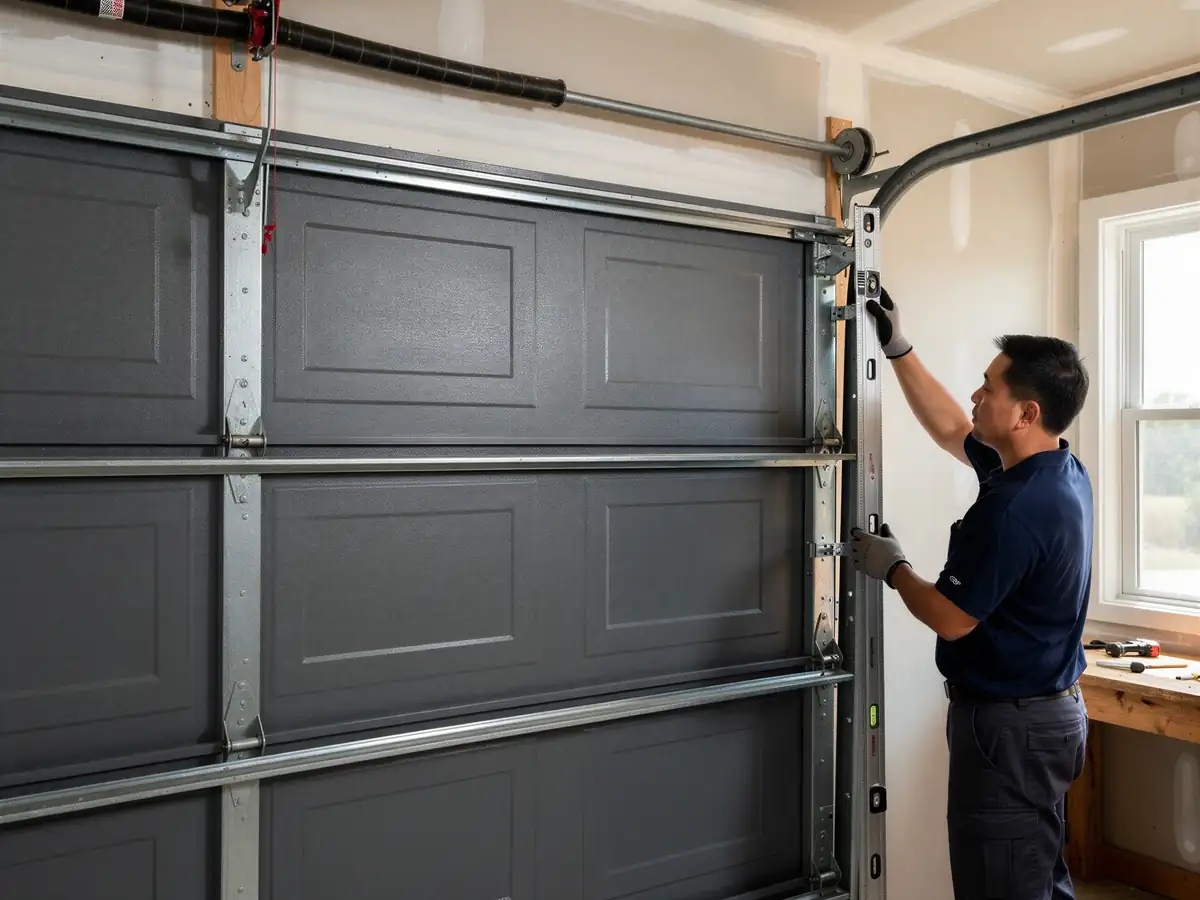
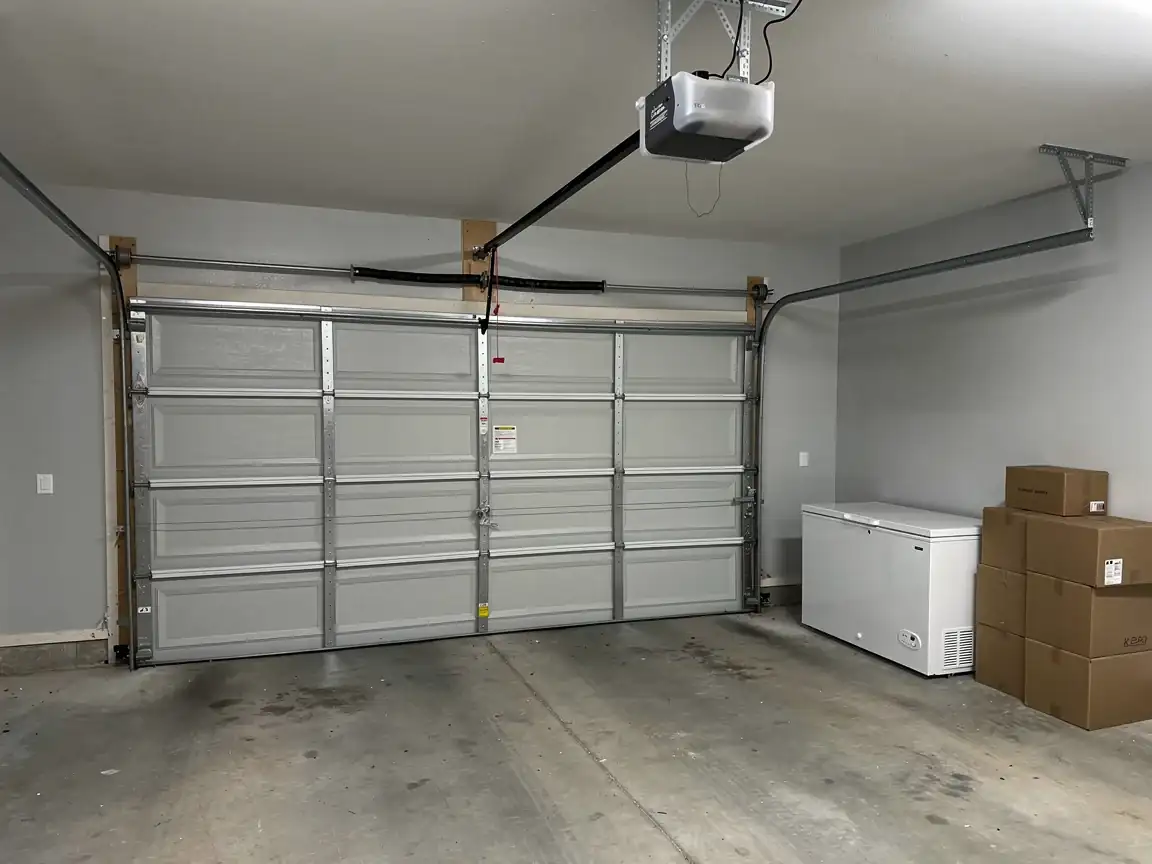
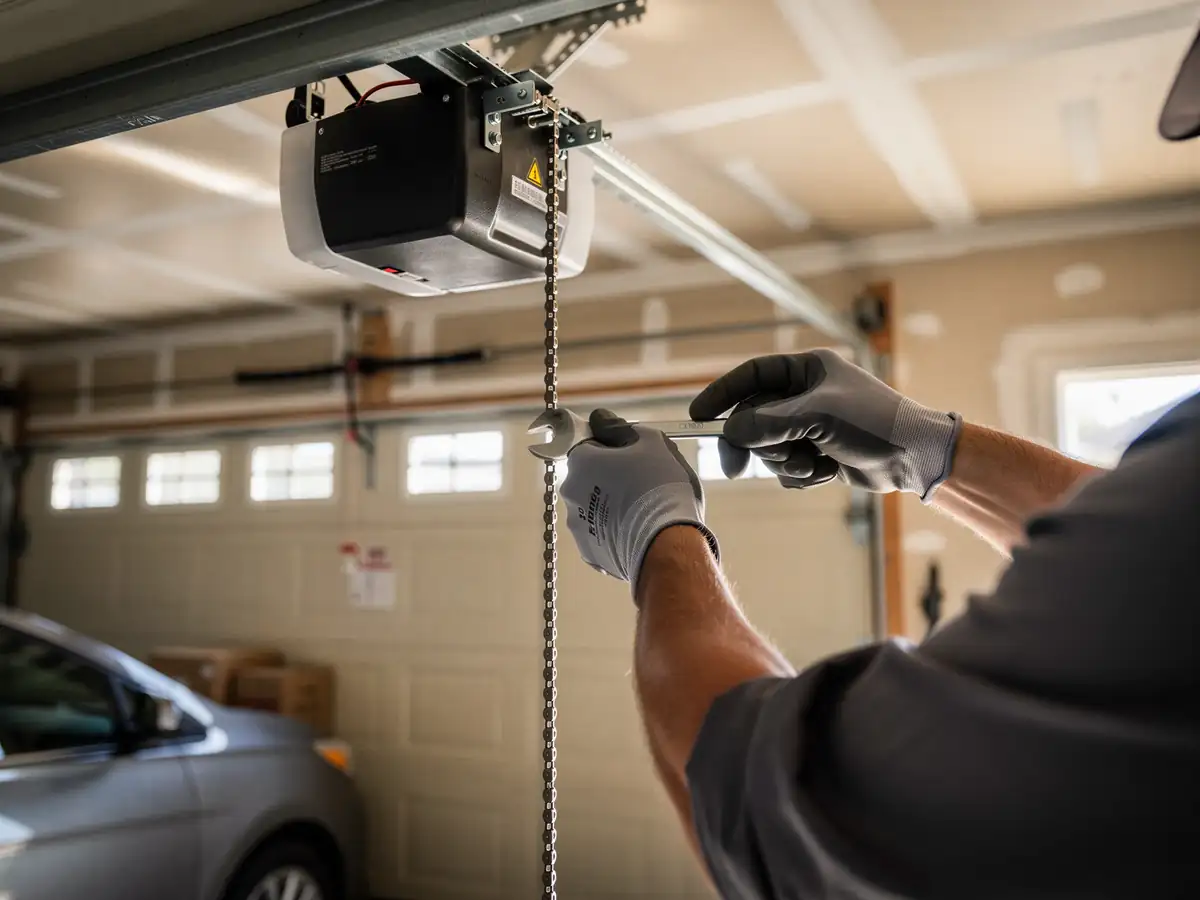
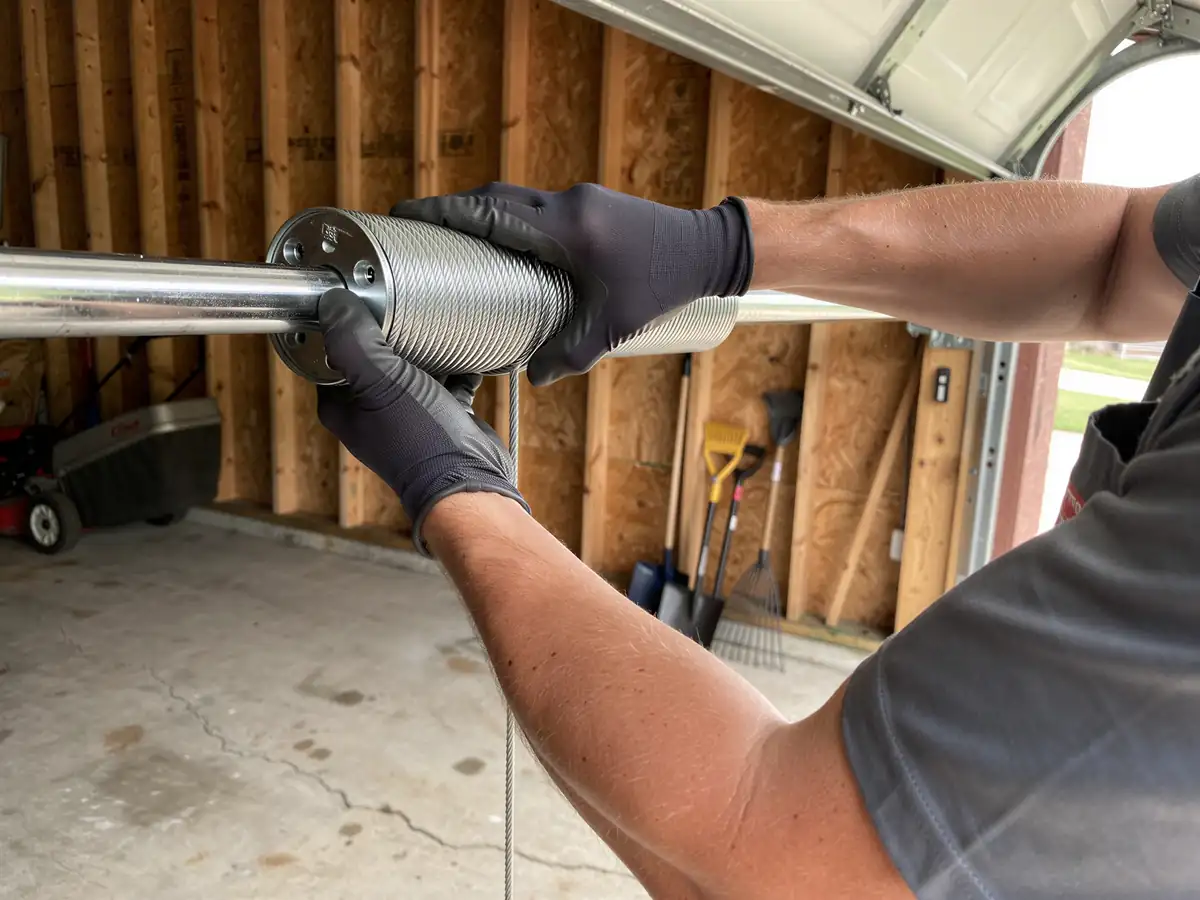
Moulton's houses tend to run older than the service area as a whole - median build year here is 1978, a full decade ahead of the 1988 mark for the territory overall. That decade matters. A door from the late '70s was likely put up with a single torsion spring on a center bracket, not the dual-spring setups that showed up on later builds. When we get a call from Moulton, it's usually one of three things: a spring that finally let go after forty-some years of cycling, a center bearing plate that's worn through, or an opener that's been replaced once already but is bolted to original, tired track. Panels themselves hold up fine if they've been kept dry and painted, but the hardware underneath them is the part nobody thinks about until it fails on a cold morning. We don't guess at what's behind the door before we get there, but if you tell us the house is original from the late '70s, we already know what we're probably looking at before we unload the truck.
What That Means for Doors
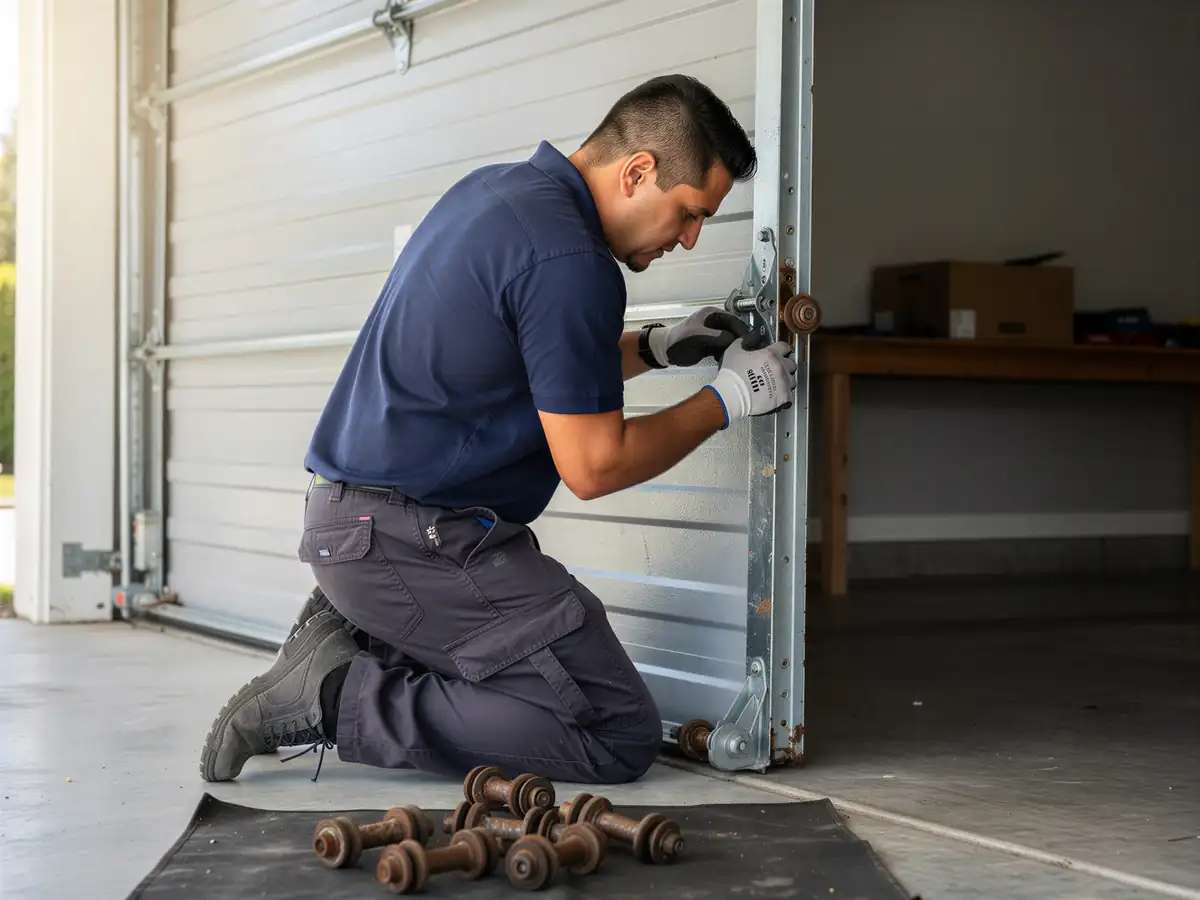
This area sits in a cold-moderate climate band, which doesn't mean brutal winters but does mean real freeze-thaw cycles every year. On a door built around 1978, that's forty-plus winters of expansion and contraction on steel track, roller stems, and the galvanized coating on springs. The coating wears thin eventually, and once it does, a spring that was fine last winter can snap on the first hard cold morning of this one. Weatherstripping on original doors is usually long gone, which doesn't break anything but does let the cold straight into an attached garage. We see a fair number of openers in Moulton that have been replaced once since the house was built but are still running on the original track and hinges - a mismatch that works until the track starts to bind. None of this is unique to one house; it's just what you get when hardware this age meets weather this variable, year after year.
The Houses Here
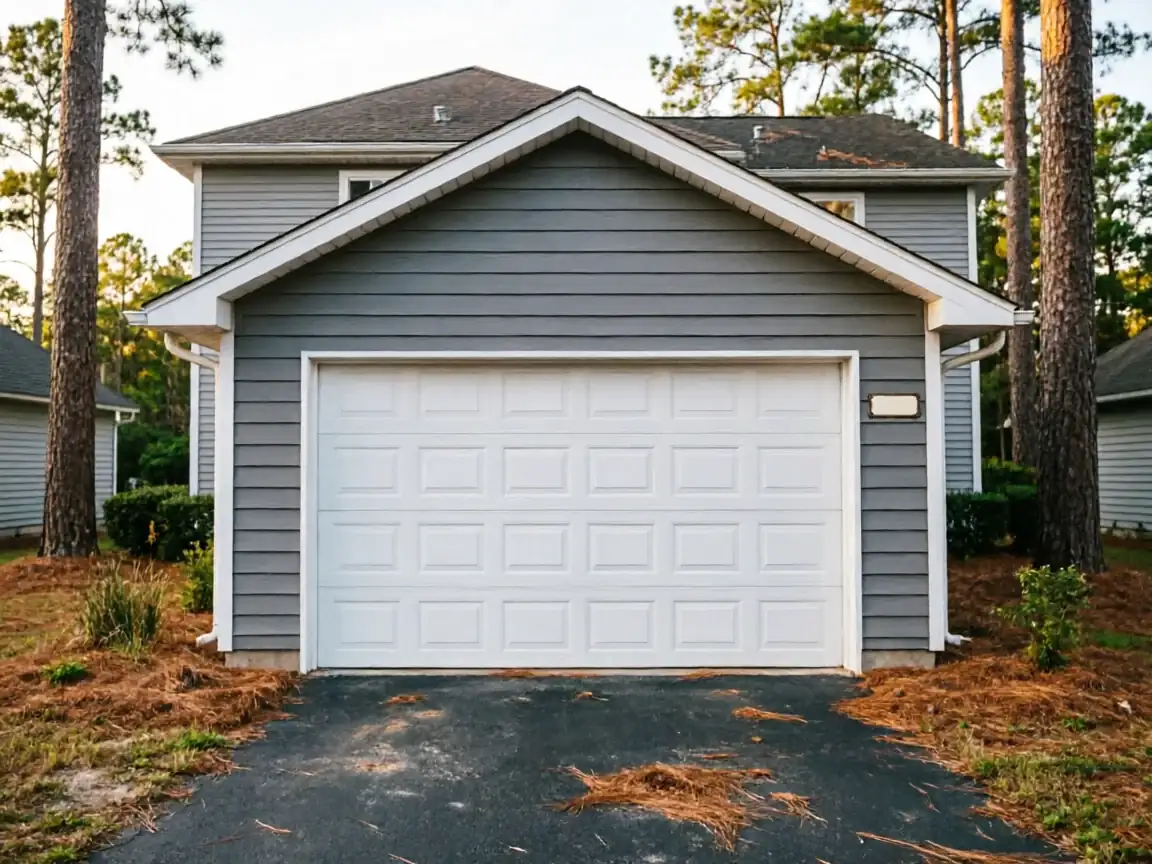
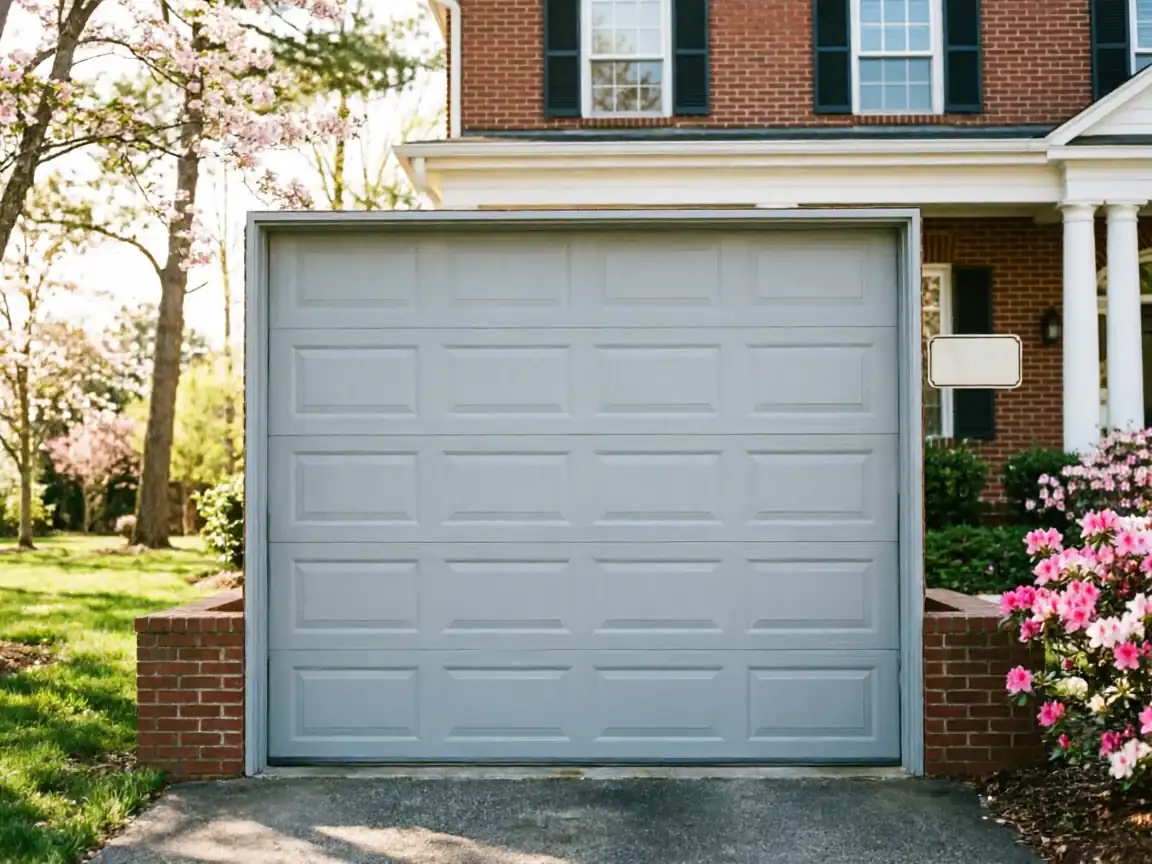
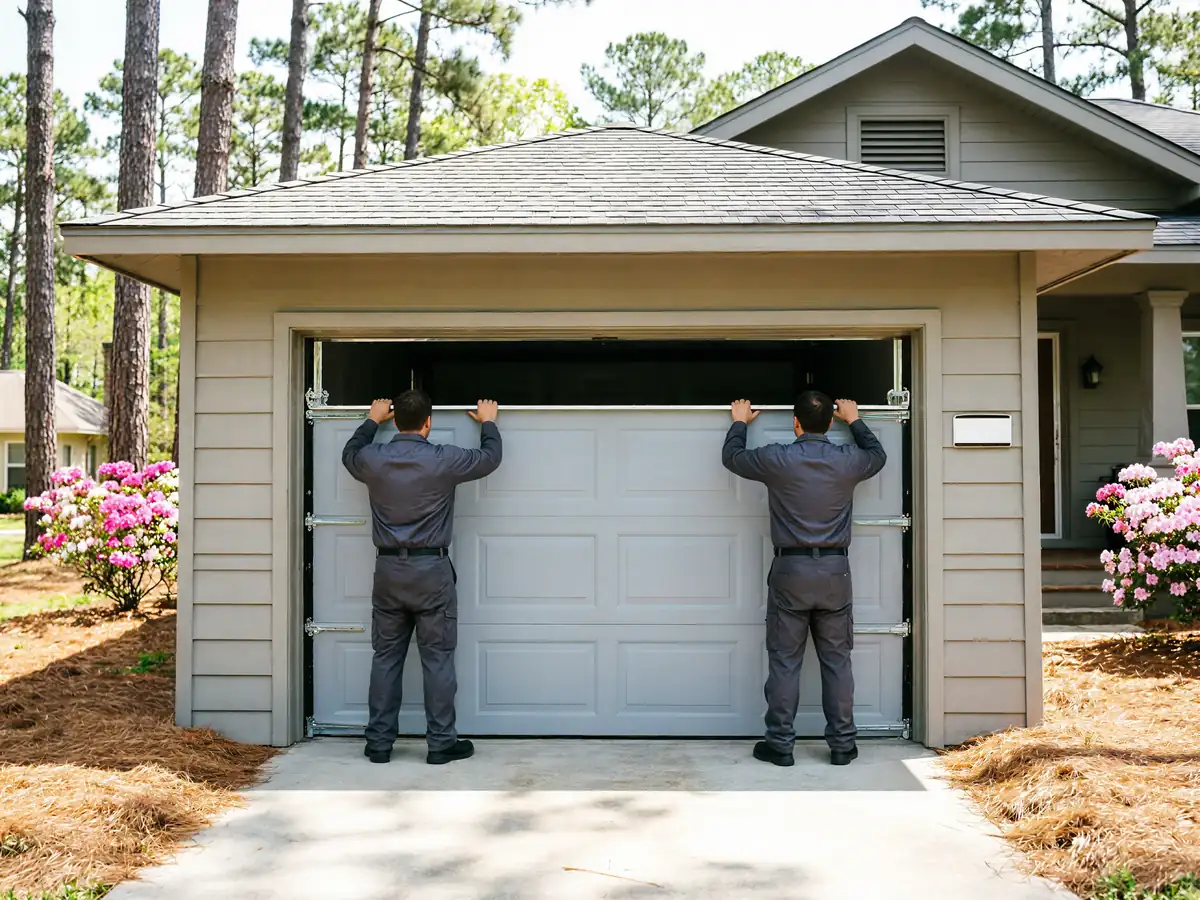
Moulton has about 1,488 households, and the median income sits around $40,792 - lower than some of the other towns on our route, which shapes how we talk about repair versus replacement. A lot of these homes are long-owned, and the door is often the original one-piece or early sectional unit that came with the house in the late '70s. Replacing a full door and opener isn't always the right call when a spring job or a track adjustment solves the actual problem. We'd rather fix the $150 part than sell a $1,200 door when the door itself is sound. That said, if the panels are rusted through at the bottom or the track is bent past straightening, patching it is a short-term answer and we'll say so plainly. Given the income profile here, we try to lay out the honest cost difference between a repair that buys a few more years and a replacement that stops the recurring calls for good.