What Causes It Around Here
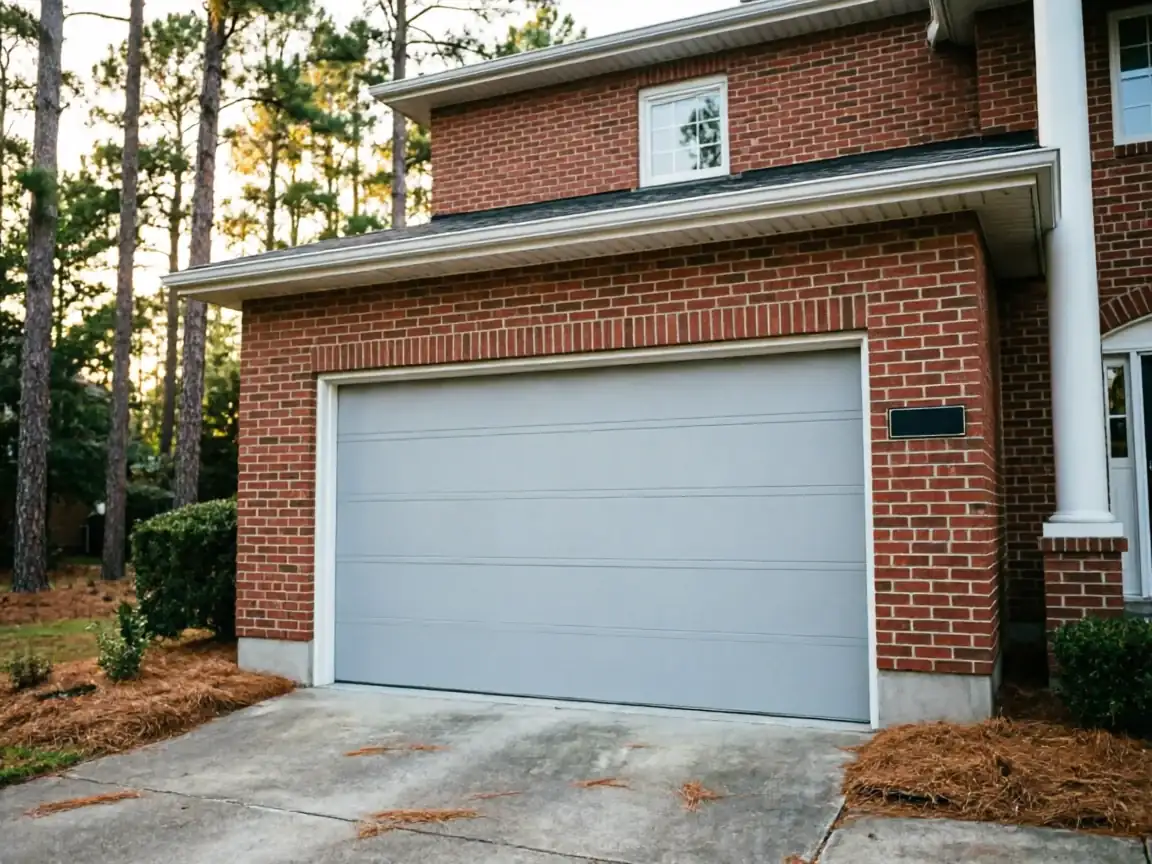
Most of the houses we work on in this service area went up between 1972 and 2012, with the bulk of that stock dating to the 1980s and 90s across the seven communities we cover. That era of construction leaned on steel sectional doors with thinner gauge panels than what's sold today, and after three or four decades those panels are tired. They dent easier, they rust at the bottom seam where water sits, and the paint finish chalks and cracks in a way that makes a single damaged panel stick out next to the rest.
The cold-moderate climate band this area sits in adds its own wear pattern. You get freeze-thaw cycles through winter that work water into any existing seam or scratch, then expand it. A small ding from a bumper tap in October can turn into a split seam by February once moisture gets behind the paint and the metal flexes with the temperature swing. We also see panels that warped from one side baking in direct sun while the other side stays shaded - common on doors facing a certain way on these older lots, and it throws the whole section out of alignment with its neighbors.
None of this is really an installation defect. It's just steel panels built thirty-plus years ago doing what steel panels that age do.
How It Shows Up
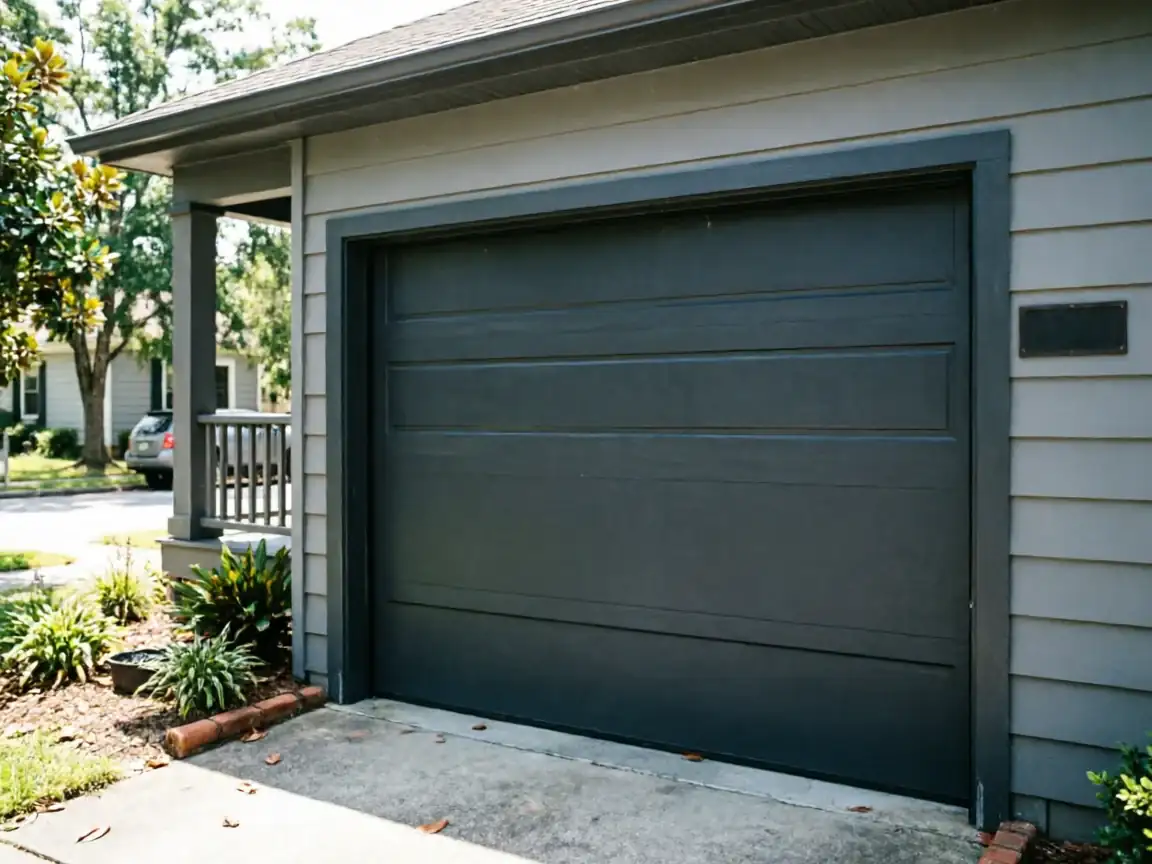
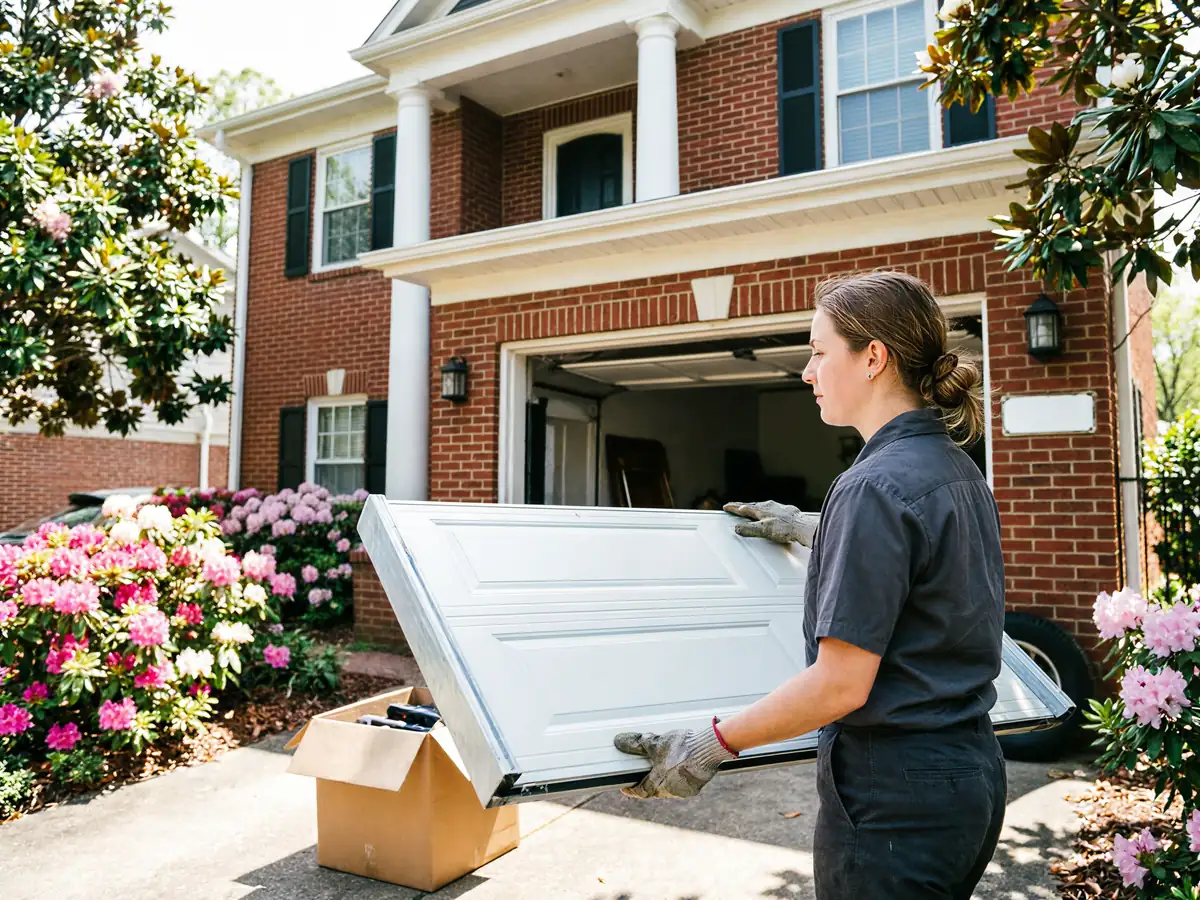
The most common call we get is a single dented panel, usually the bottom one, from a backed-into bumper or a thrown object
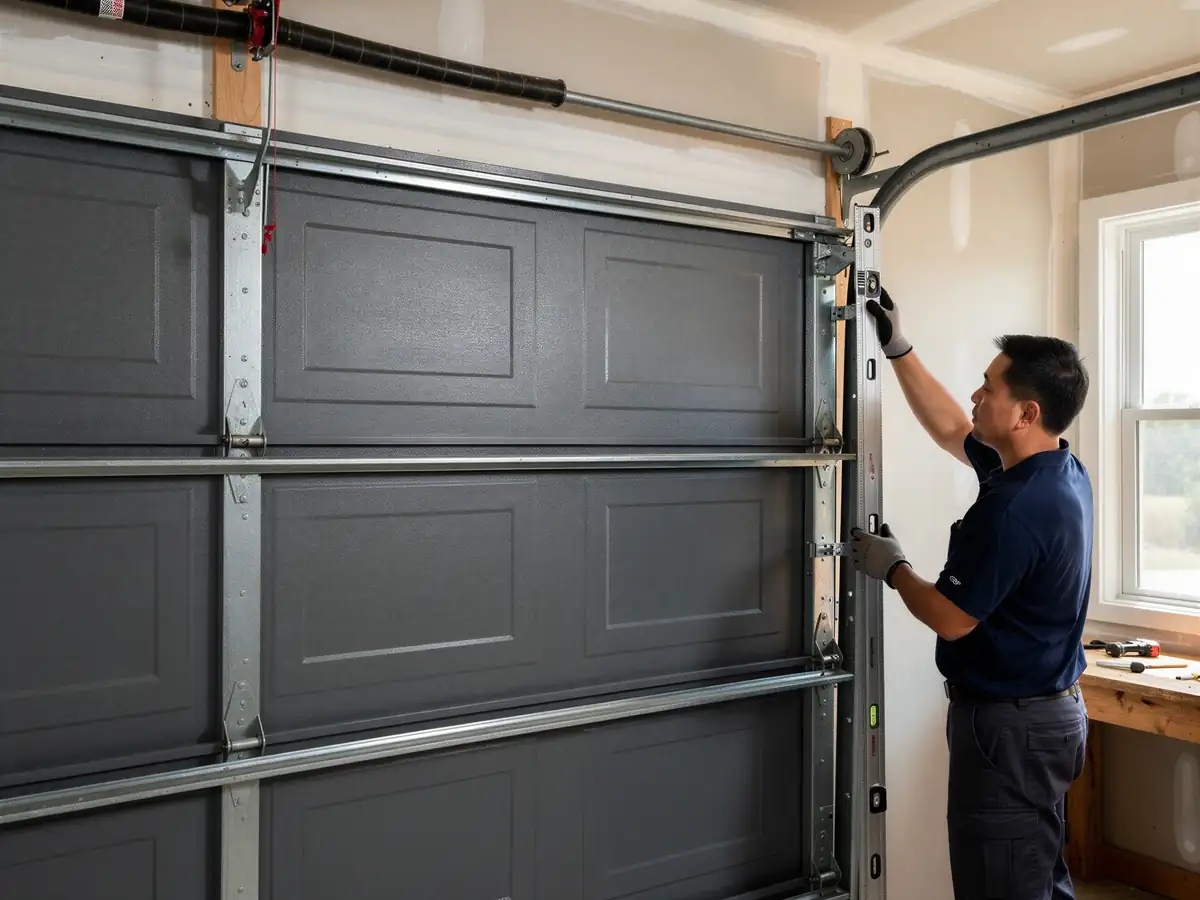
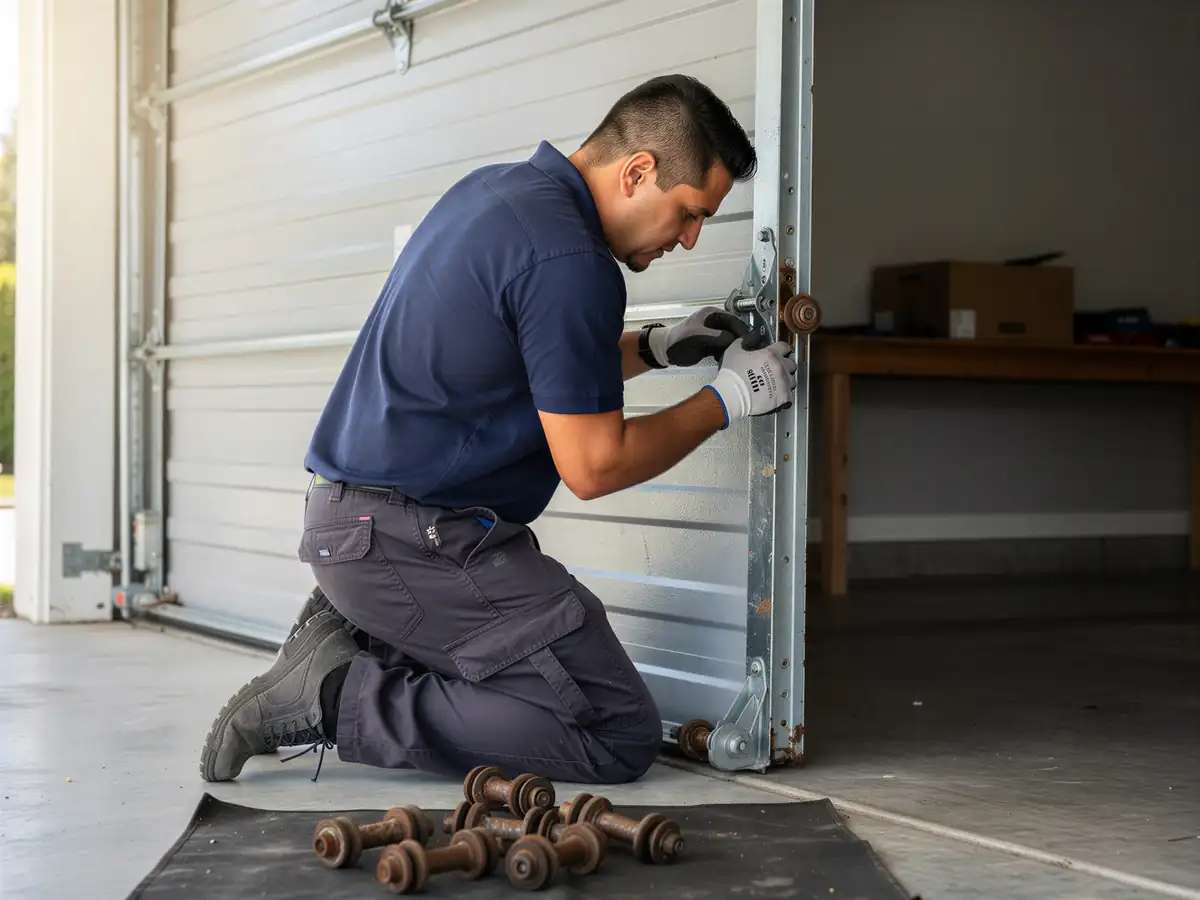
On its own that's a straightforward swap if the panel is still made or a close match exists. What turns it into a bigger job is when the dent has bent the track rail behind it or cracked the hinge mounting holes - on doors from the 1980s-90s stock we see a lot of, that hardware is original and brittle.
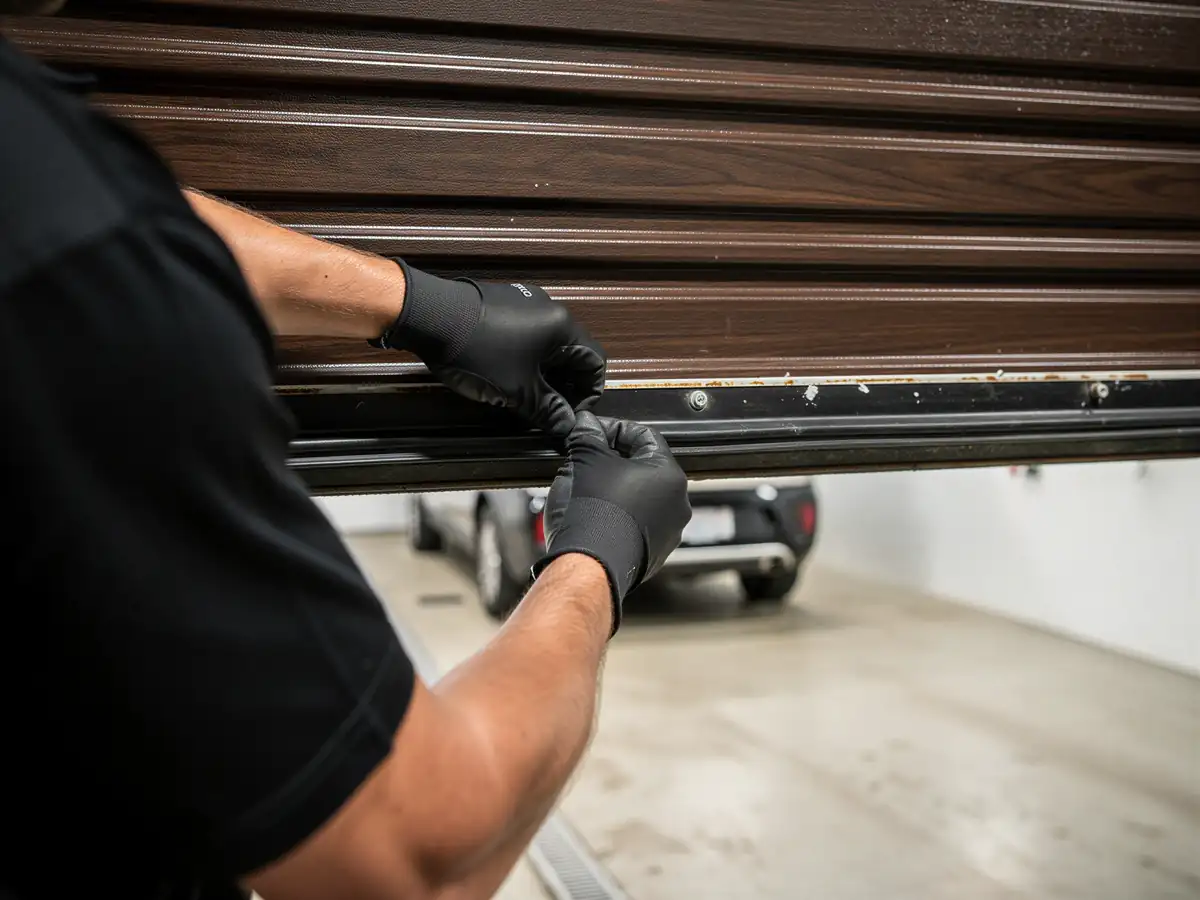
Rust-through at the bottom panel seam is the second pattern
And it's almost always tied to a door that sits low enough to catch standing water or snowmelt runoff along the sill. You'll see it start as bubbling paint, then a soft spot you can push a finger into, then a hole. By the time it's visible from the driveway, the steel behind the finish is usually thinner than it looks.
Warping shows up as a door that won't seal flat against the weatherstrip on one side
Or a section that doesn't line up with its neighbors when the door is down. Sometimes that's one bad panel. Sometimes, especially on a door with multiple panels from the same production run, it's a sign the whole set is reaching the end of its service life together, not just the one you noticed first.
The Cost of This Job
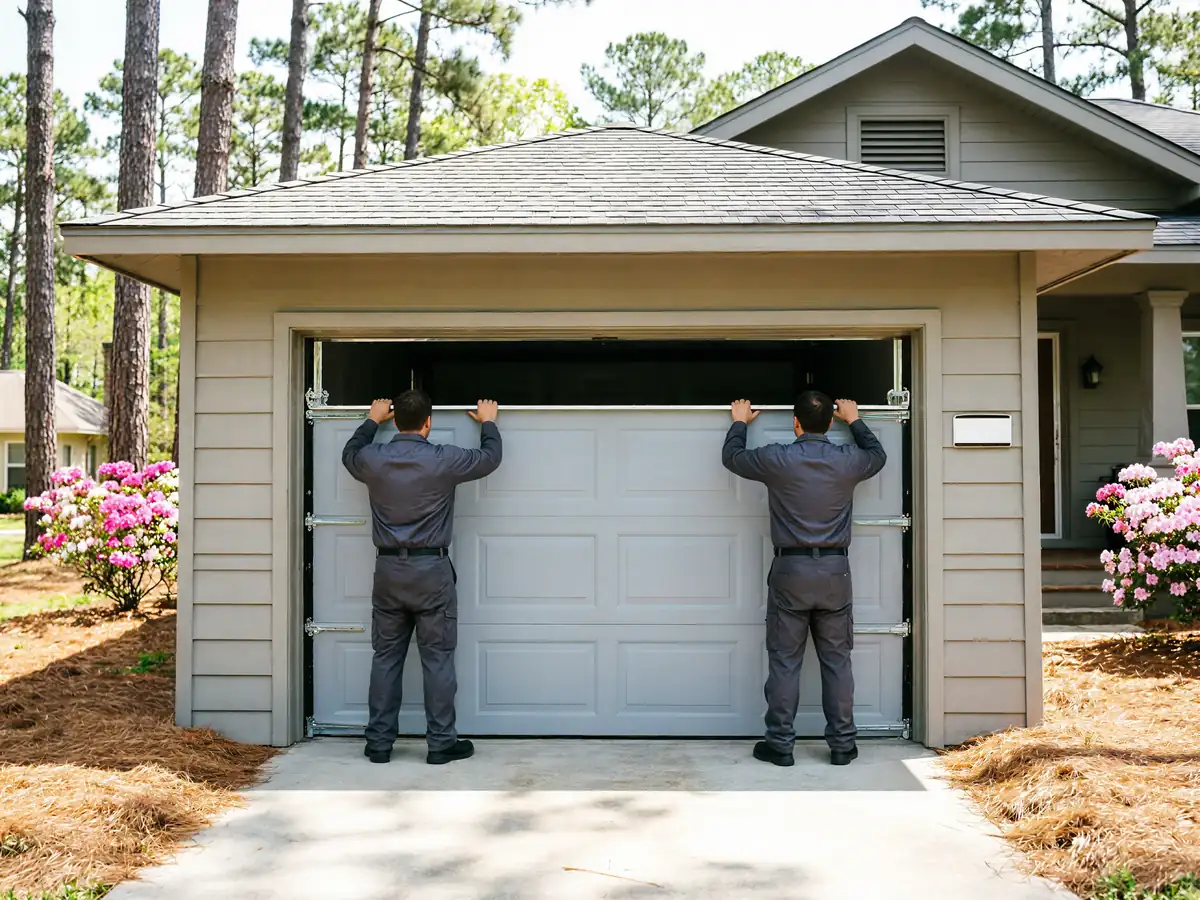
We don't have a flat number to quote here because panel replacement cost depends on things we can only confirm in person: the door's brand and panel style, whether that exact panel is still manufactured or needs a close match, how many panels are affected, and whether the track or hinges took damage along with the panel. A single matching panel swap on a door that's still in production is a different job than sourcing a panel for a door that was discontinued a decade ago.
That said, with median household income across this service area sitting around $67,863, we try to be straight about when a panel swap makes sense versus when it doesn't. If two or more panels on an older door are showing the same rust or warp pattern, replacing just one often isn't worth it - you're putting new steel next to panels that are going to fail the same way within a year or two. In that case we'll tell you straight that a full door replacement is the better use of your money, even though that's a bigger job than what you called about.
Getting It Booked In
If you've got a single dented or rusted panel and the door still opens and closes square, that's usually a quick in-person look to confirm the panel is still available before we quote anything. If the door is binding, dragging, or won't seal, that's worth mentioning when you call since it changes what we need to bring.
We cover the Decatur area along with Trinity, Priceville, Hartselle, Somerville, Triana, Falkville, and Moulton. One thing worth knowing up front: replacement panels for older or discontinued door lines sometimes have to be special-ordered, so a repair that looks simple on the phone can still mean a short wait on parts once we're on site. We'd rather tell you that now than have you waiting on us to explain it later.