Time on the Job
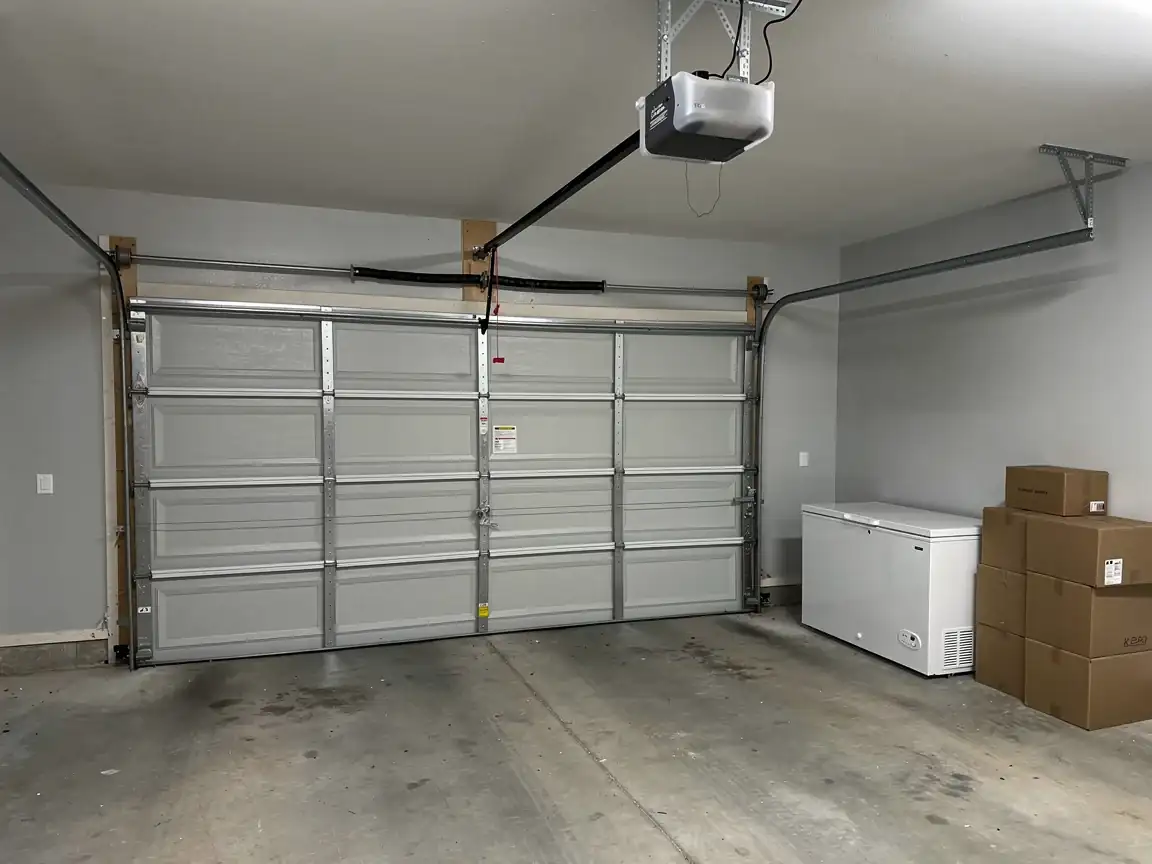
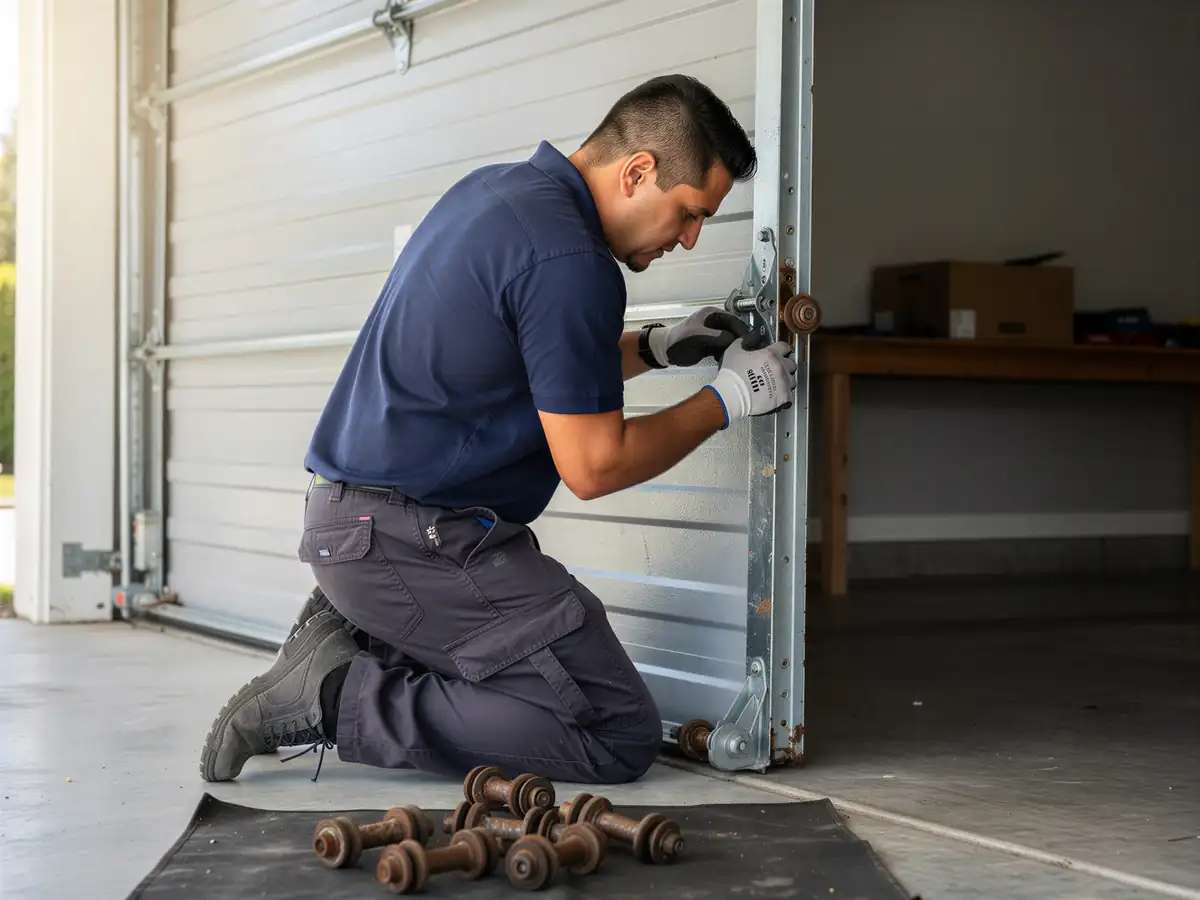
The homes we work on in Falkville tend to run older than what we see closer to Decatur. Median year built here is 1972, well ahead of the 1988 median across the wider service area, and the broader stock we cover runs anywhere from 1972 to 2012. That gap matters more than it sounds. A door and opener installed in the early 1970s has usually gone fifty years without anyone touching the hardware beyond swapping a bulb or spraying WD-40 on a hinge. Springs get replaced when they break, sure, but the track brackets, the lag bolts holding the rail to the header, the original bearing plates - those are often still exactly where they were bolted in. Falkville only has about 454 households, so this isn't a huge market, but it's a consistent one: older build year, original parts, and nobody's had a reason to look at them until something starts grinding or sticking. Maintenance here isn't about chasing a new problem. It's about catching wear on hardware that's been quietly working since before most tune-up schedules existed.
Can You Do This Yourself
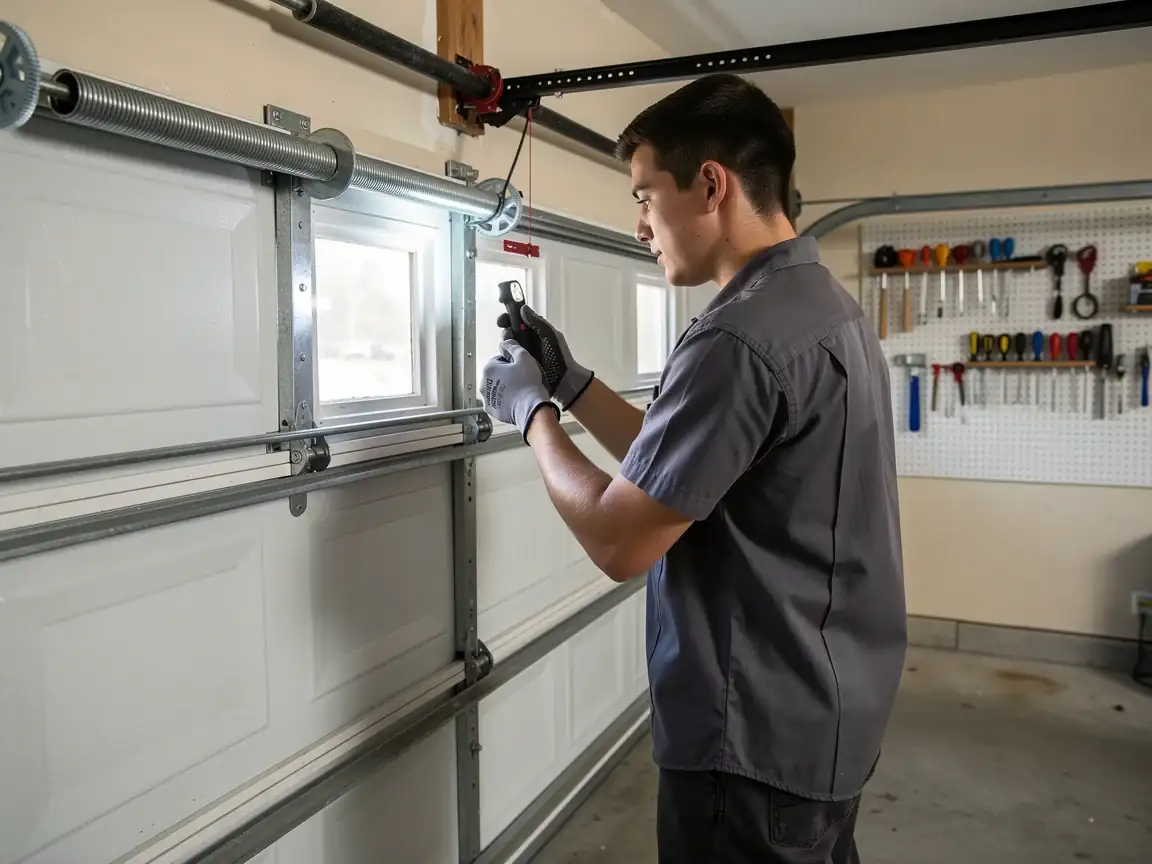
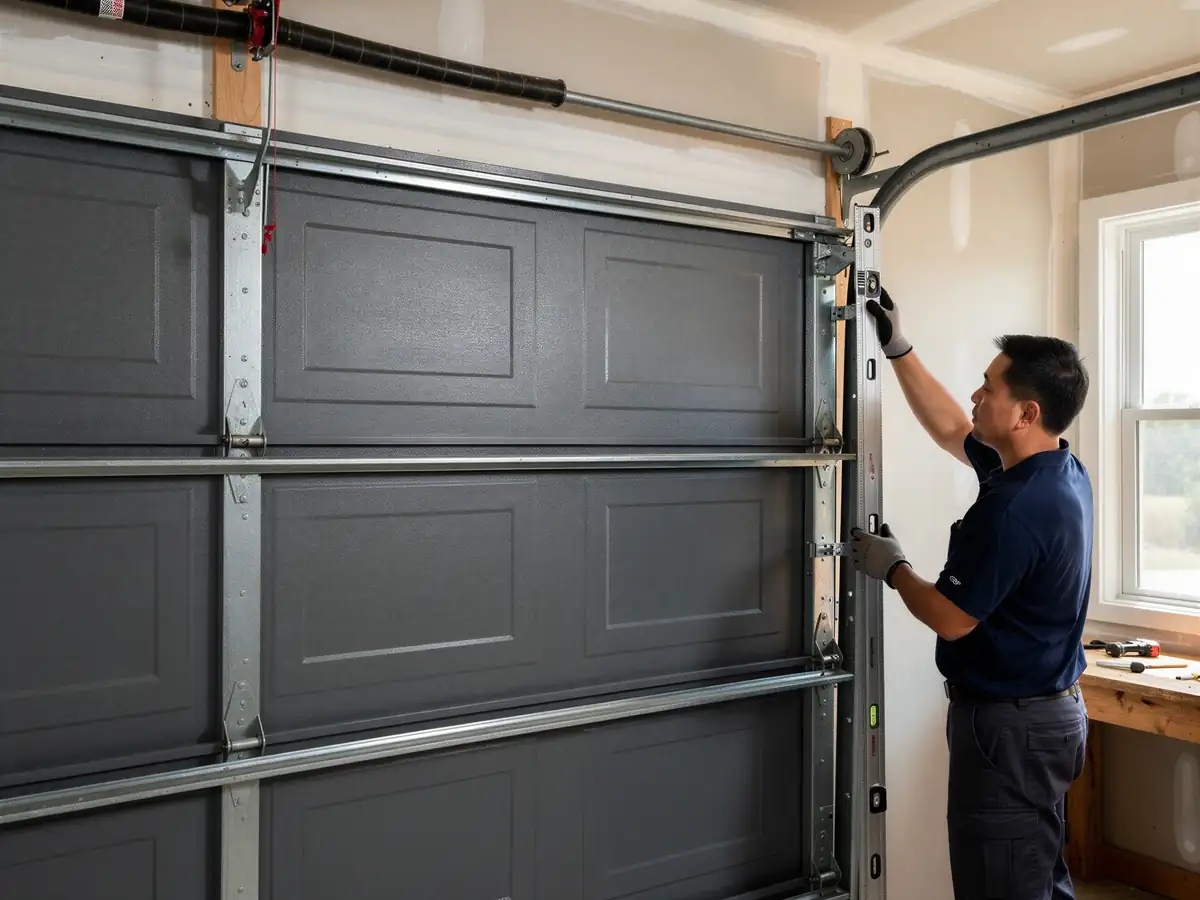
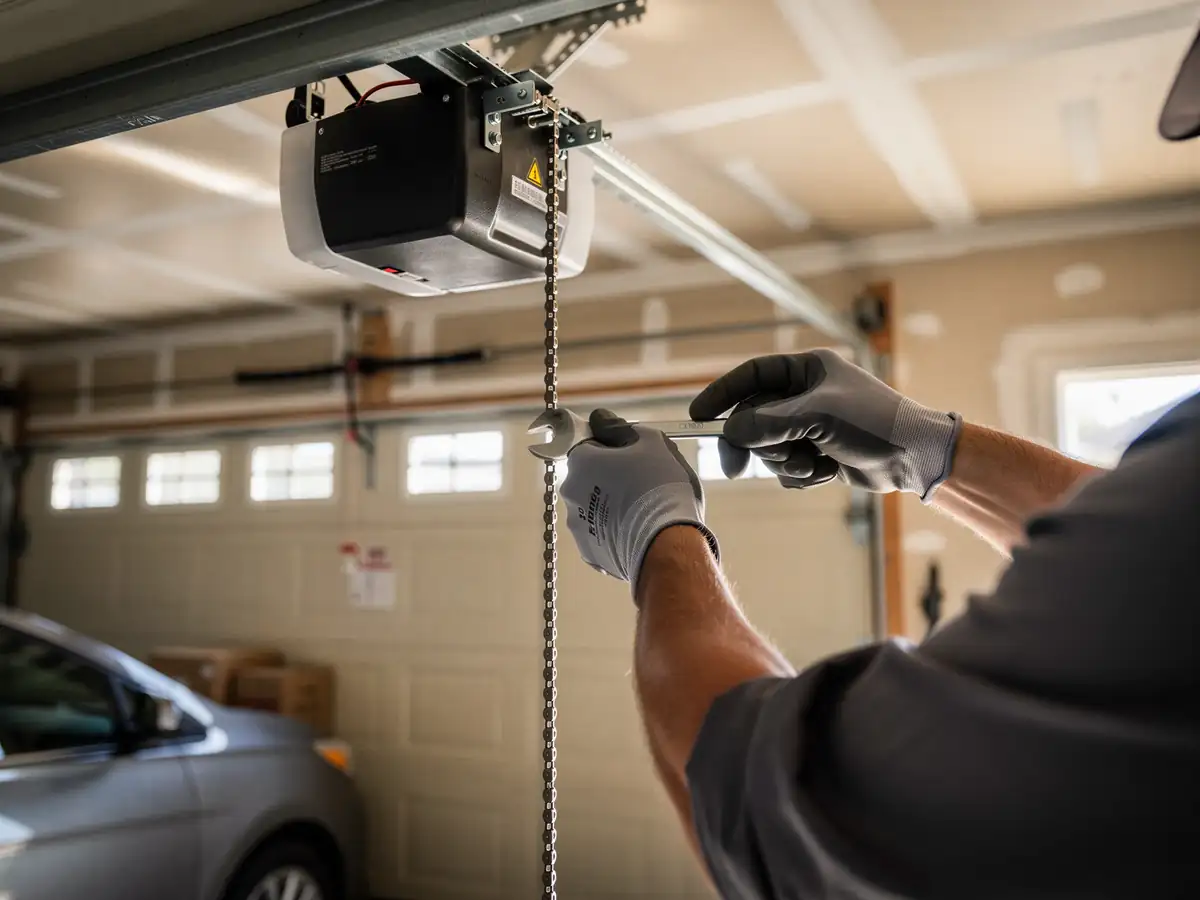
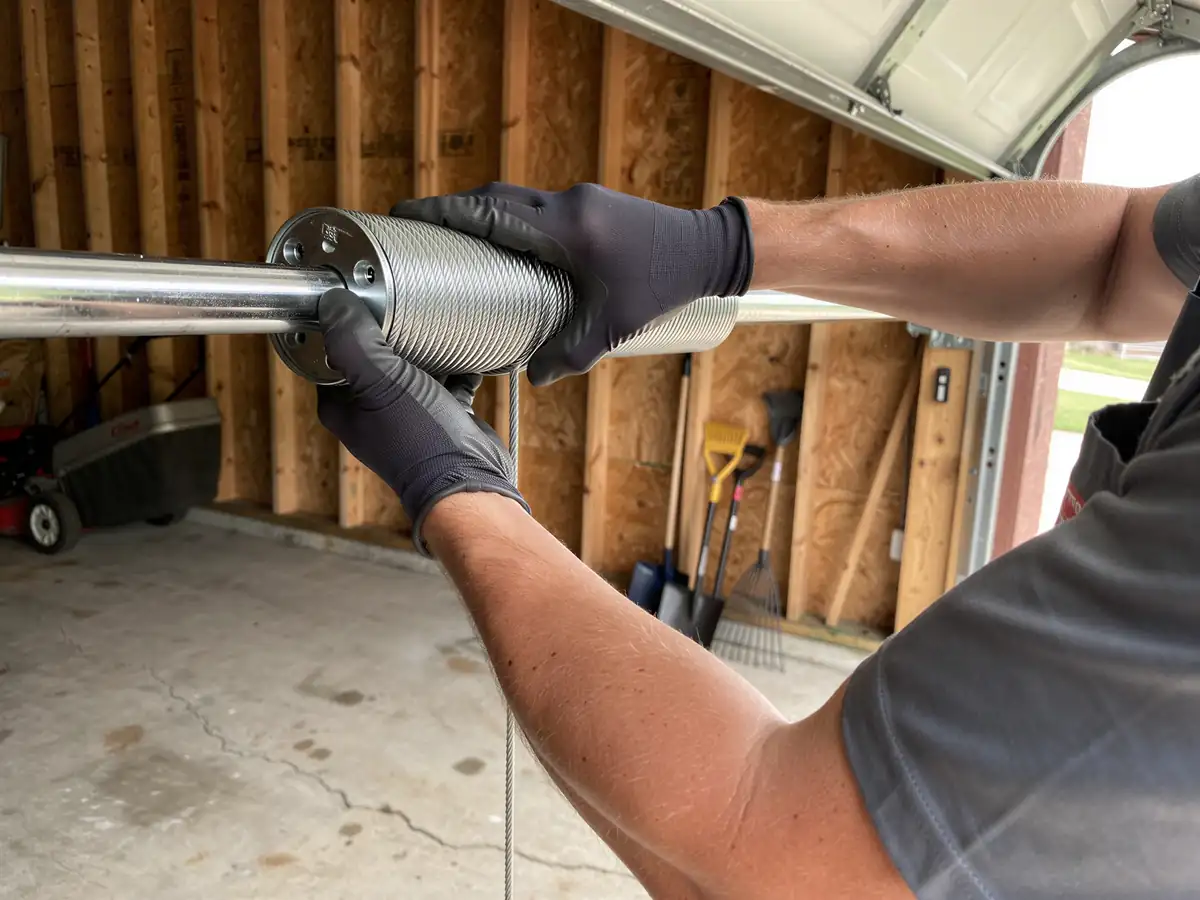
Some of it, yes. Wiping down tracks, checking that the auto-reverse still triggers when you lay a 2x4 under the door, tightening visible bolts on the brackets - a homeowner can do all of that in twenty minutes. What's harder to judge yourself is spring tension and cable condition on hardware this old, because the failure mode on a torsion spring that's fifty years into its life isn't the same as one five years in. The metal fatigues differently, and a spring that looks fine can let go without much warning. We won't tell you to hire someone for every five-minute task - that's not an honest use of your money - but spring work and anything involving the torsion bar is not a DIY job on original hardware, full stop.
What Causes It Around Here
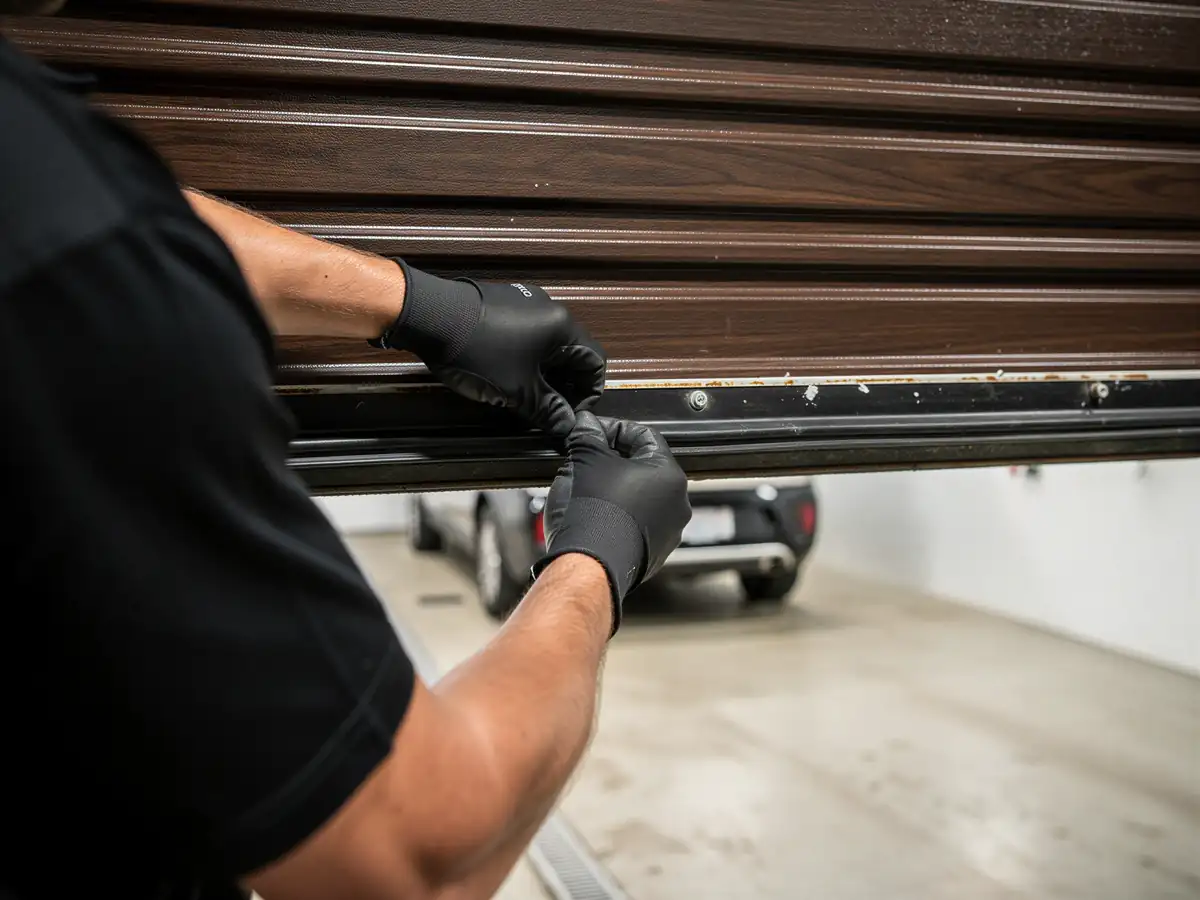
The climate band this area sits in is cold-moderate, which means steel hardware goes through a real freeze-thaw cycle every winter without the deep sustained cold that would justify different materials. That cycle is what actually wears original bearing plates and hinges down over fifty years - not one bad storm, but decades of metal contracting and expanding against itself. Combine that with median household income in this part of the service area sitting around $43,145, noticeably below the wider area's $67,863, and you get a pattern we see often: doors get repaired when something breaks rather than serviced on a schedule. That's a reasonable way to spend money, but it does mean more of the original 1972-era hardware stays in place longer than it would somewhere with routine tune-ups baked into the budget.