Getting It Booked In
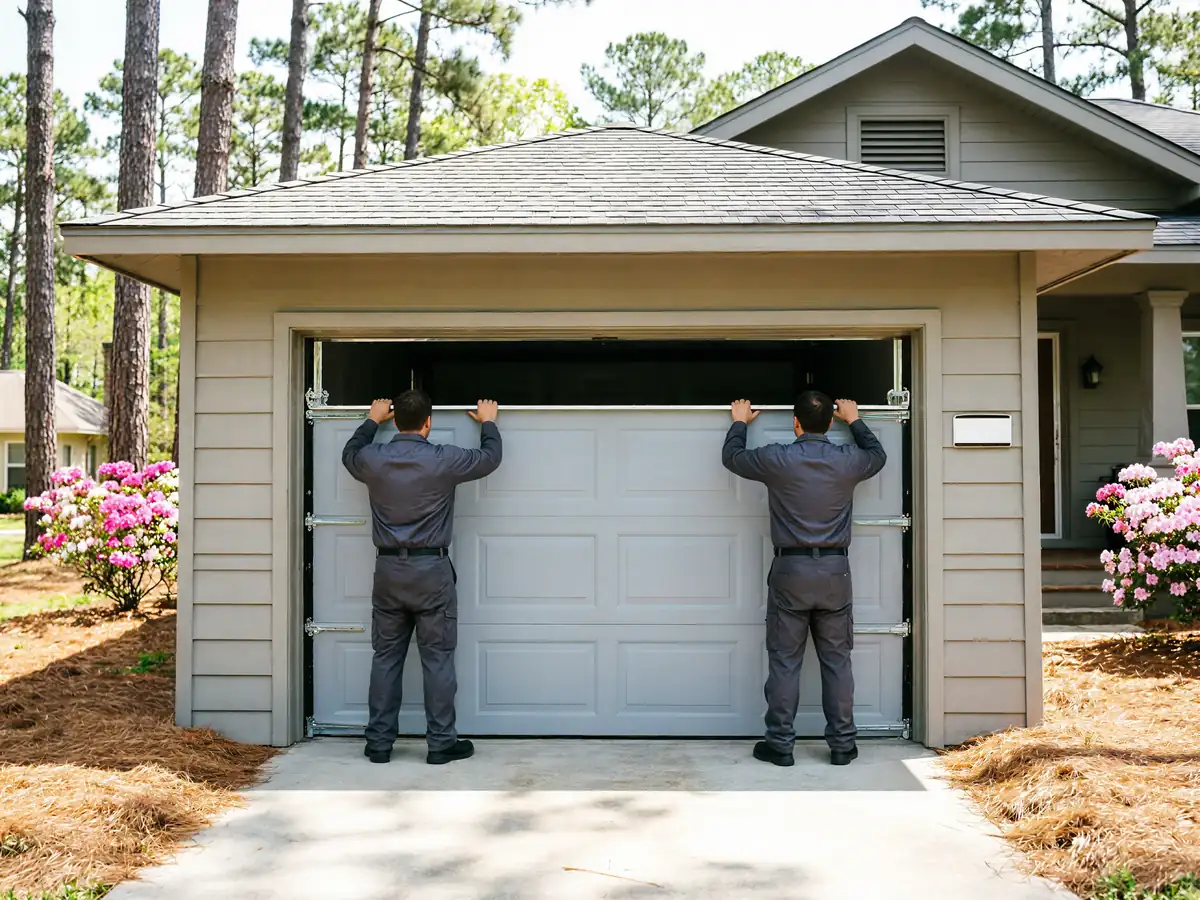
Priceville sits about 7 miles from our Decatur base, one of the shorter runs we make. That matters less for scheduling than you'd think, but it means we're not guessing at travel time when we quote a window for the work.
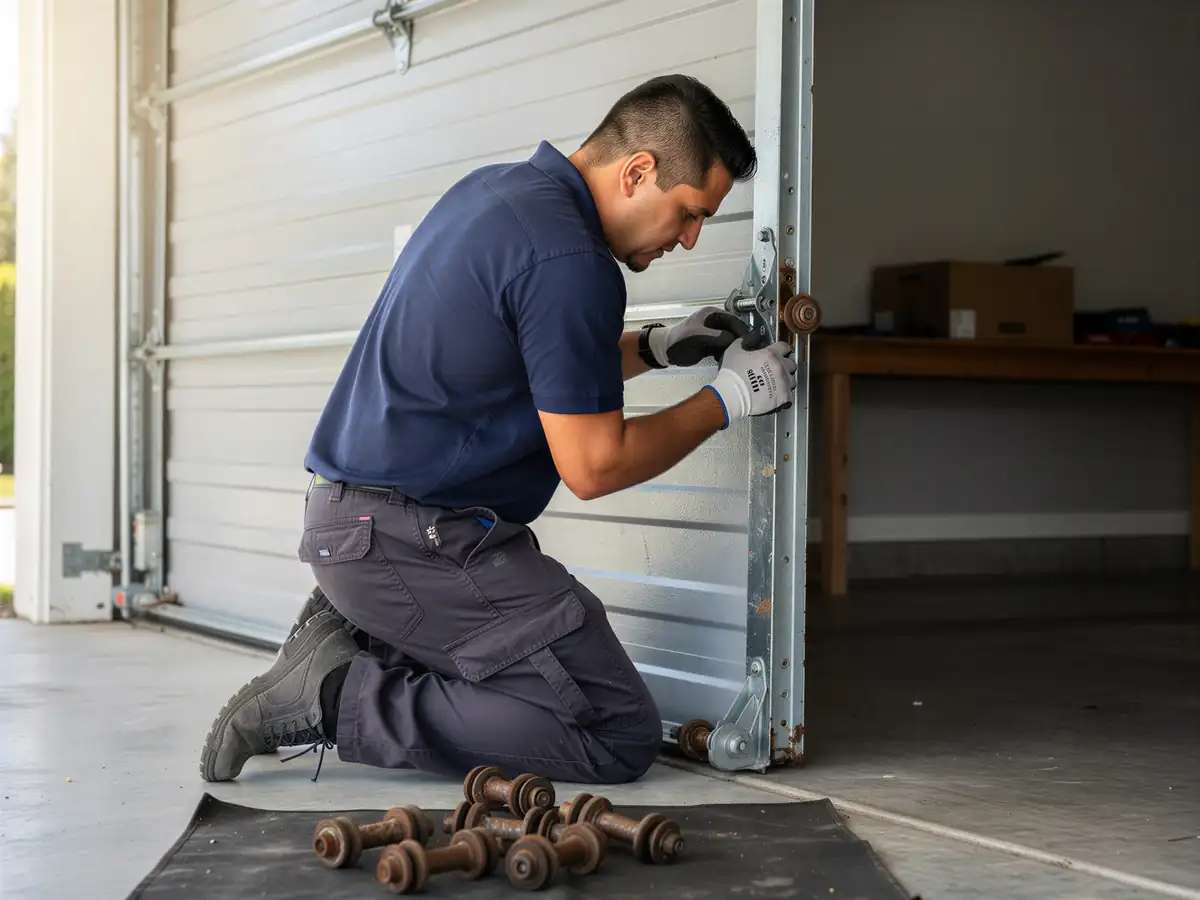
What matters more is what's actually on the door. Priceville's housing stock centers on a median build year of 2004 - call it a decade and a half newer than the 1988 median across the broader Decatur-area service territory we cover. That's not a small gap. A door built in 2004 almost always shipped with factory-grade nylon rollers on stamped steel brackets, not the older galvanized steel rollers you'll find on doors from the 70s and 80s stock that makes up a lot of the rest of our territory.
When you call, tell us the rough age of the house if you know it, or just the door's install date if it's on a sticker inside the track rail. That one detail tells us more than the symptom usually does, and it lets us bring the right roller stock instead of a guess.
Can You Do This Yourself
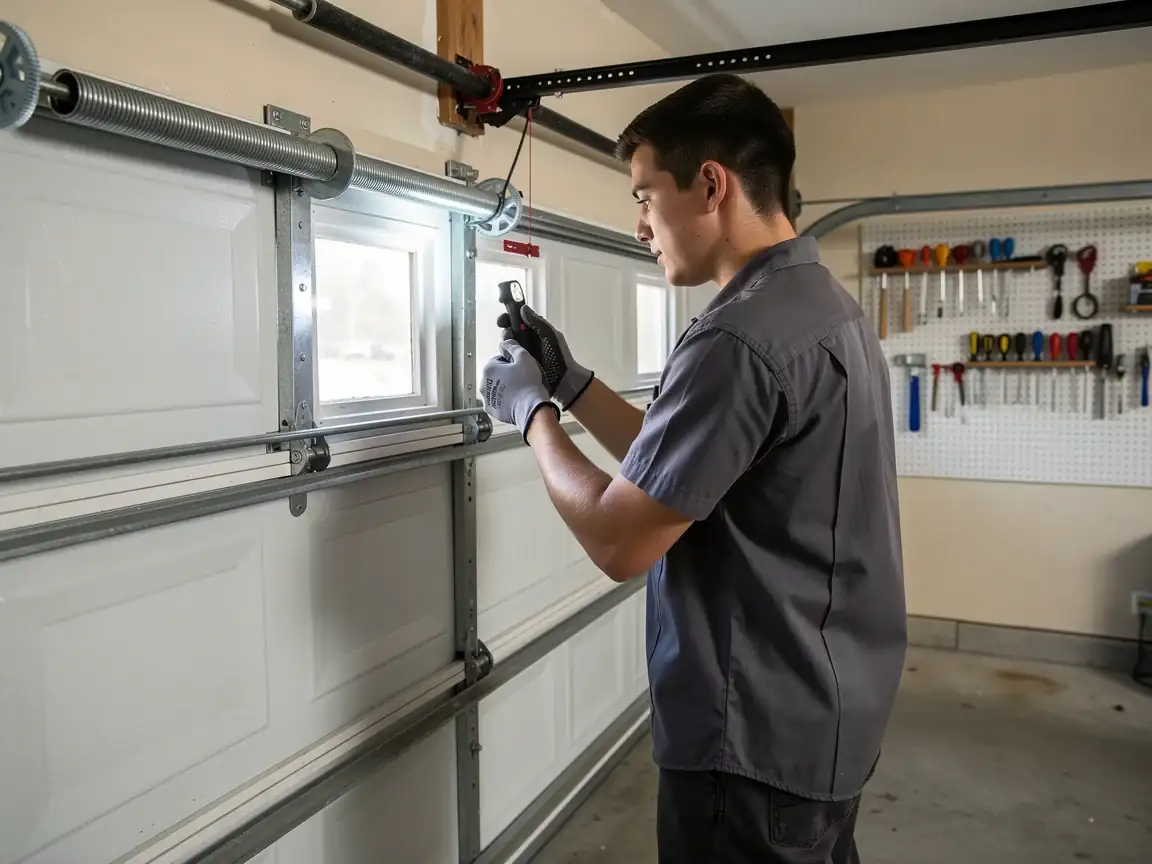
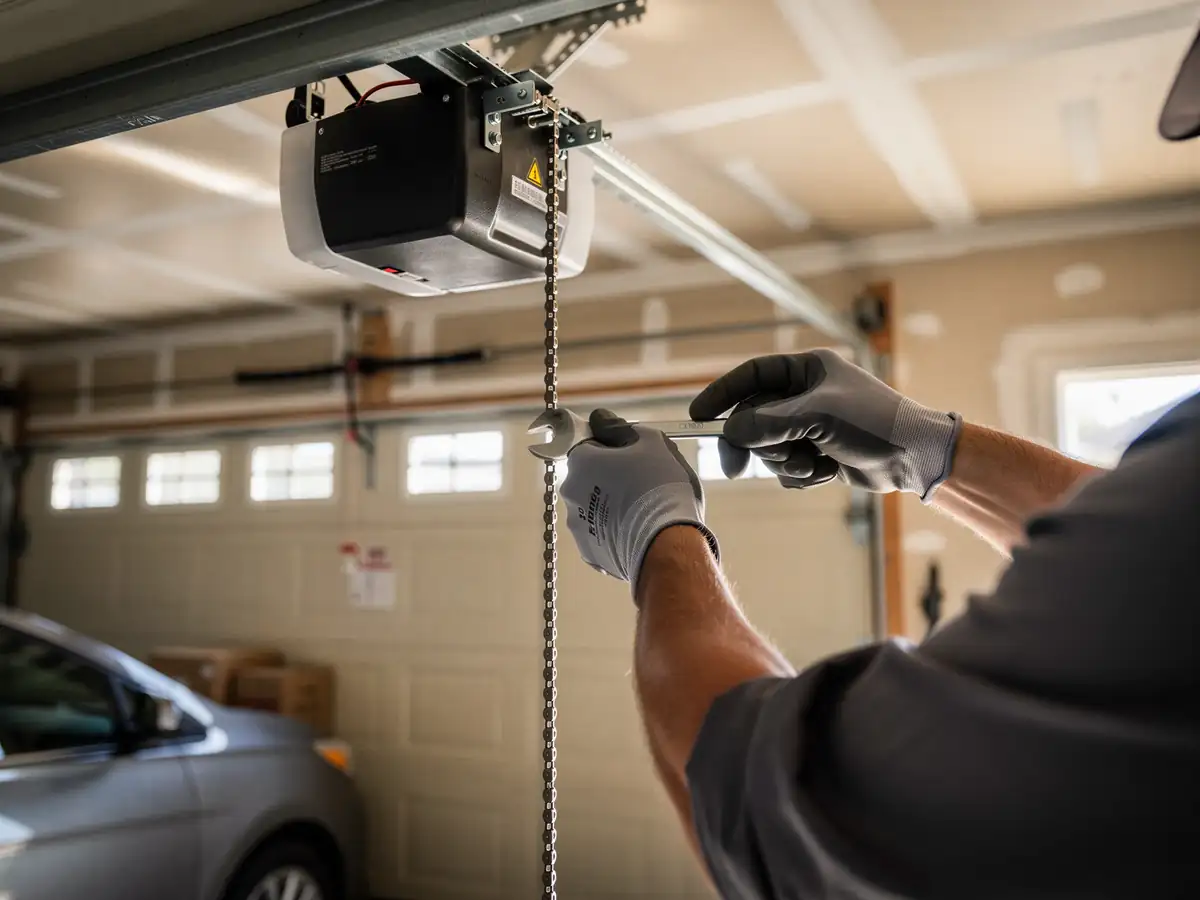
Swapping a single roller on a door this age is one of the more doable DIY jobs in garage door work, provided the door is down, unplugged from the opener
And you're not touching anything with spring tension on it. Nylon rollers on a 2004-era track slide out of the bracket once you pull the roller stem free, and a replacement part costs little.
Where it stops being a weekend project
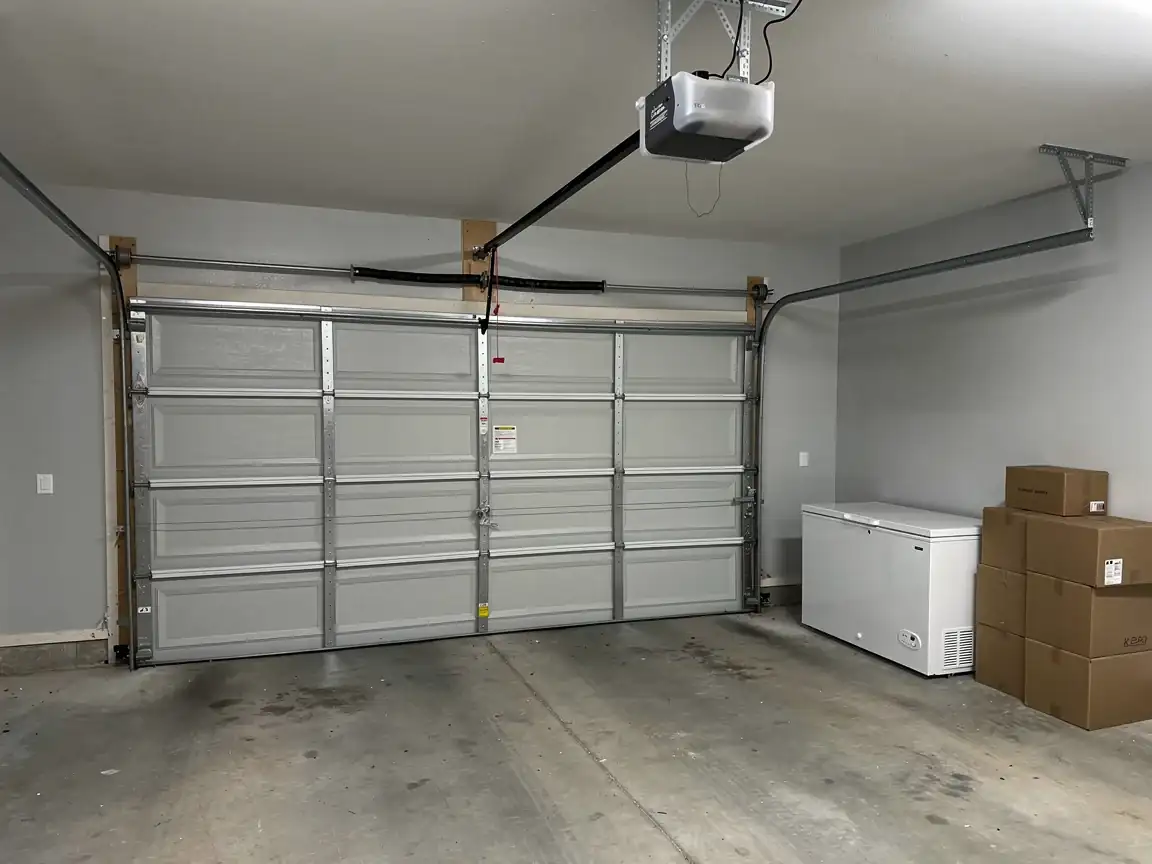
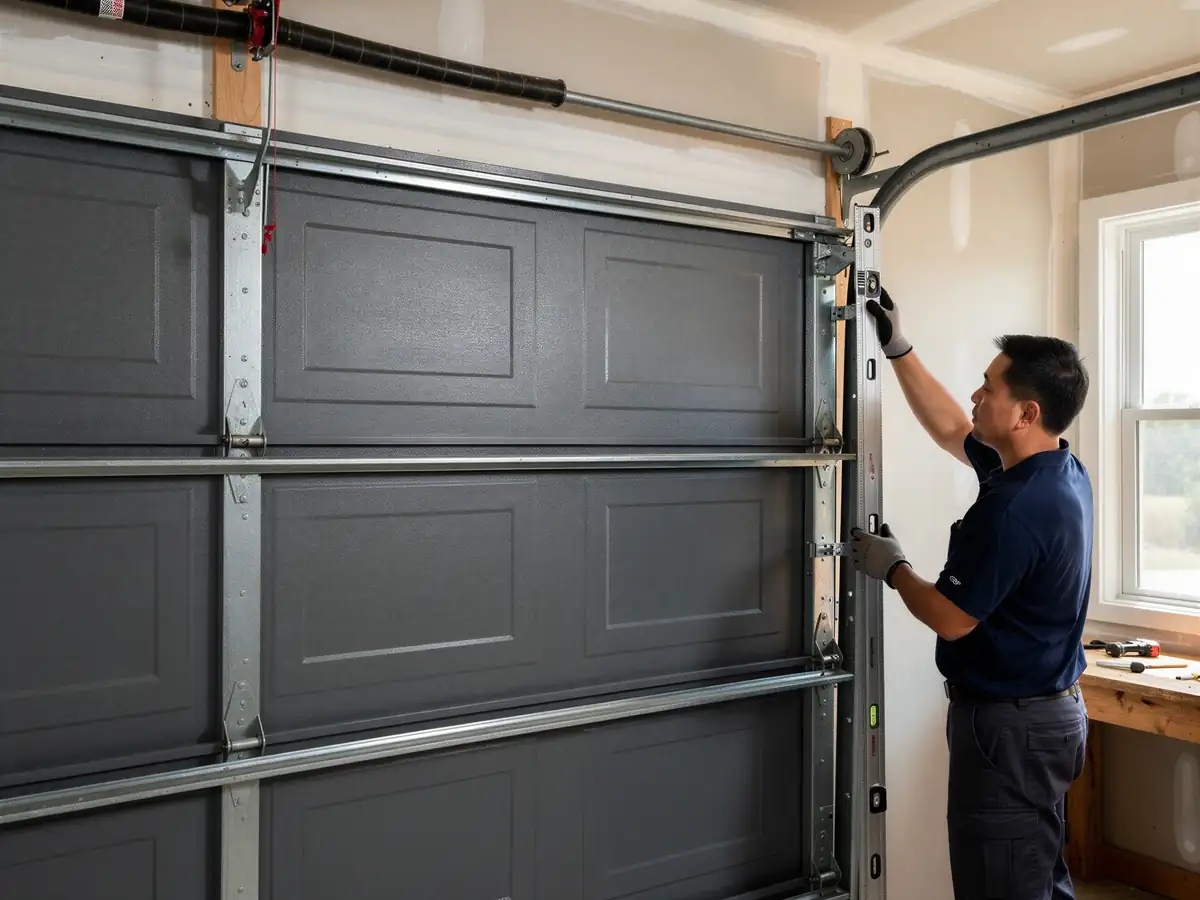
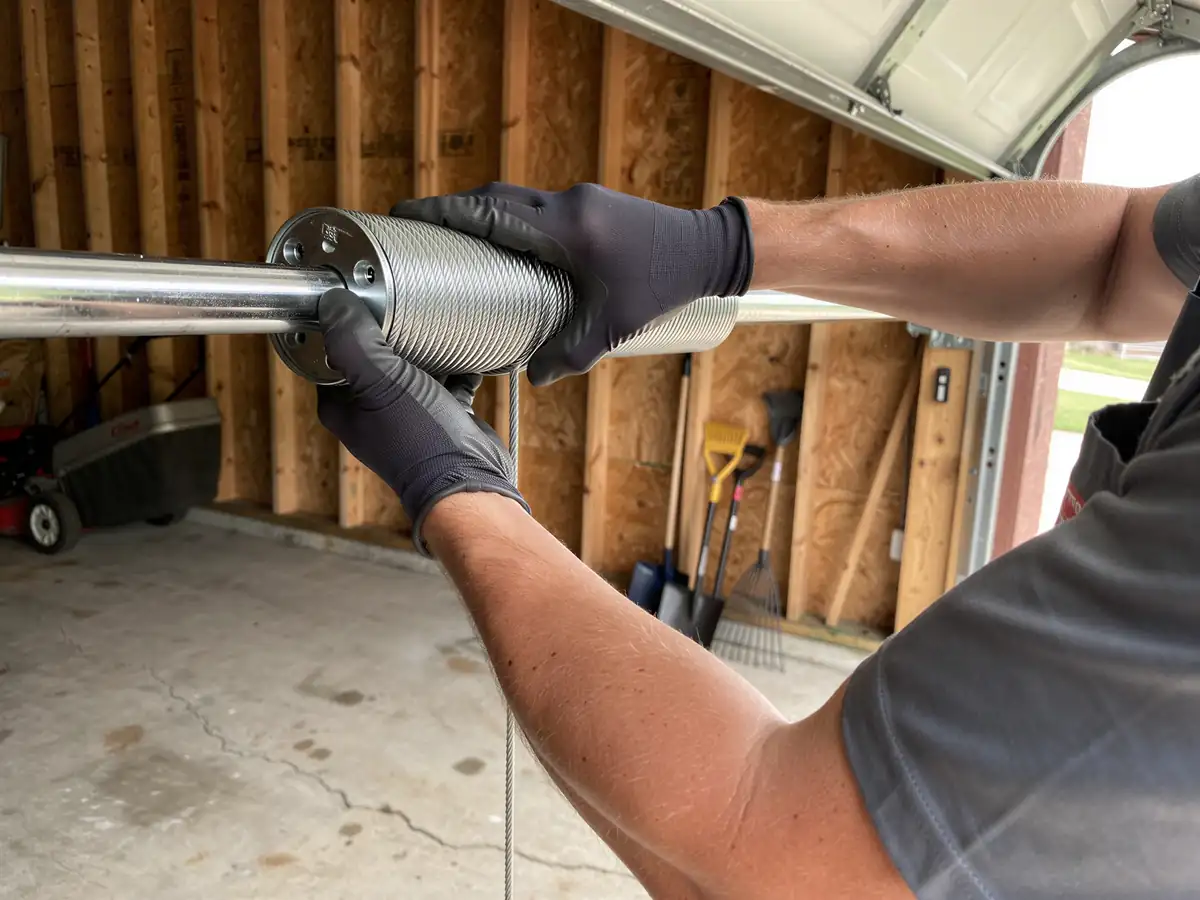
If the roller closest to the bottom bracket is seized or bent, that bracket carries cable tension, and the cable is attached to the spring system. That's not a part to improvise around. If you're not sure which roller you're looking at, stop and call, because the bottom two brackets on either side are the ones that can put you in the ER if you get it wrong.
We'll say plainly: if more than two or three rollers are worn on the same door
You're better off having the whole set replaced in one visit rather than paying for a callback in six months when the next one goes. That's a labor-cost argument, not a sales pitch - one visit costs less than two.
How It Shows Up
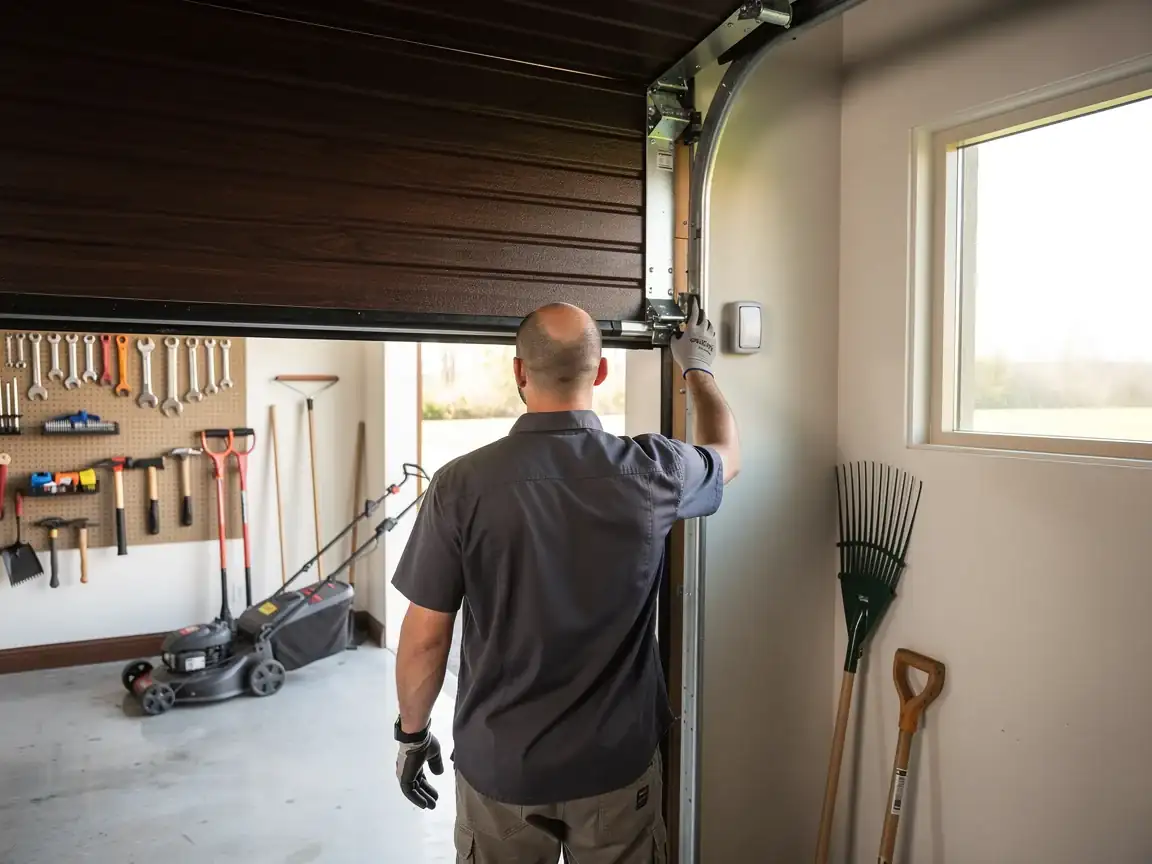
On houses built around 2004, the complaint we hear most isn't a door that won't open - it's a grinding or scraping noise partway through the cycle, usually right as the door crosses from vertical to horizontal track. That's the curved section, and it's where original builder-grade nylon rollers wear fastest because the roller takes side load there, not just vertical load.
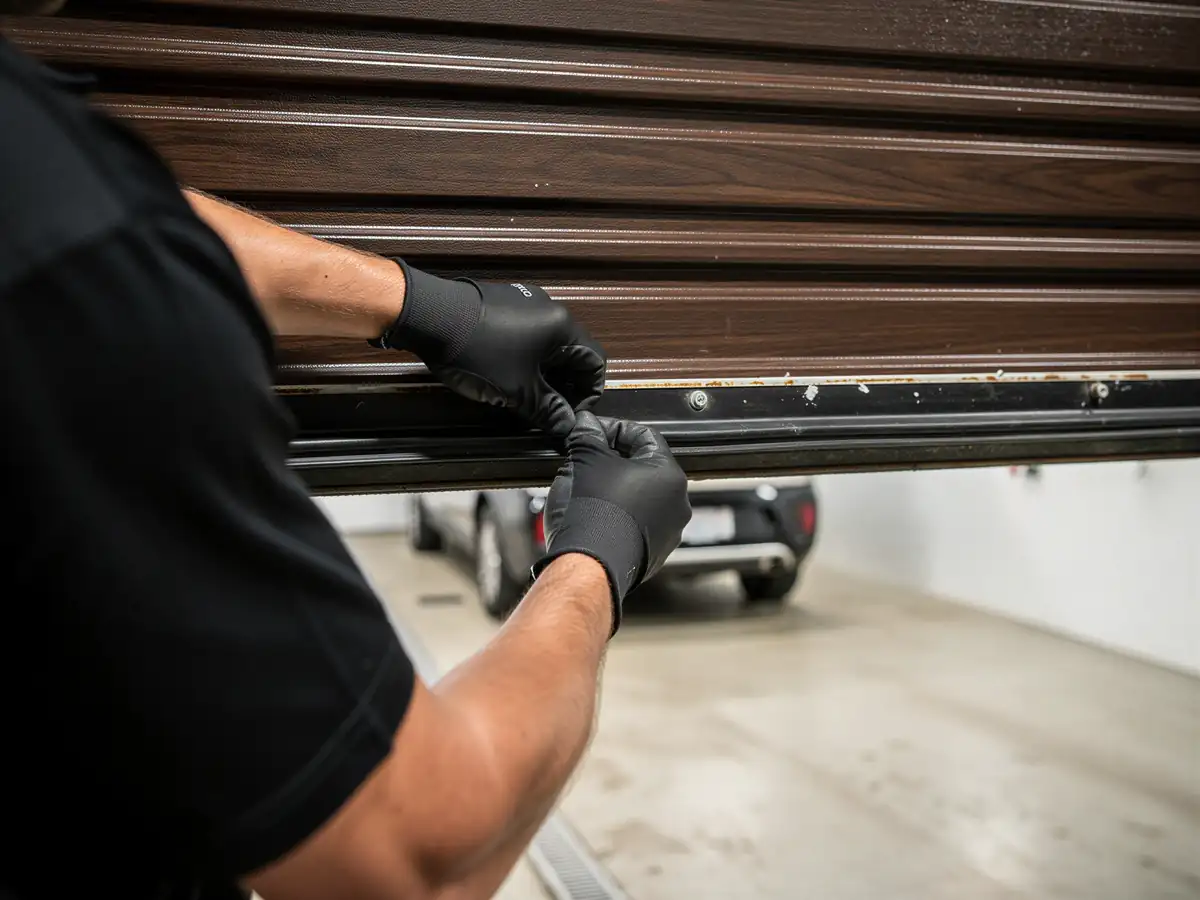
A cracked or flat-spotted nylon roller doesn't usually jam the door outright. It rattles, it catches, and it throws the panel slightly off true in the track, which you'll notice as a door that looks like it's climbing crooked for a second before it straightens out. Left alone long enough, that uneven load transfers to the next roller down, and then you're replacing two instead of one.
Steel rollers, more common on the area's older 70s-80s housing stock, tend to fail differently - they seize at the bearing rather than crack, and the sound is more of a metallic squawk than a scrape. If your door's doing the scrape-and-catch, that's a nylon-roller symptom, consistent with the age of construction common here.
Time on the Job
A straight roller swap on one side of a residential double door, nylon to nylon, typically runs under an hour once we're on site, assuming the track itself isn't bent and the brackets are sound. Full-set replacement - all ten rollers across a double door - takes longer because we're also checking track alignment at each bracket as we go, not just swapping parts.
We won't quote a number here because job time varies with how much the worn roller has already knocked the track out of alignment, and we don't know that until we're looking at it. What we can say: this region's COLD-moderate winters do add a seasonal factor - nylon stiffens slightly in cold weather and can crack rather than flex if it's already got a flat spot, so winter calls for this symptom aren't unusual.
One honest limit: if the track itself is bent, not just the roller worn, that's a separate repair and changes the time and the parts list. We'll tell you on site before doing anything, not after.