What Can Go Wrong
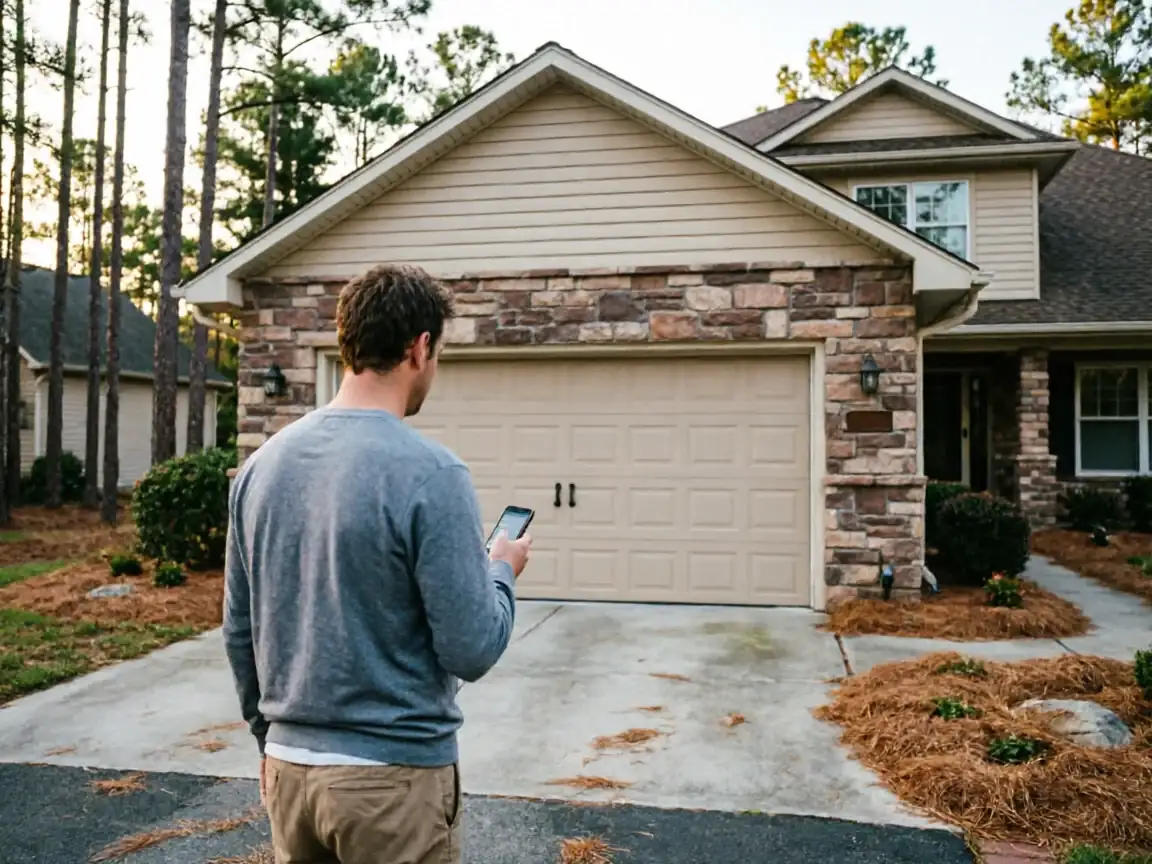
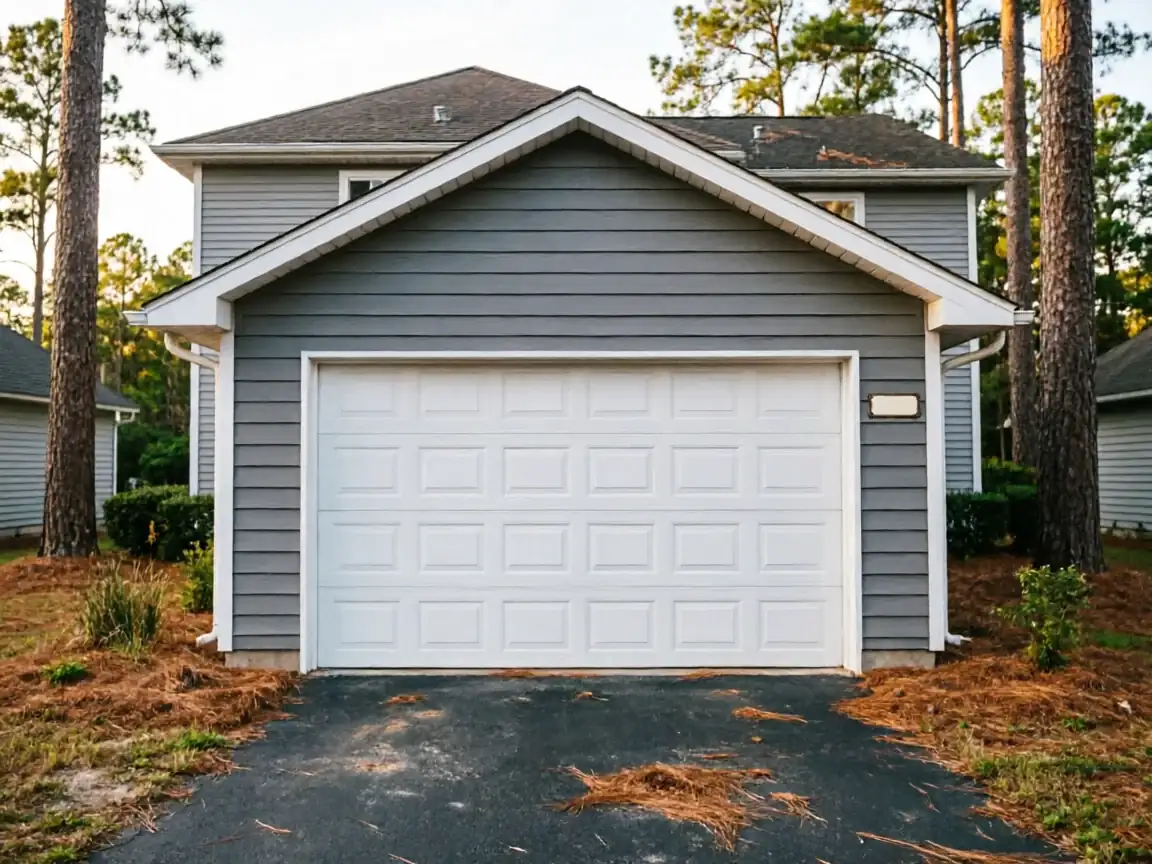
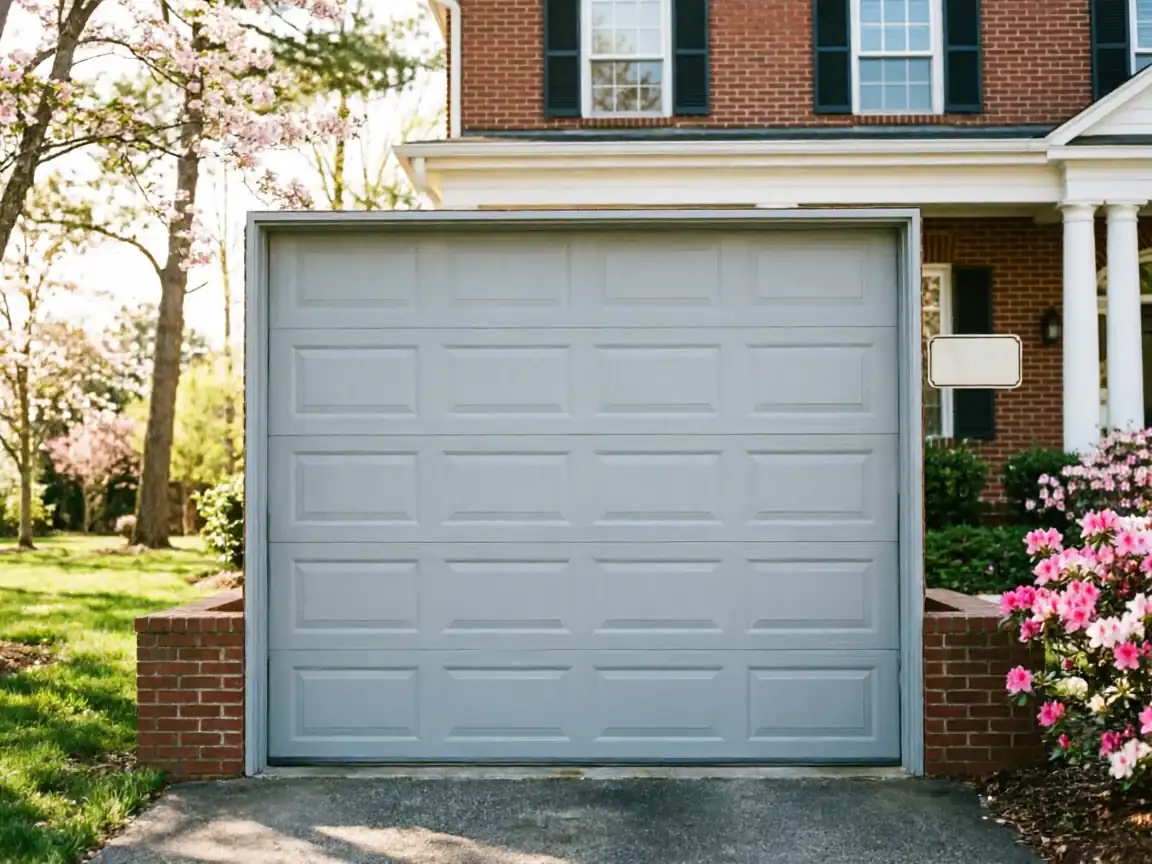
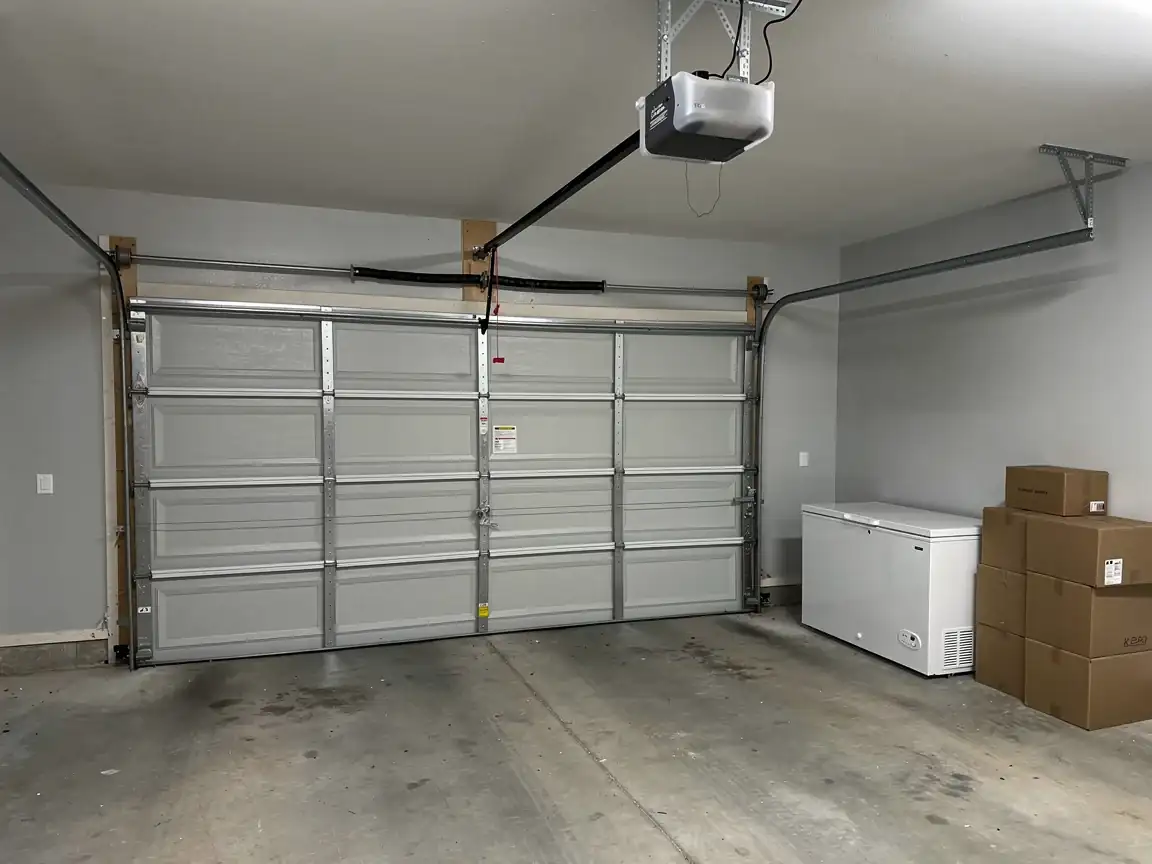
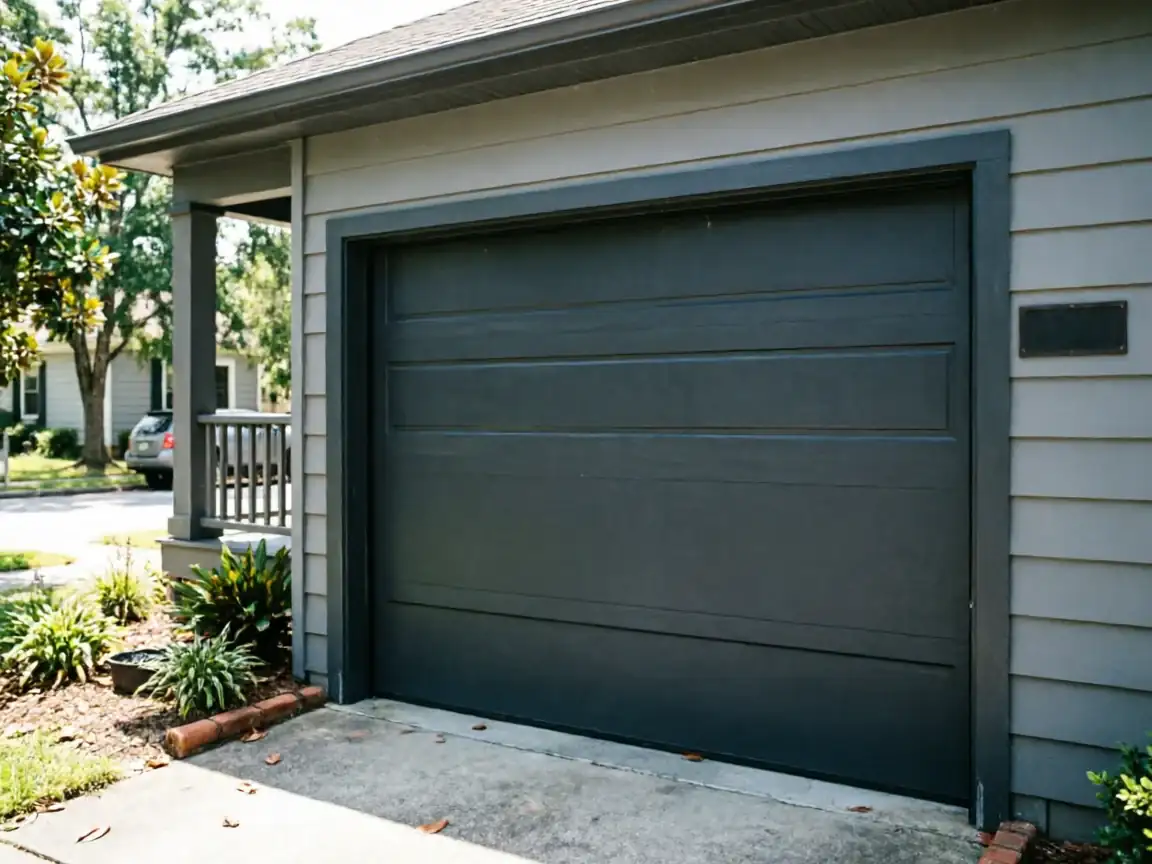
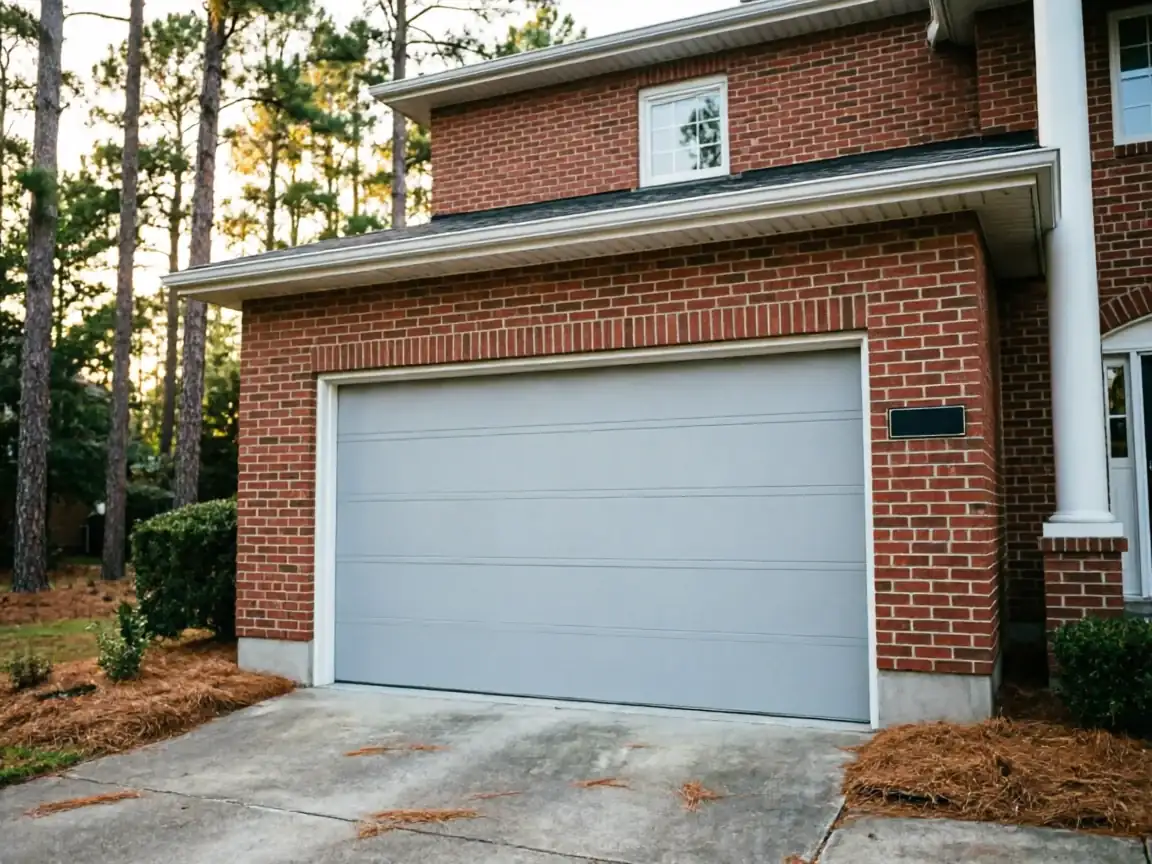
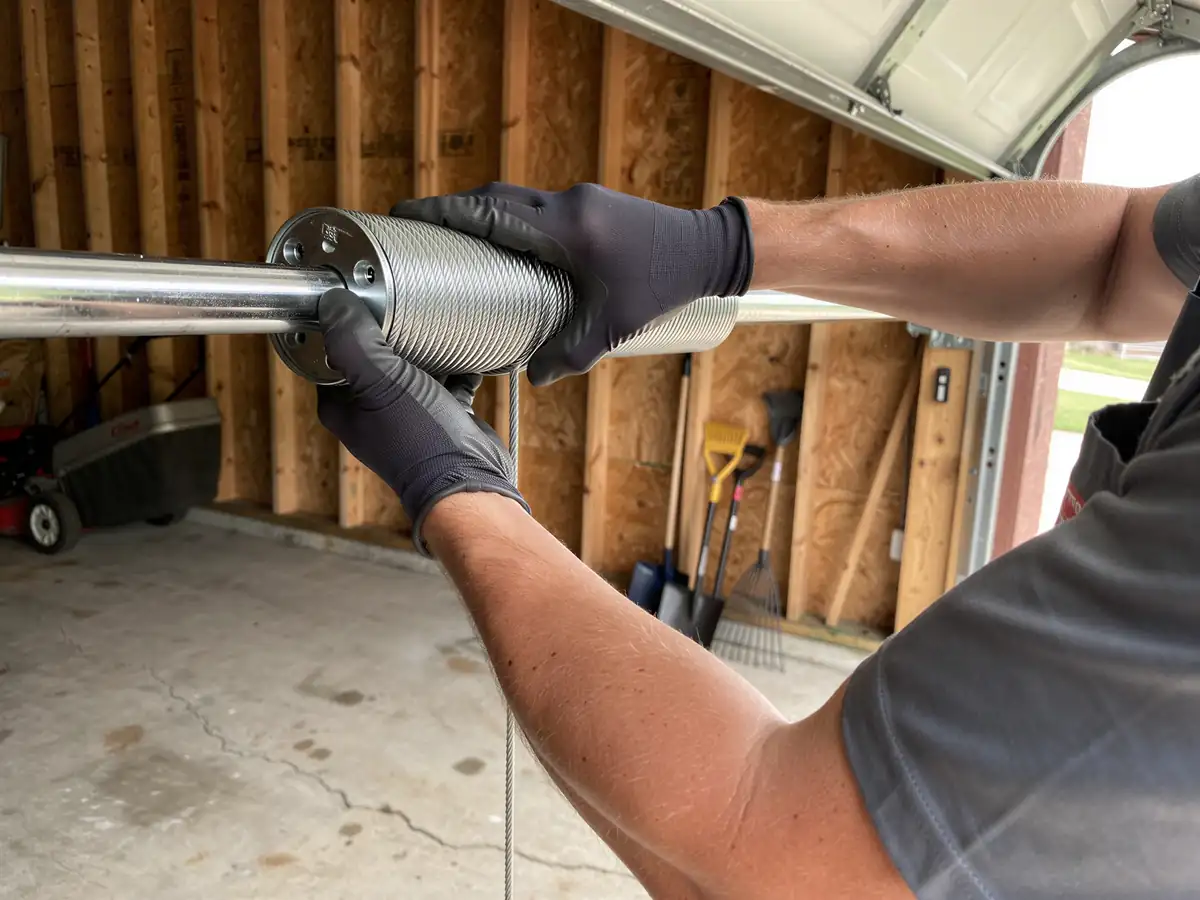
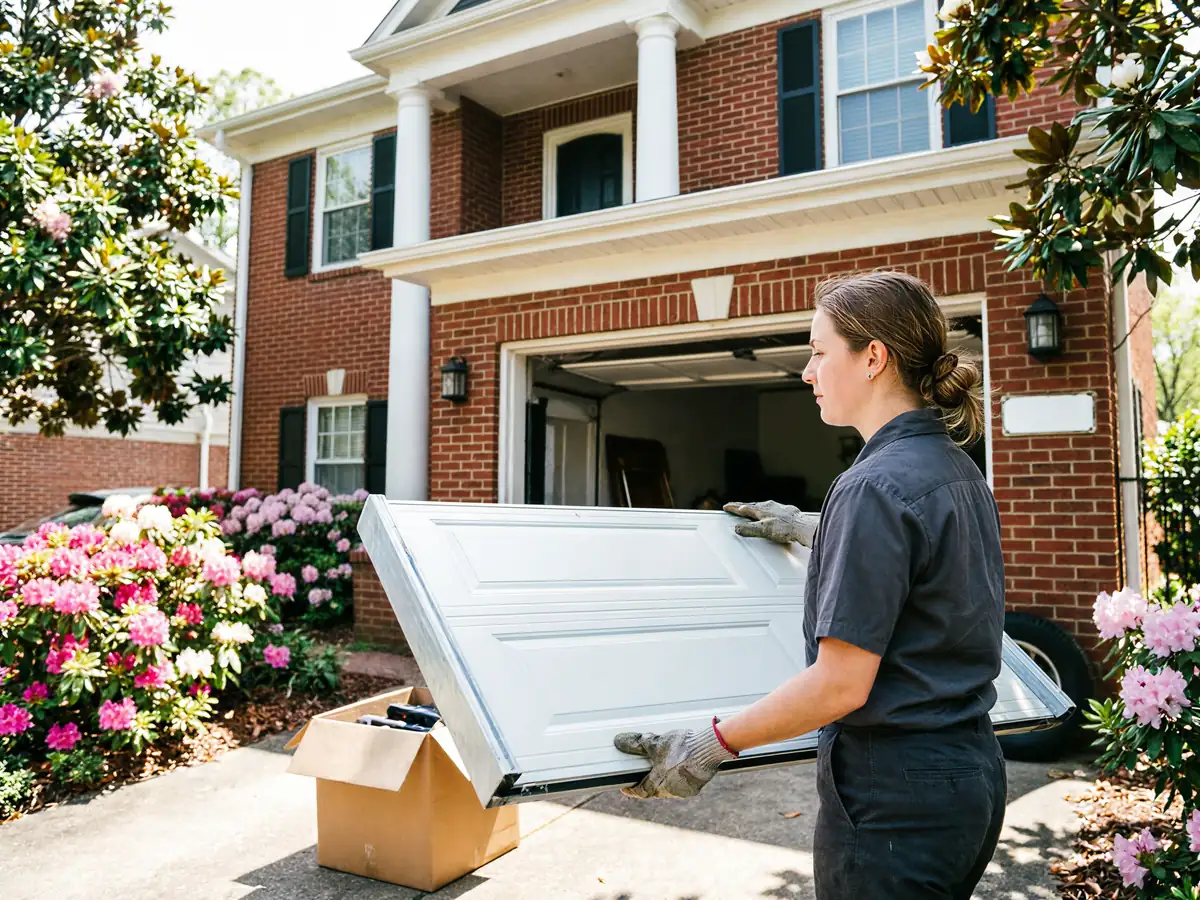
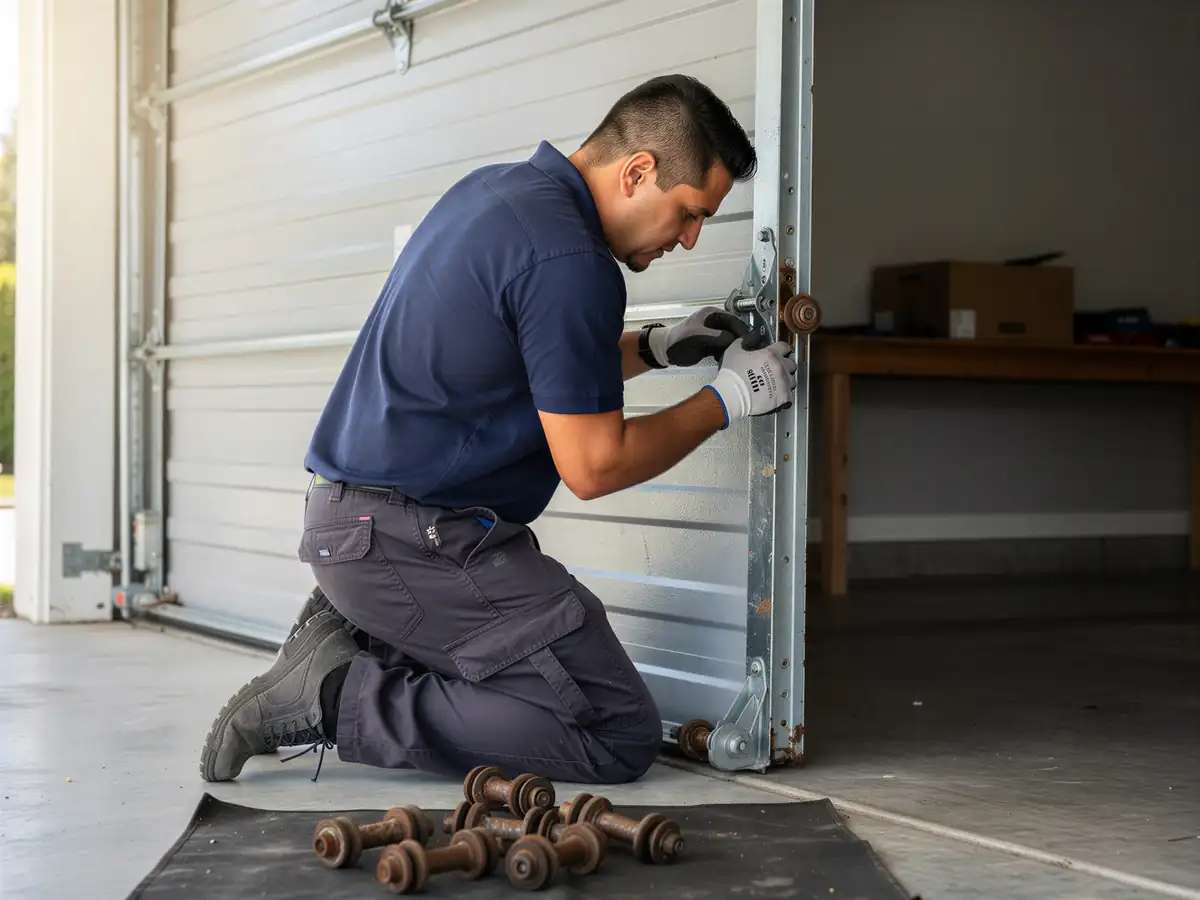
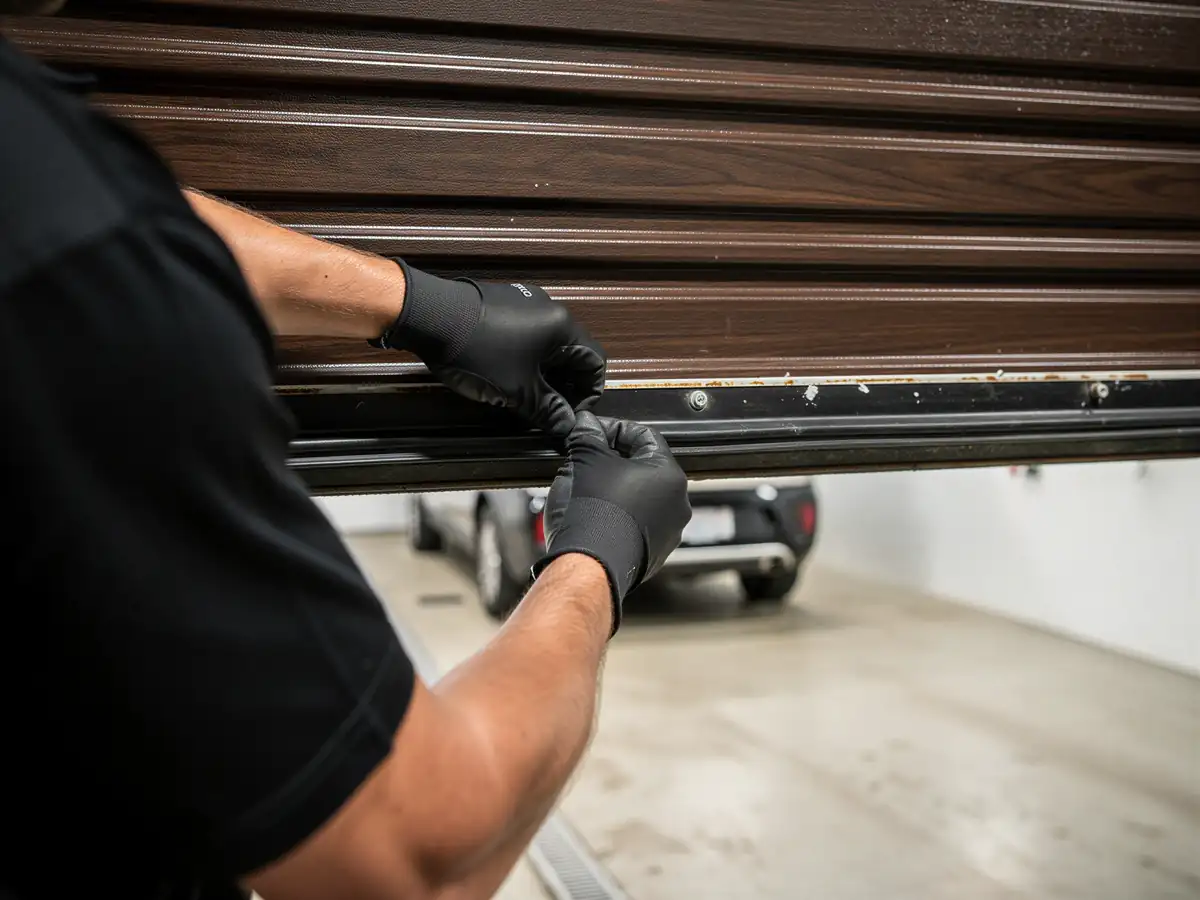
Most garages in Hartselle went up around 1982, which puts the doors themselves in a specific bracket: steel, single-layer, no foam core, raised-panel faces bolted to a frame that's thinner than what gets installed today. These are 16x7 or 9x7 sections depending on whether the house has a two-car or one-car bay, running on torsion or extension springs sized for a lighter, uninsulated panel. After forty-some years, the common failures are what you'd expect from steel that age: torsion springs that have cycled past their rated life and snap without warning, galvanized cable fraying where it wraps the drum, and rollers worn oval so the door shudders on the way up. Openers from a later retrofit era - chain-drive units bolted onto original track - often grind out a gear or lose a limit switch long before the door itself gives up. Panels dent easily since there's no insulation layer to absorb an impact, and once a bottom panel bends, the whole door can bind in the track. None of this is unique to one house; it's the baseline condition of a door built when 1982 was the going standard.
How We Fix It
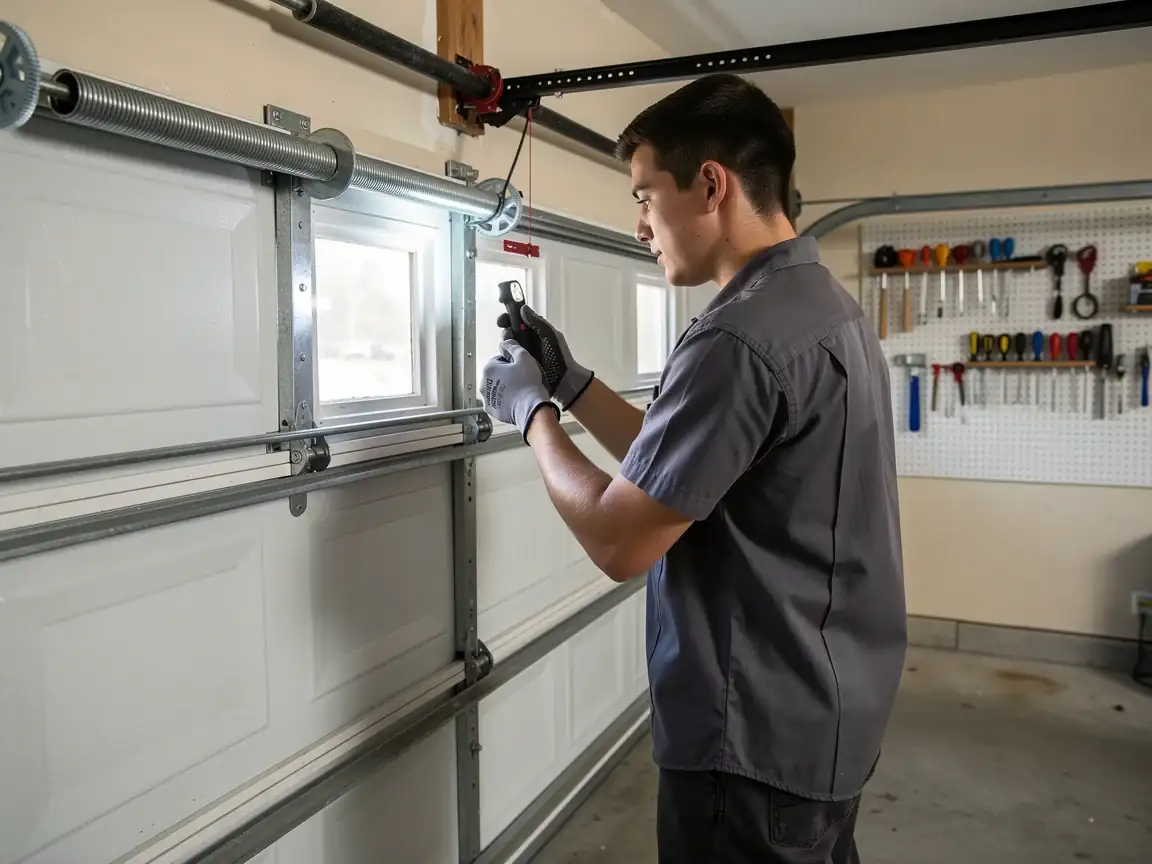
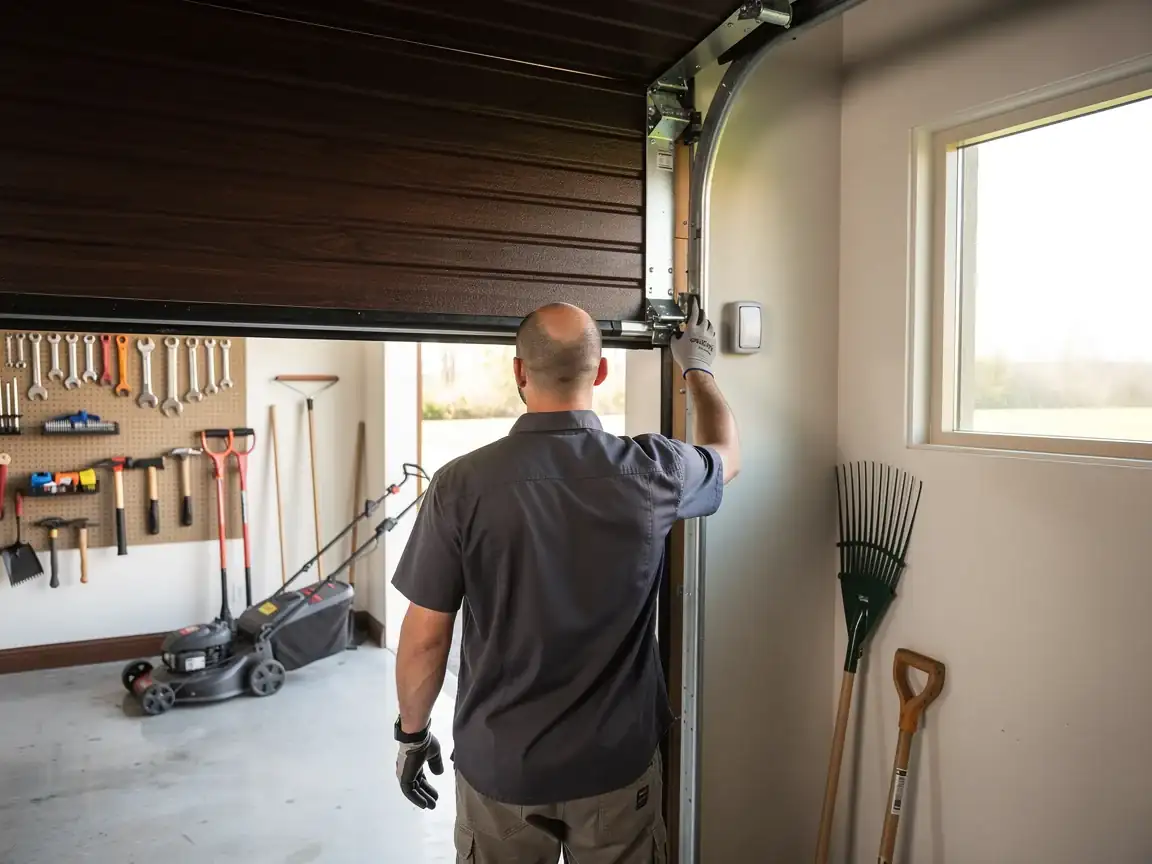
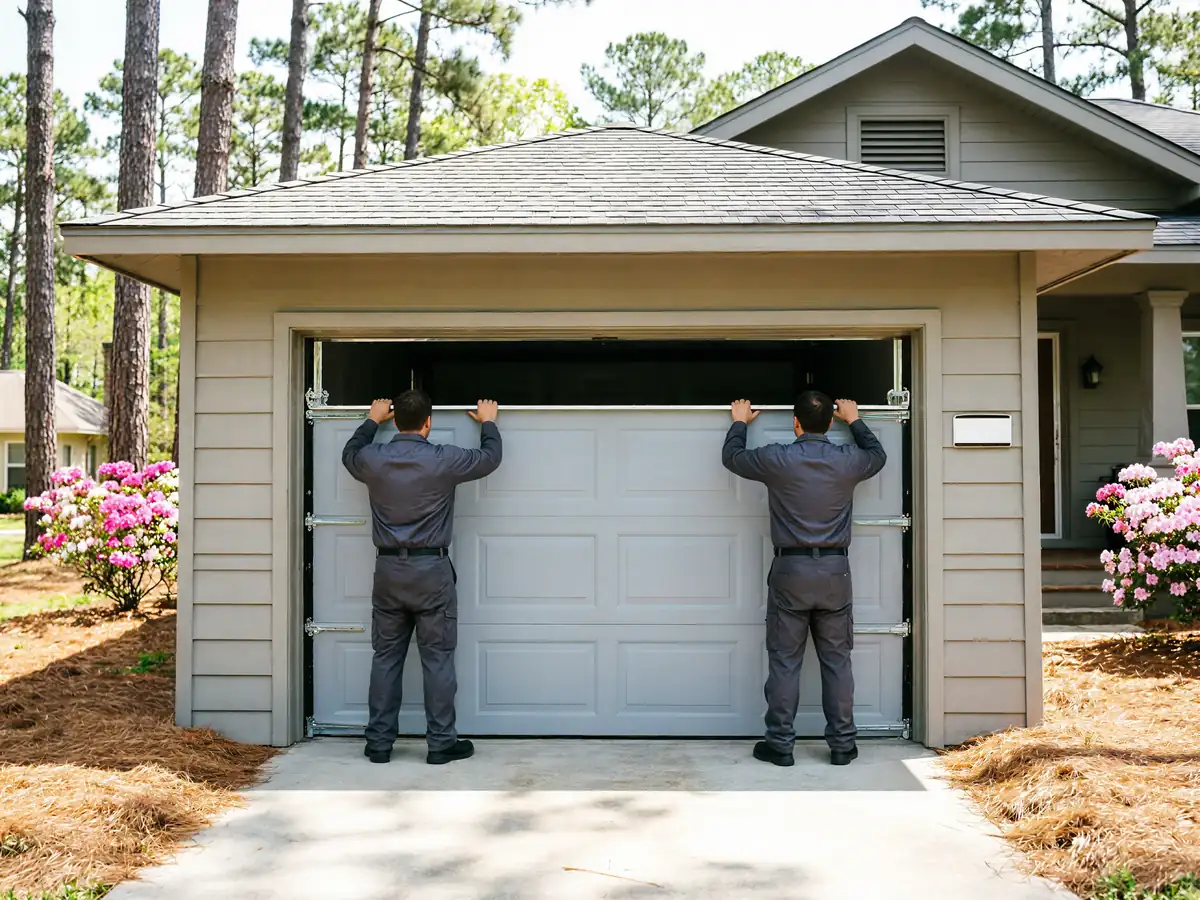
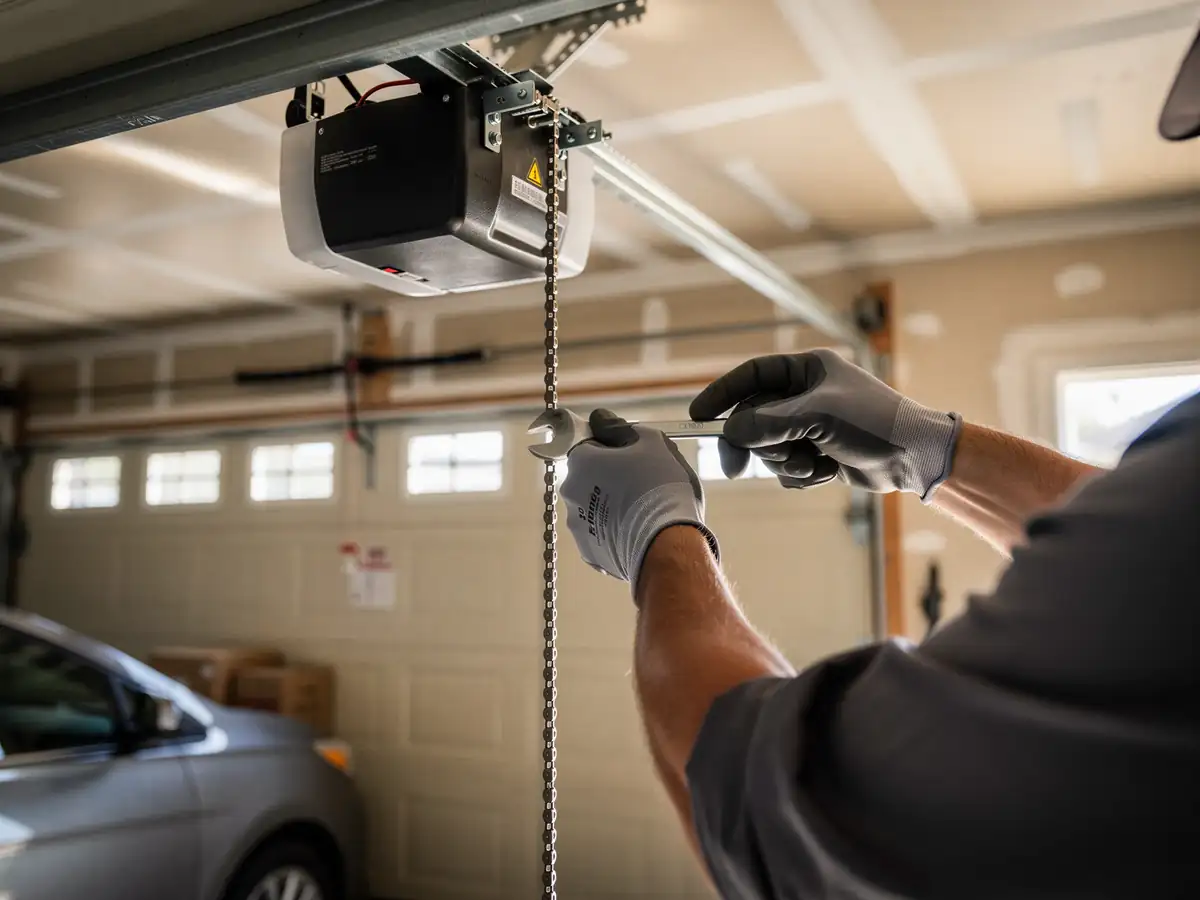
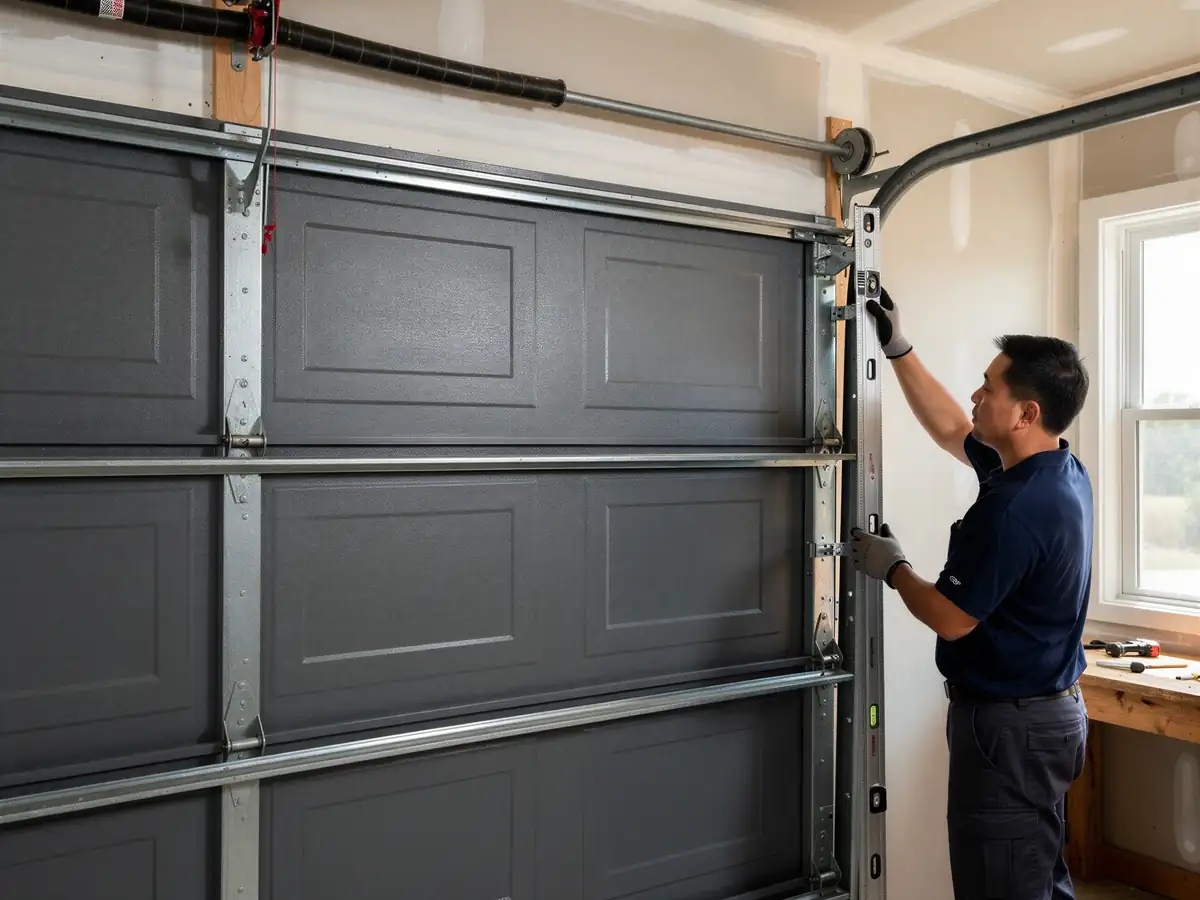
We come from Decatur, about 10 miles out, so when we get a call from Hartselle we plan the visit around a full look at the door, not just the one symptom on the phone. On a 1982-era door, that usually means checking spring wind against the actual door weight - a lot of these were strung for the original panel, not a heavier replacement someone bolted on later - then inspecting the drums, cable, and track alignment before touching the opener. If the track is racked from foundation settling, we re-set and re-square it rather than just lubricating the symptom. Old chain-drive openers get a gear and limit-switch check, since that's the most common failure point on units from that generation. We carry standard torsion and extension spring sizes for this housing stock; if a part turns out to be genuinely obsolete, we'll tell you straight rather than quote a job we can't actually deliver on.
Can You Do This Yourself
Some of this is reasonable DIY: tightening loose hinge bolts, lubricating hinges and rollers, clearing track debris, or replacing weatherstripping along the bottom panel. None of that needs a truck from Decatur. What we don't recommend touching yourself is the torsion spring system - it's under enough tension on even an older, lighter door to cause a serious injury if the winding bar slips, and on a door this age the spring and drums have likely never been serviced, which means there's no way to know their actual condition until someone's hands are on them. Cable replacement carries the same risk. If your door is sagging on one side, binding partway up, or the opener strains and reverses, that's past the point of a weekend fix - call before you start taking panels apart.